EV & Battery Pack AutomatedTest Benches
High-voltage battery cycling, cell balancing, thermal chamber synchronization, and BMS communication validation test rigs designed with strict hardware safety interlocks.

EV Battery Testing Capabilities
High-throughput test and measurement capabilities engineered to eliminate spaghetti code and deliver deterministic factory-floor execution.
High-Voltage Pack Cycling & Characterization
Regenerative charge/discharge cycling up to 1000V and 600A with energy recovery feeding back into the plant grid.
- ✓Constant Current / Constant Voltage (CC/CV)
- ✓Drive cycle replay (WLTP, US06, NEDC)
- ✓DC Internal Resistance (DCIR) calculation
- ✓Coulombic efficiency and capacity mapping
Multi-Channel Cell Voltage & Temp Profiling
High-density isolated data acquisition monitoring up to 256 individual cell voltages and temperatures simultaneously.
- ✓Galvanic isolation up to 1000VDC
- ✓Sub-millivolt cell voltage accuracy
- ✓Multi-point thermistor & RTD profiling
- ✓Real-time thermal runaway early warning
BMS CAN / CAN-FD Protocol Validation
Automated validation of Battery Management System firmware, safety interlocks, State of Charge (SOC), and State of Health (SOH).
- ✓NI-XNET high-speed CAN-FD communication
- ✓DBC database symbolic signal decoding
- ✓High-voltage contactor actuation verification
- ✓Diagnostic Trouble Code (DTC) reading & clearing
Thermal Chamber & Chiller Synchronization
Automated control of climatic test chambers (-40°C to +85°C) and battery liquid coolant chillers synchronized with electrical loading.
- ✓Modbus TCP & RS-485 chamber integration
- ✓Coolant flow rate and pressure regulation
- ✓Dew point & condensation prevention logic
- ✓Thermal shock profile automation
Multi-Tier Hardware Safety Interlocks
Fail-safe protection circuits integrating insulation resistance monitoring (Hipot), smoke/gas detectors, and emergency contactor trips.
- ✓Hardware-timed emergency contactor dump
- ✓Insulation & ground fault monitoring
- ✓Hydrogen & VOC gas detection interlocks
- ✓NFPA & ISO 6469 high-voltage compliance
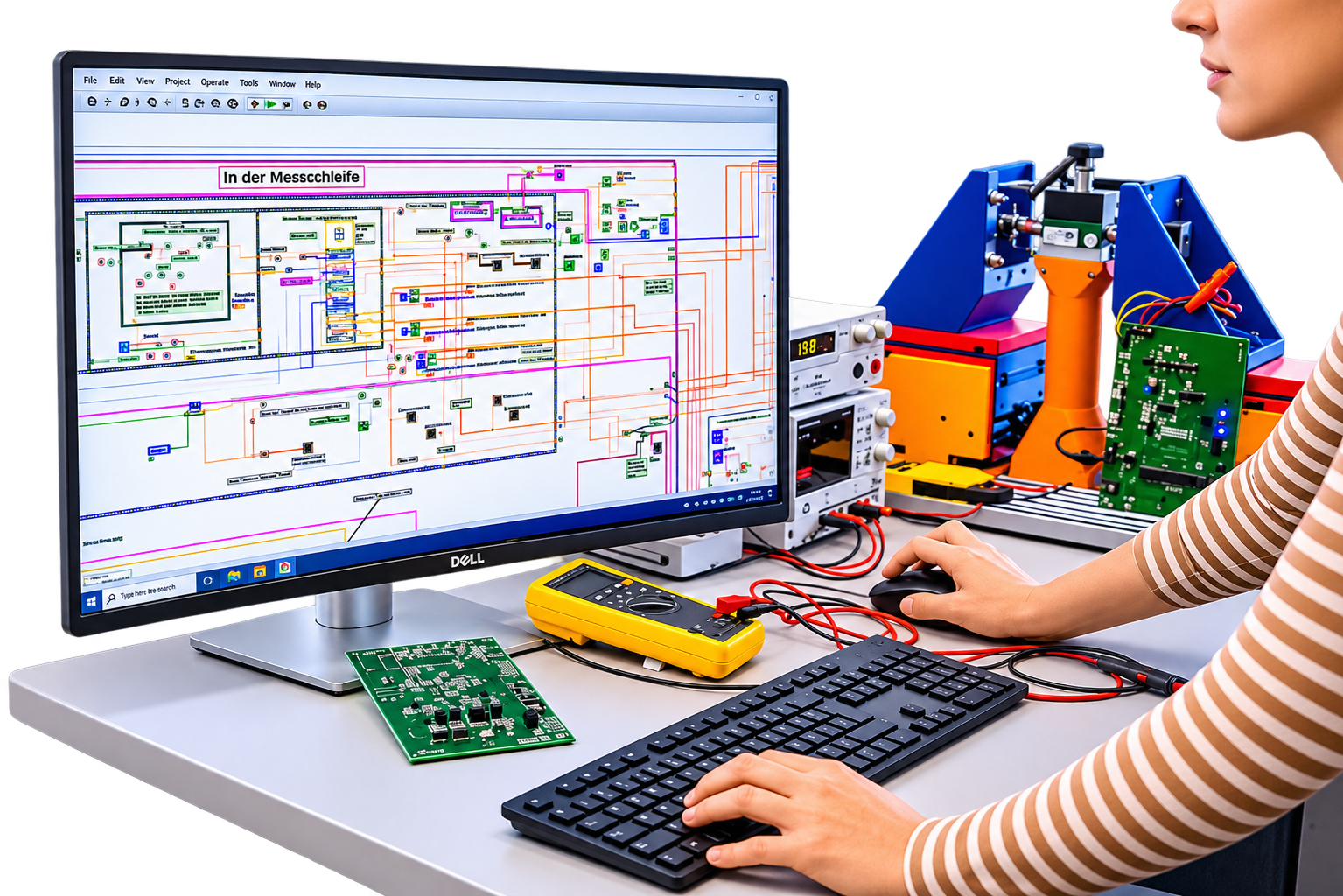
High-Voltage Precision for Next-Gen E-Mobility
VEST Solutions engineers automated test benches for electric vehicle (EV) battery cells, modules, and full high-voltage battery packs. We integrate high-power regenerative DC power supplies, multi-channel cell voltage monitoring (CVM), and environmental thermal chambers under a unified LabVIEW test executive.
Our systems validate battery management system (BMS) communication over CAN-FD, measure internal resistance (DCIR) with milliohm accuracy, and execute complex drive cycle simulations (WLTP, US06) while enforcing multi-tier electrical and thermal safety shutdowns.
Deterministic Battery Test Architecture Patterns
Industrial-grade design patterns engineered to replace monolithic code with modular, testable, and maintainable LabVIEW frameworks.
Dual-Loop RTOS Safety Monitor
Runs on a deterministic real-time controller. If cell temperature or voltage exceeds critical thresholds, contactors open within 2ms, independent of Windows OS.
Lossless TDMS Data Streaming
Streams 256 channels of voltage, current, and temperature data continuously to disk at 1 kHz without UI display stutter or memory leaks.
DBC Symbolic CAN-FD Engine
Translates raw automotive network frames into physical engineering values (SOC, SOH, cell voltages) in real time using industry DBC database files.
Automated Profile Sequencer
Allows battery test engineers to build custom multi-step charge, discharge, pulse, and rest profiles using intuitive spreadsheet recipes.
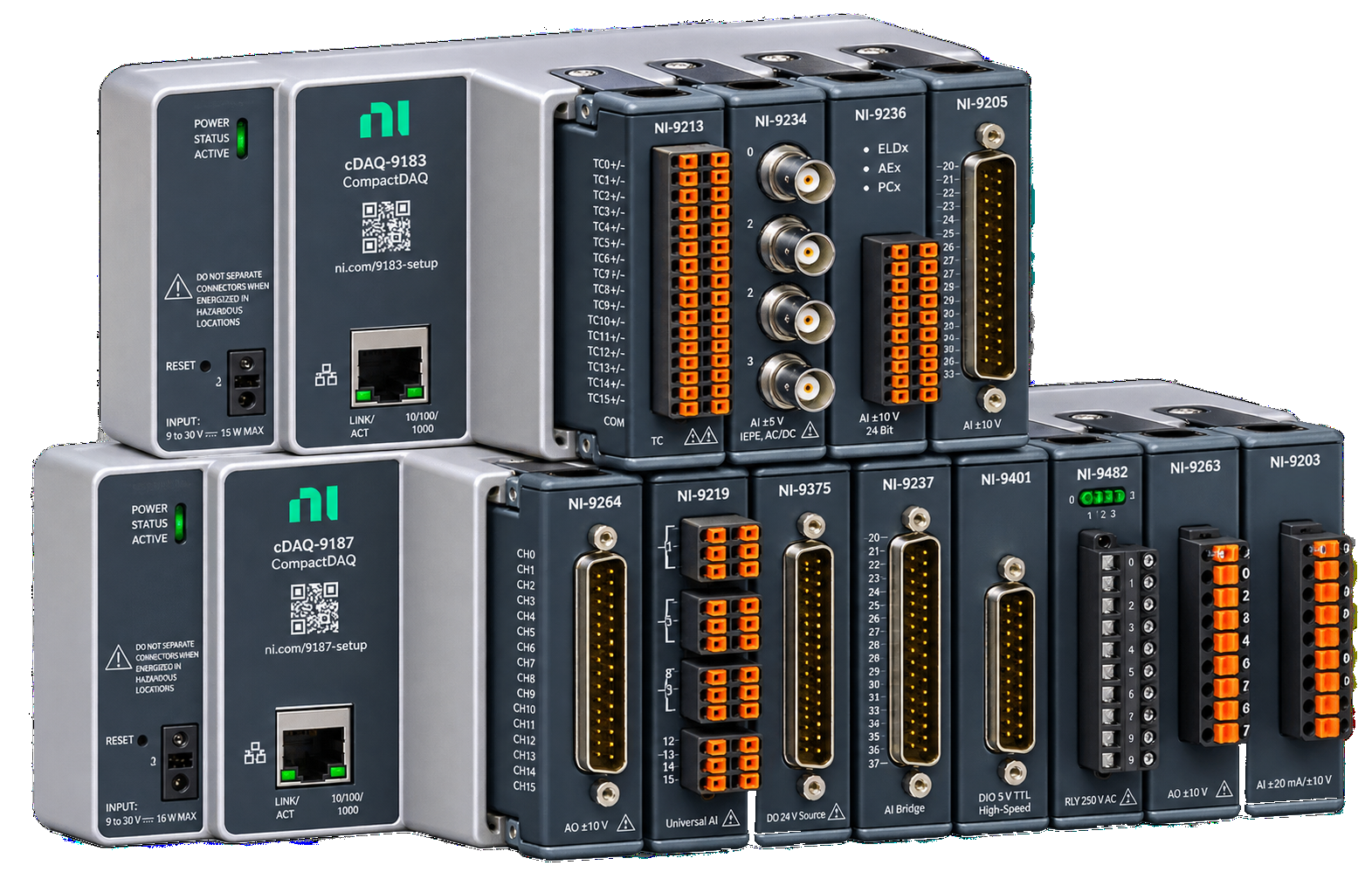
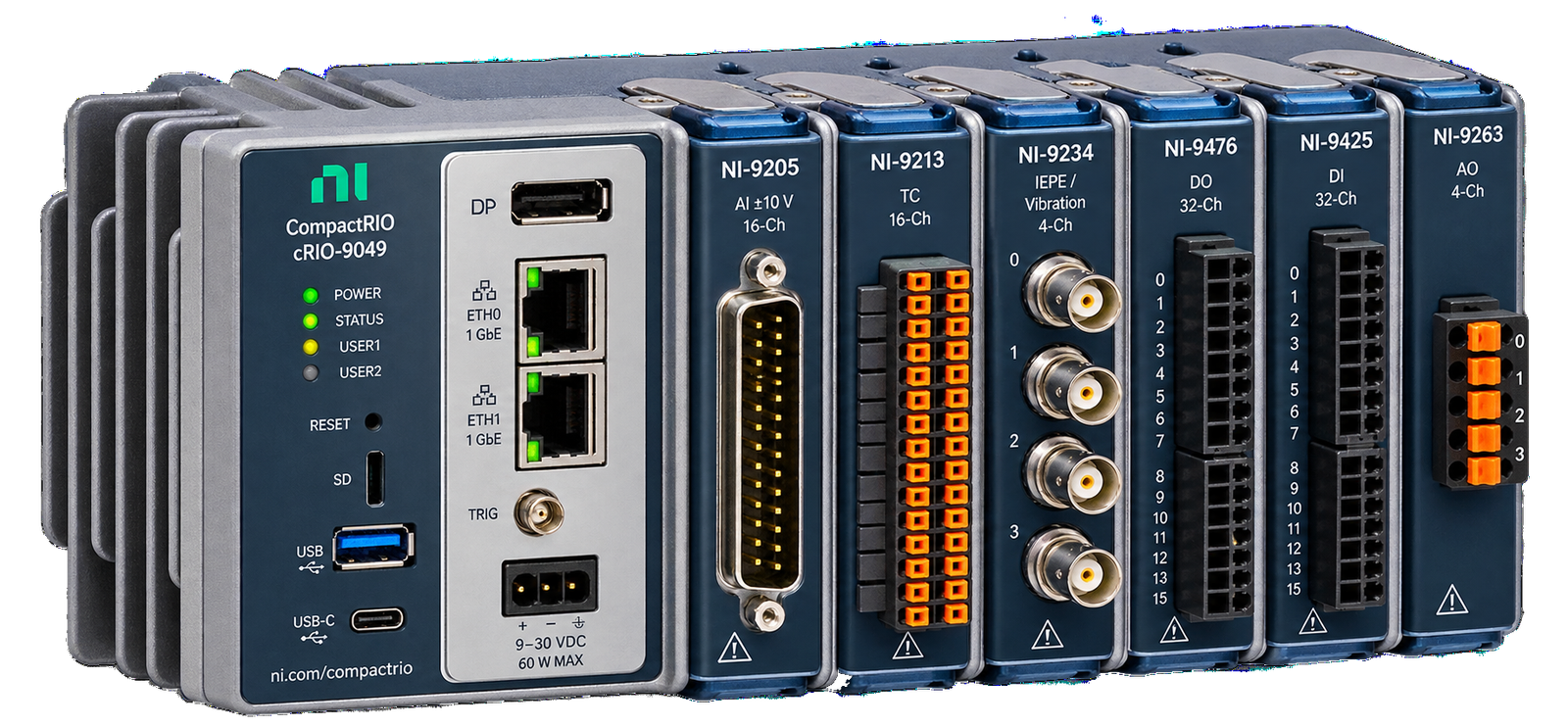
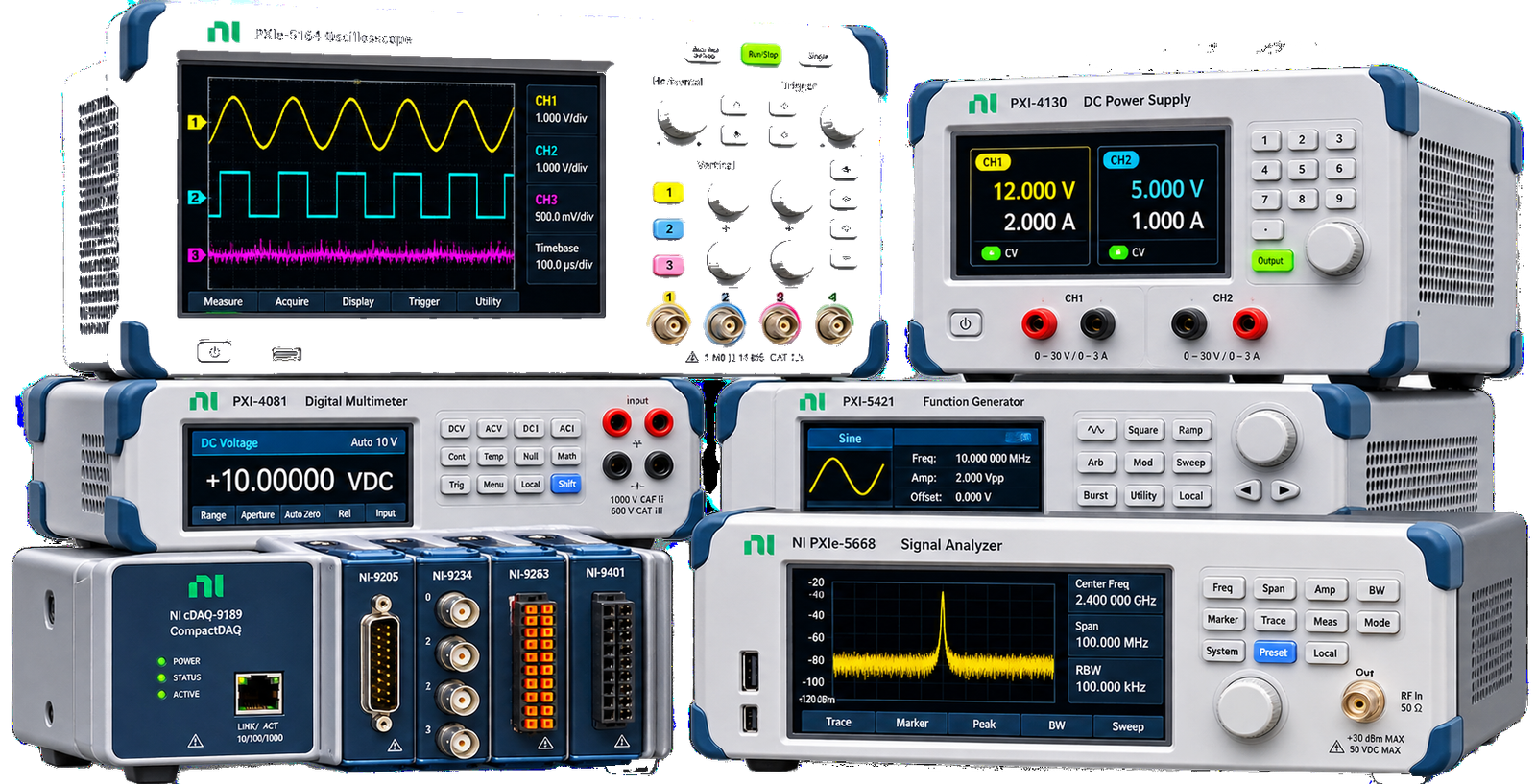
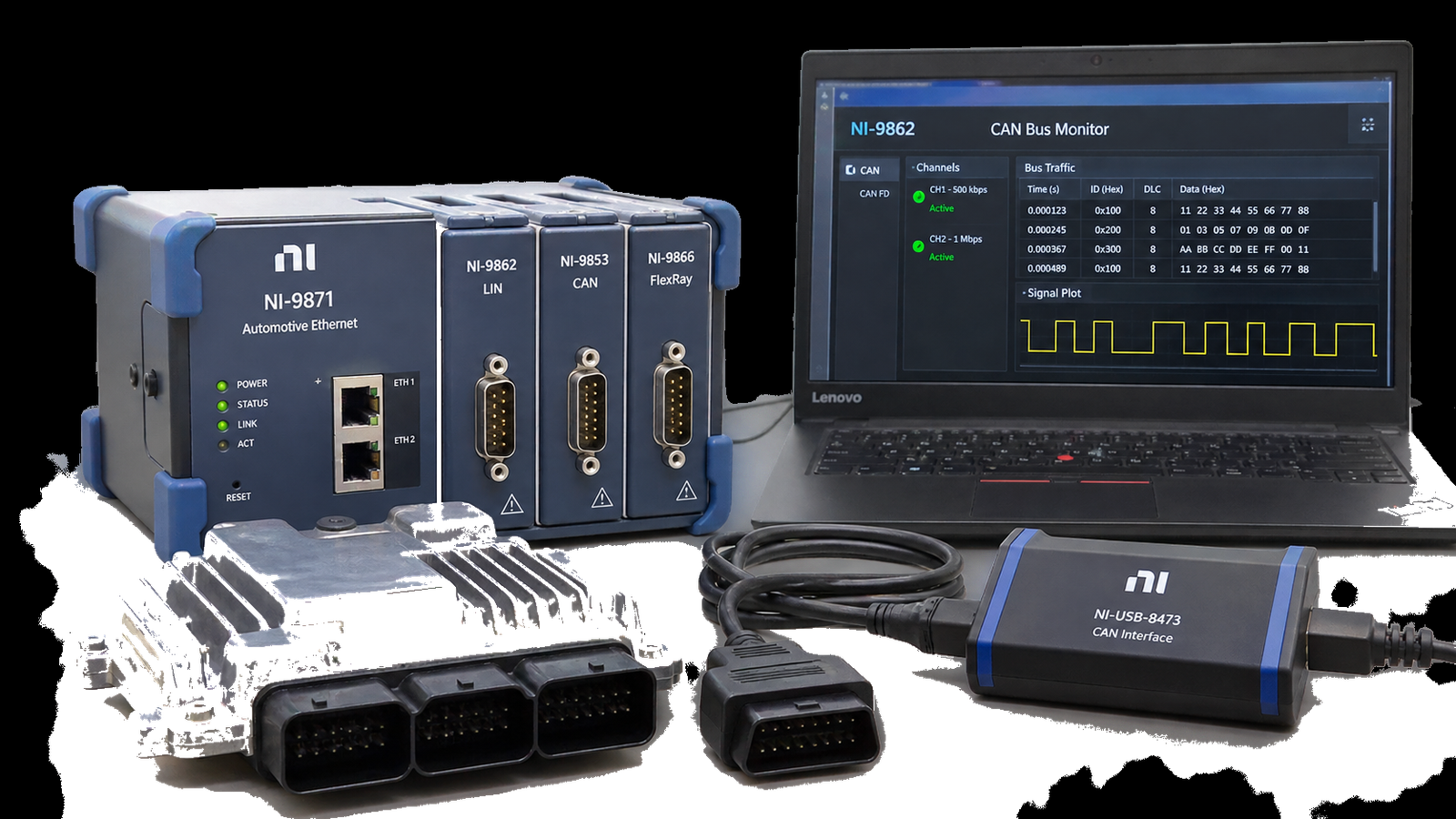
Supported Power Supplies & Acquisition Hardware
Seamless integration with industry-leading measurement hardware, controllers, sensors, and communication protocols.
Measurement Precision & Safety Benchmarks
High-voltage testing demands uncompromising measurement accuracy and fail-safe safety responsiveness.
Safety System Rigor
- Hardware dual-channel e-stop interlocks bypassing all software
- Automated pre-charge circuits preventing massive inrush current
- Hydrogen and volatile organic compound (VOC) sniffer integration
- HV safety enclosures with locked door limit switches
Battery Data Precision
- Kelvin 4-wire sensing directly at pack terminals
- Hardware-timed synchronized voltage and current sampling
- Sub-millivolt cell voltage accuracy for precise SOH estimation
- Automatic thermocouple cold-junction compensation
Turnkey Battery Test Rig Lifecycle
From initial requirements elicitation to automated FAT/SAT deployment, our deterministic engineering lifecycle ensures zero runtime regressions.

Pack Electrical & Safety Audit
Review battery pack voltage ratings, BMS communication matrix (DBC), and required cooling profiles.
- Test Routine Specification
- Signal Limit Matrix
- User Access & Audit Trail
- Initial FAT Criteria
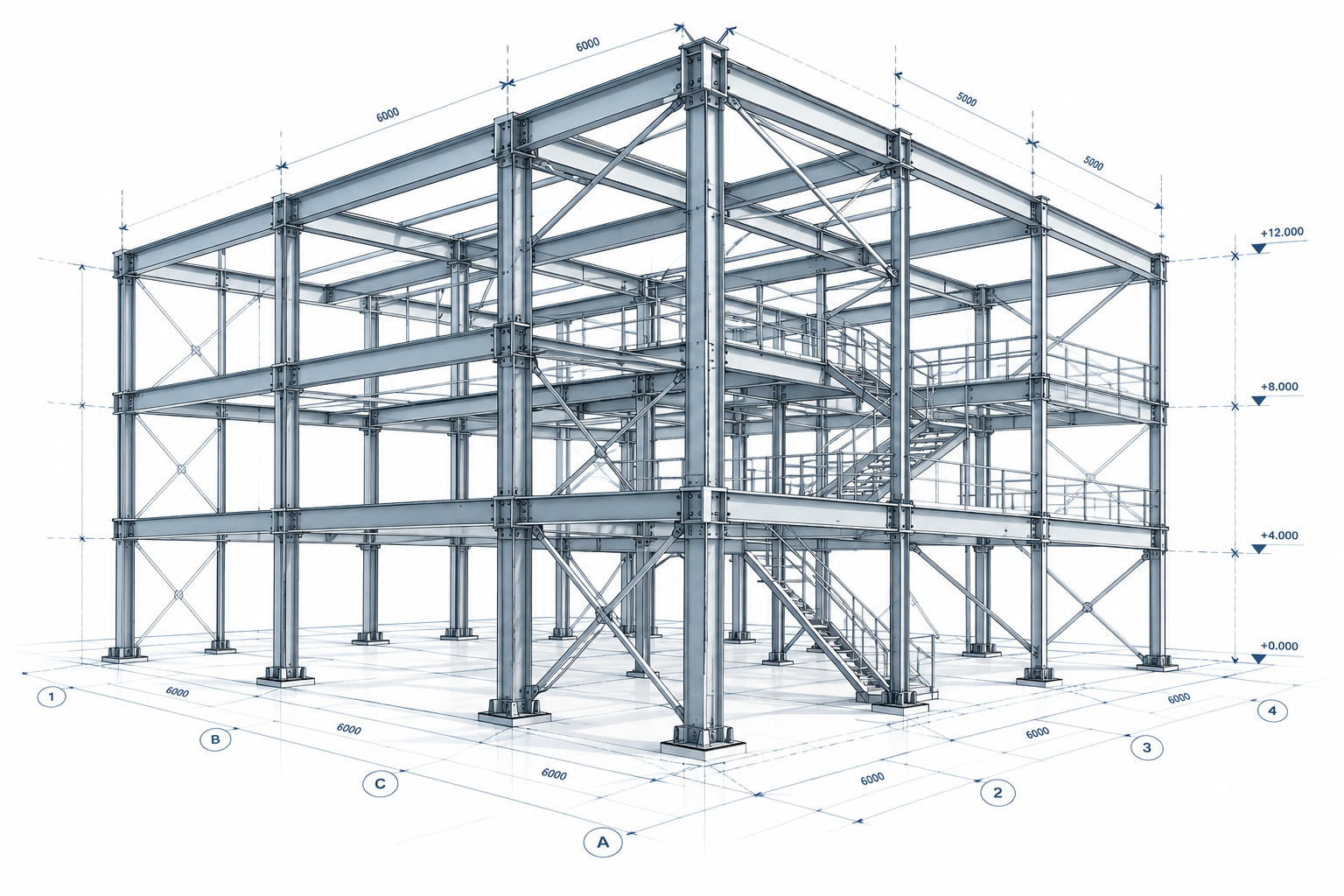
Power & Thermal System Sizing
Size regenerative DC power cycler, thermal chamber volume, chiller BTU capacity, and power cabling.
- Module Class UML Diagrams
- Queue / Event Channel Protocols
- Actor Tree & DQMH Modules
- HAL Interface Definitions

Electrical & Safety Enclosure Build
Design high-voltage distribution cabinet, contactor interlocks, and emergency disconnect circuits in EPLAN.
- Interchangeable Instrument Drivers
- SCPI / VISA Protocol Adapters
- Offline Simulation Stubs
- Hardware Loopback Verification
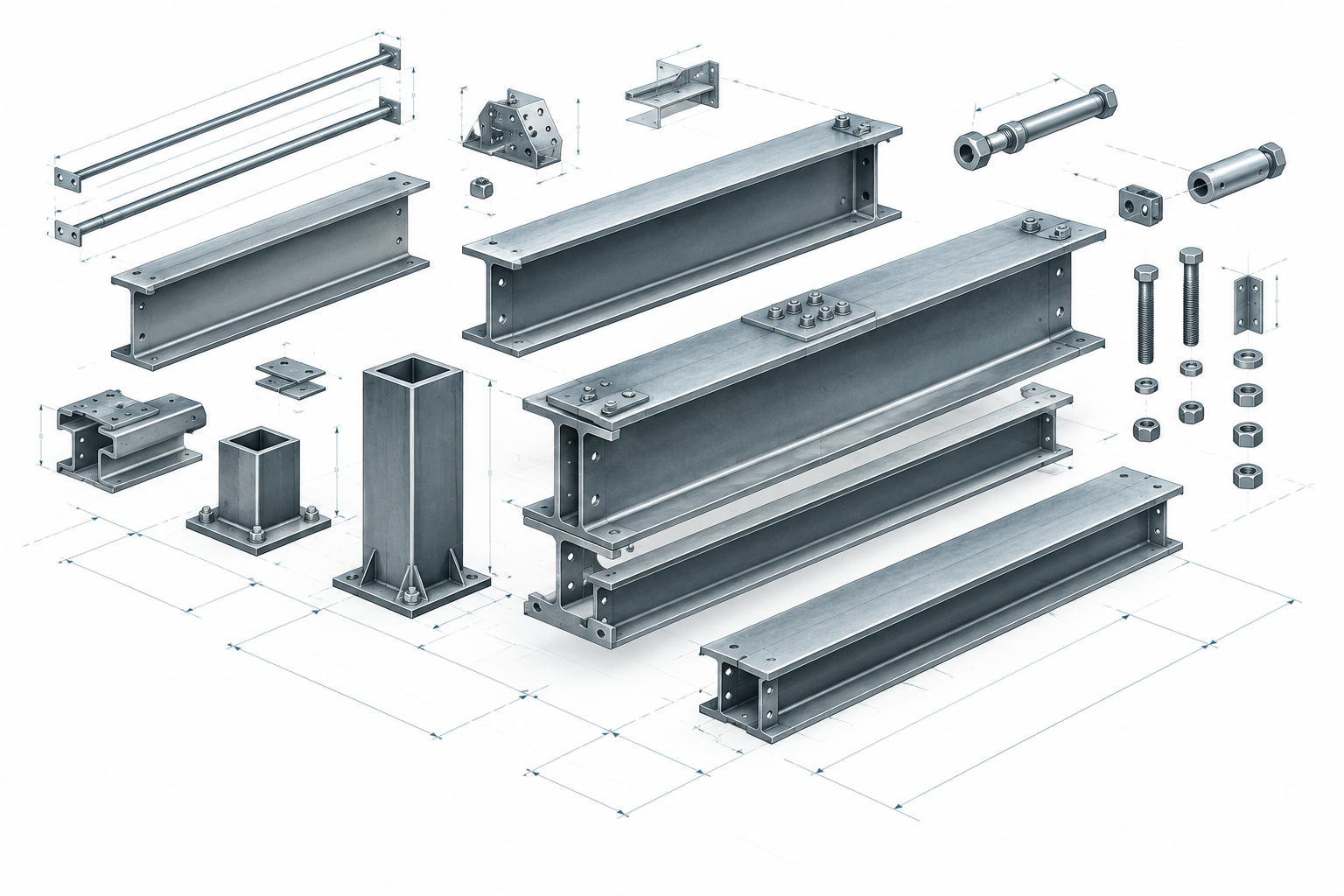
LabVIEW RT / TestStand Development
Program deterministic safety loops, CAN-FD decoding modules, and automated drive cycle sequencers.
- Asynchronous Engine Implementation
- State Transition Handlers
- TDMS / Database Logging Engines
- SubVI Error Cluster Routing

Dry-Run Safety Qualification
Simulate battery responses with high-voltage resistors to verify 2ms safety shutdown mechanisms.
- Dynamic Subpanel Framework
- 24/7 Dark/Light Operator HMI
- Interactive Calibration Wizards
- Automated Recipe Batch Loaders
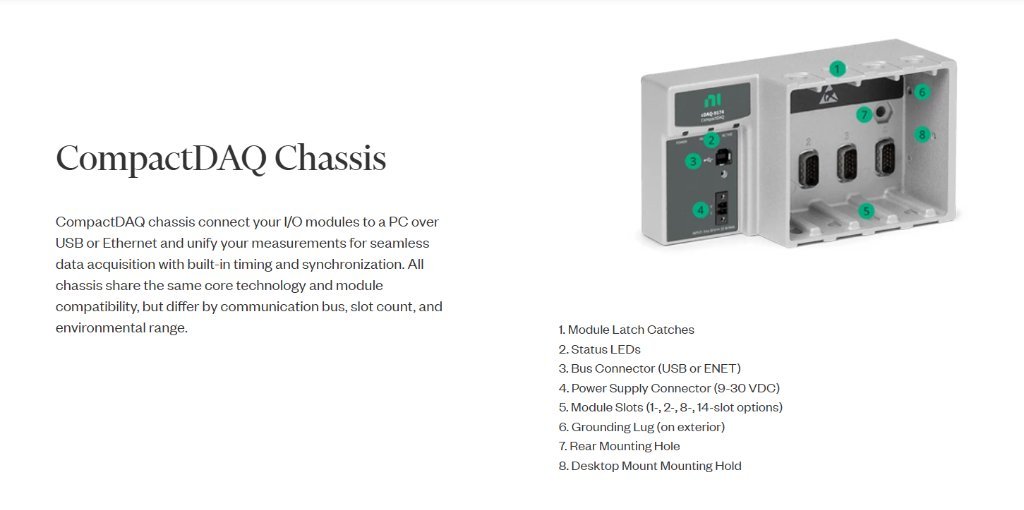
Live Battery Pack Commissioning
Conduct full-power charge/discharge cycles on real battery packs, tuning chiller and thermal regulation.
- 72-Hour Continuous Run Benchmark
- DETT Reference Leak Eradication
- Thread Execution Trace Report
- VI Analyzer Automated Code Score
Operator Training & SAT
Deliver safety protocols, train technicians on high-voltage handling, and hand over complete software.
- Final Standalone Executable (.exe)
- Factory Acceptance (FAT) Sign-Off
- Site Commissioning (SAT) Protocol
- Complete Uncompiled VI Source Code
What You Receive
A useful proposal starts with useful data. Every system we deliver is validated for throughput, hardware determinism, error recovery, and comprehensive lifecycle operating criteria.
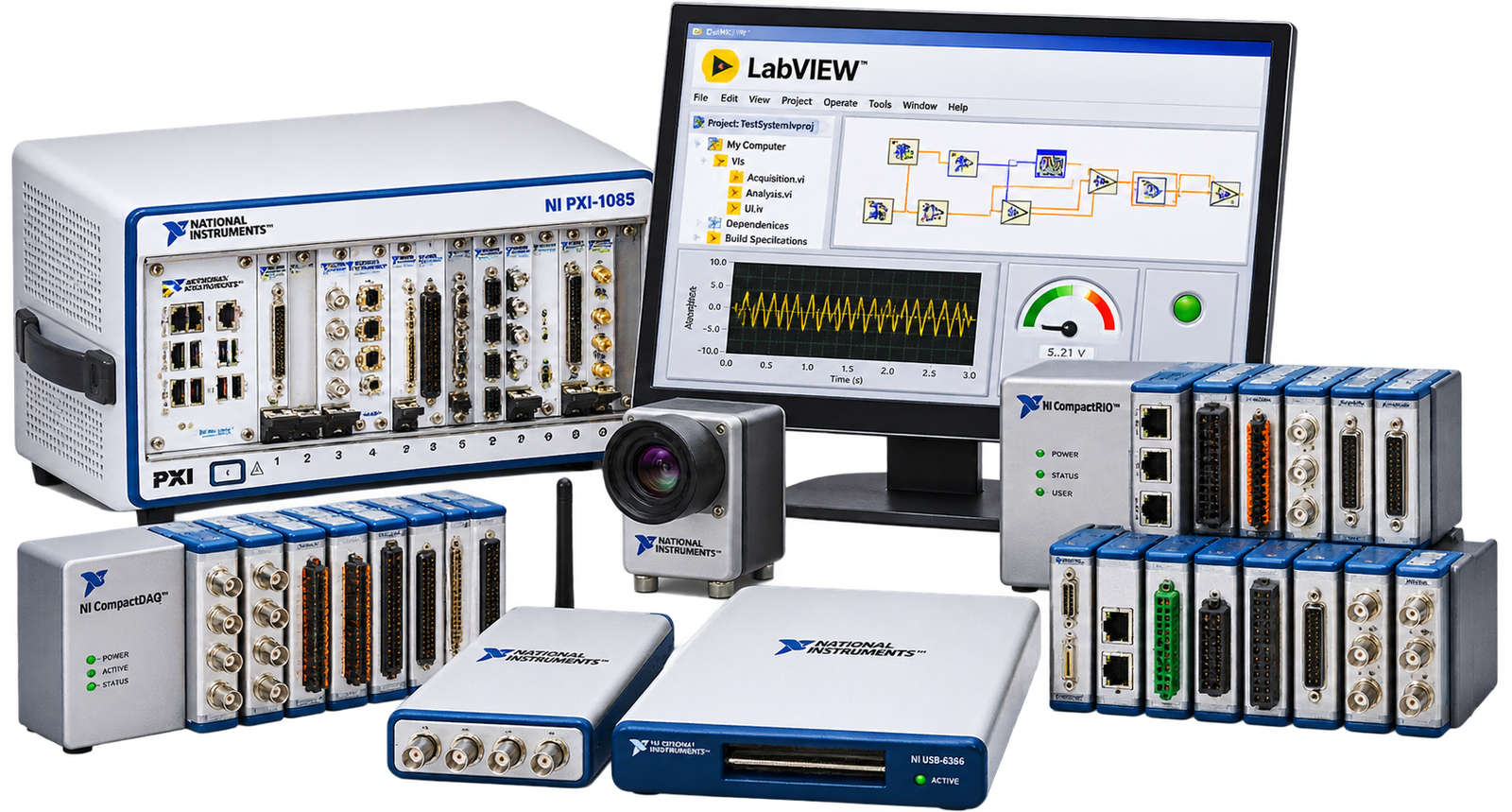
E-Mobility Applications
Proven test, measurement, and automated validation platforms deployed across mission-critical global industrial sectors.
Electric Passenger Vehicle Packs
End-of-line functional validation of 400V and 800V automotive lithium-ion battery packs and BMS modules.

Electric Commercial Trucks & Buses
High-capacity multi-module battery cycling and thermal dissipation mapping for heavy-duty commercial fleets.
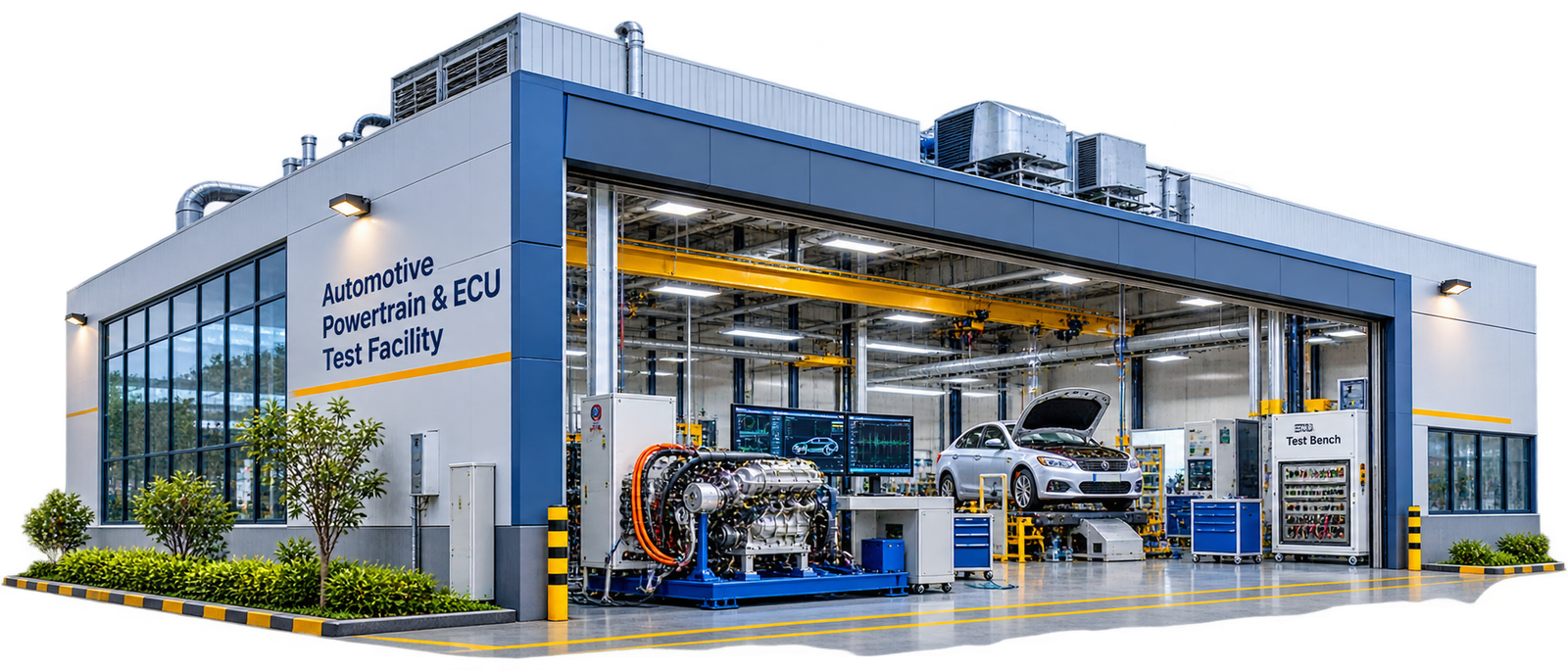
Grid Energy Storage Systems (BESS)
Long-term degradation, capacity fade, and round-trip efficiency testing for containerized utility battery storage.
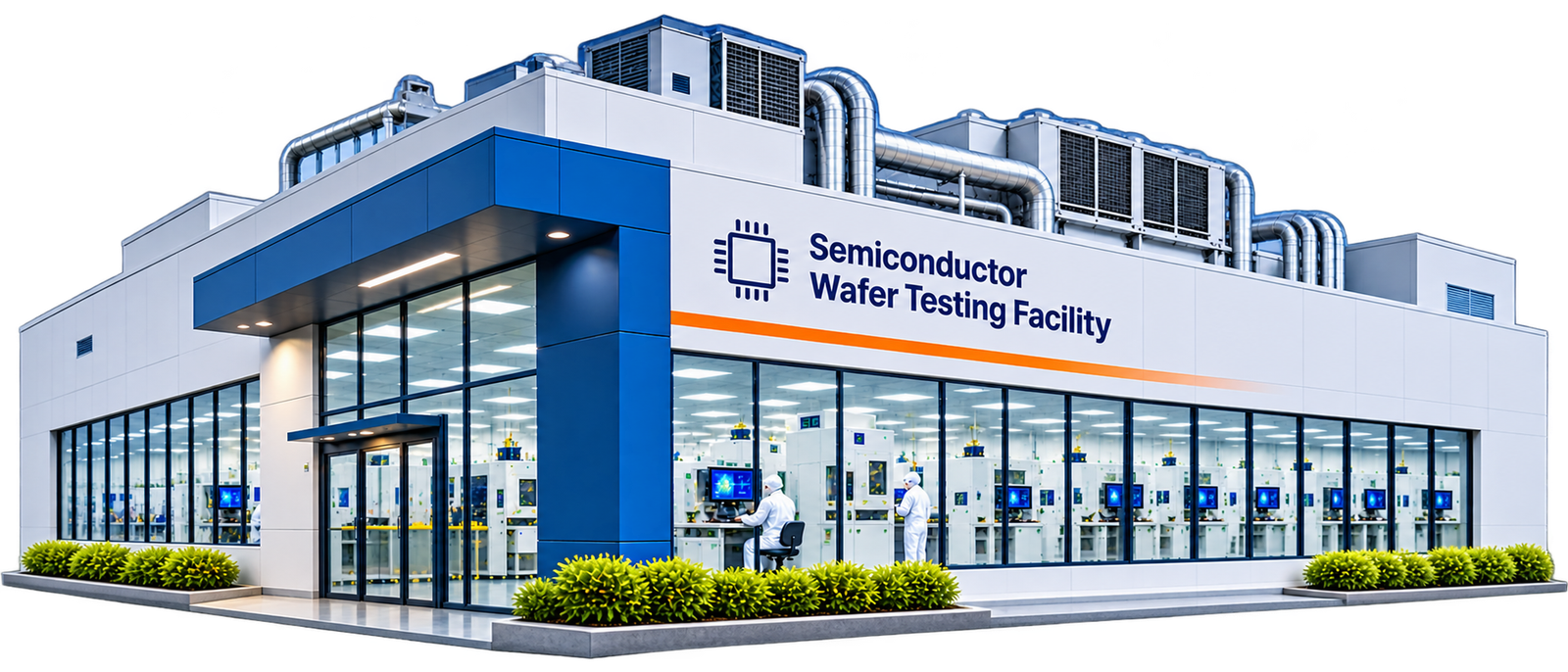
Electric eVTOL & Aerospace Battery Rigs
High-altitude thermal vacuum cycling and burst-current discharge validation for urban air mobility.

Why VEST Solutions
Why Choose VEST Solutions?
Certified LabVIEW Architects and Hardware Integration Specialists delivering zero-defect deterministic automation.
Deep experience with 400V and 800V automotive EV battery architectures
Combined mastery of high-power electrical engineering and certified NI software
Uncompromising safety engineering: hardware interlocks guaranteed < 2ms
Regenerative design reducing factory electrical operating costs by up to 90%

Native CAN-FD and automotive Ethernet protocol decoding capability
In-house electrical control cabinet assembly and high-voltage wiring
100% open source software delivery with no proprietary runtime restrictions
Complete integration with third-party thermal chambers and chillers
Engineering Truth: Safety Is Not A Software Feature
When cycling an 800V / 100 kWh battery pack, a software glitch or Windows operating system update must never have the power to cause a thermal runaway event.
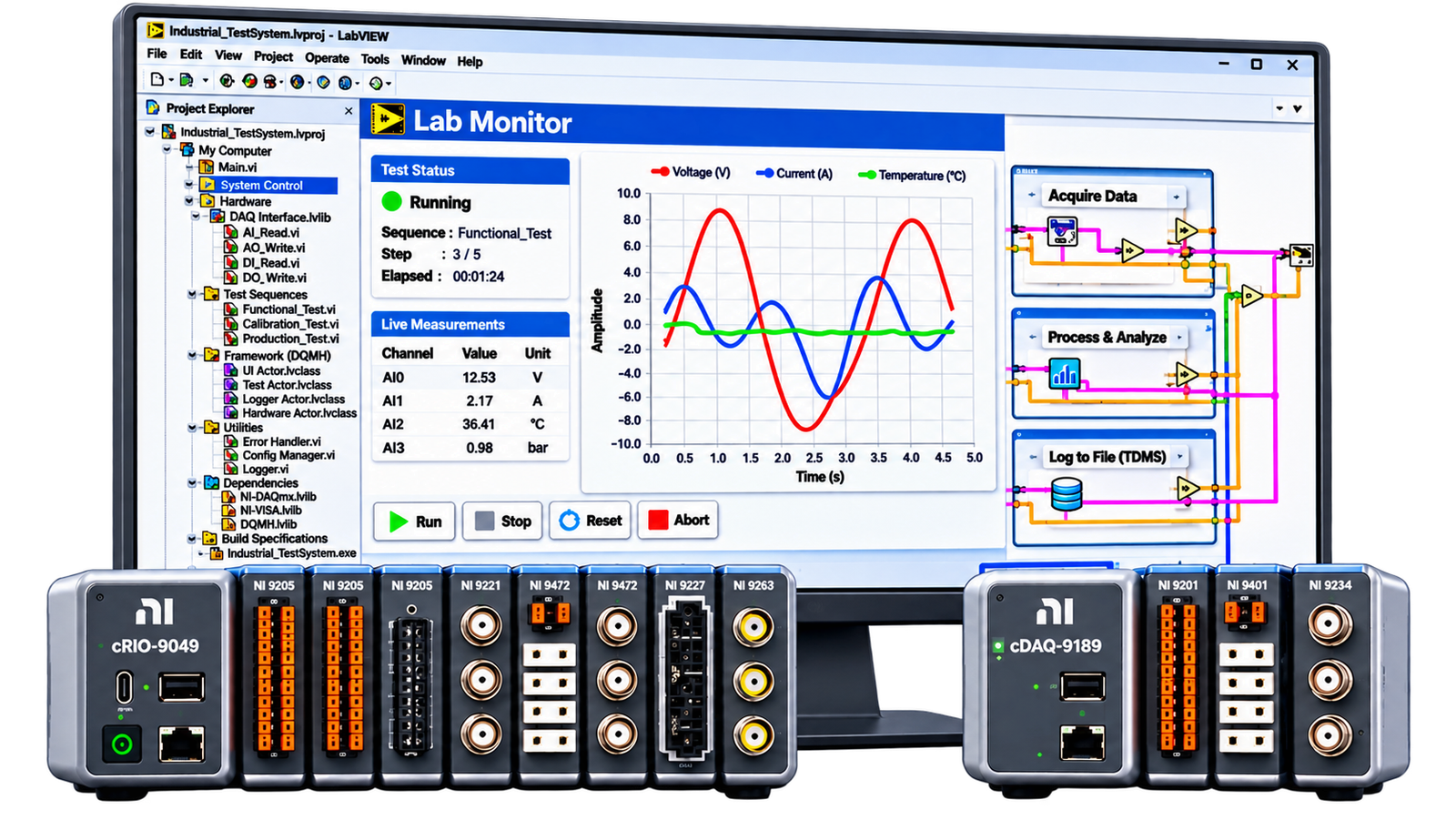
What must run on dedicated hardware interlocks
- Emergency stop buttons and enclosure door safety interlocks
- Over-temperature contactor disconnect circuits
- High-voltage isolation breakdown and ground fault detection
- Smoke, gas, and fire suppression system trip lines
What the PC / LabVIEW software should control
- Dynamic charge/discharge profile sequencing and ramp rates
- BMS CAN-FD communication queries and DTC fault logging
- Chamber and chiller temperature setpoint ramping
- High-density data logging, impedance calculations, and PDF reporting
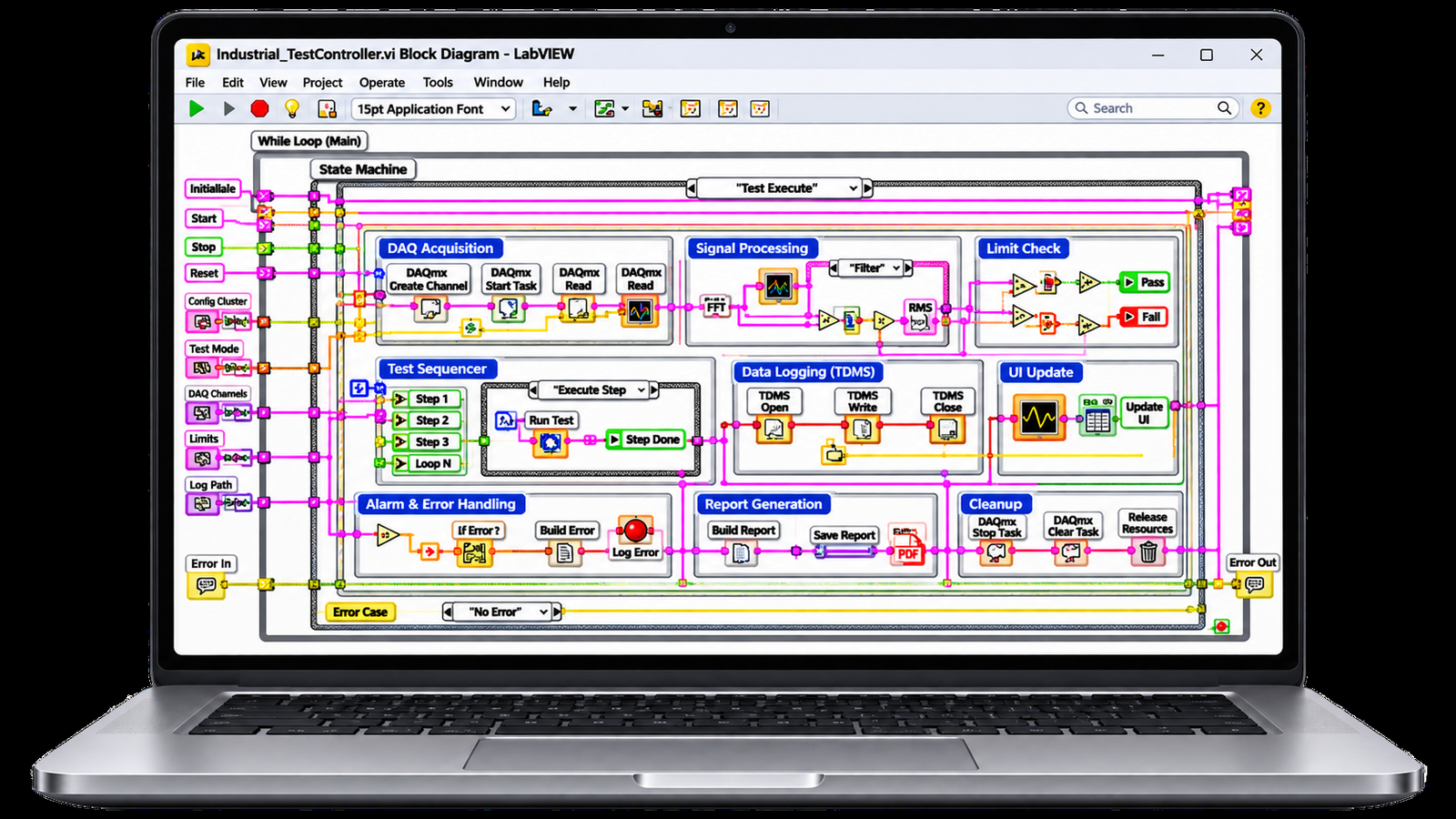
Costly EV Battery Testing Mistakes
Architectural pitfalls that turn scalable test systems into unmaintainable legacy technical debt.
Using non-isolated DAQ channels
Connecting standard DAQ channels to high-voltage battery stacks creates catastrophic short circuits. We mandate 1000V channel-to-channel galvanic isolation.
Neglecting cable inductance during fast pulses
Long power cables generate massive inductive voltage spikes during high-current pulsing, damaging cyclers. We engineer low-inductance busbar connections.
Omitting liquid chiller synchronization
Applying high-current discharge without active chiller regulation causes localized hot spots that destroy test cells. We link thermal flow with load profiles.
Logging all data in uncompressed text files
Streaming 256 channels at 1 kHz generates gigabytes of data that crash text editors. We stream into structured binary TDMS databases.
Relying on BMS data alone for safety
If the BMS firmware crashes, it stops reporting cell temperatures. We always install independent physical thermocouple sensors for safety verification.
Ignoring condensation during cold thermal tests
Ramping temperature from -20°C to +40°C without dew point management causes condensation and flashovers. We automate dry air purging.
Frequently Asked Questions
Answers to technical questions regarding architecture patterns, instrument drivers, FAT/SAT deployment, and full source code ownership.