LabVIEW
Application
Development
Design, develop and deploy high-performance LabVIEW applications for test, measurement and automation — from concept to production-ready systems.
- 01
LabVIEW Development
UI · Test Sequencing · Automation
- 02
Data Acquisition
NI DAQ · cDAQ · Real-Time
- 03
Instrument Control
VISA · SCPI · GPIB · Serial
- 04
System Integration
DAQ · PLC · Motion · Vision
- 05
Test Automation
Validation · Reporting · MES
Core Engineering Capabilities
Click any competency below to view certified software architecture, instrument drivers, and deterministic performance benchmarks.
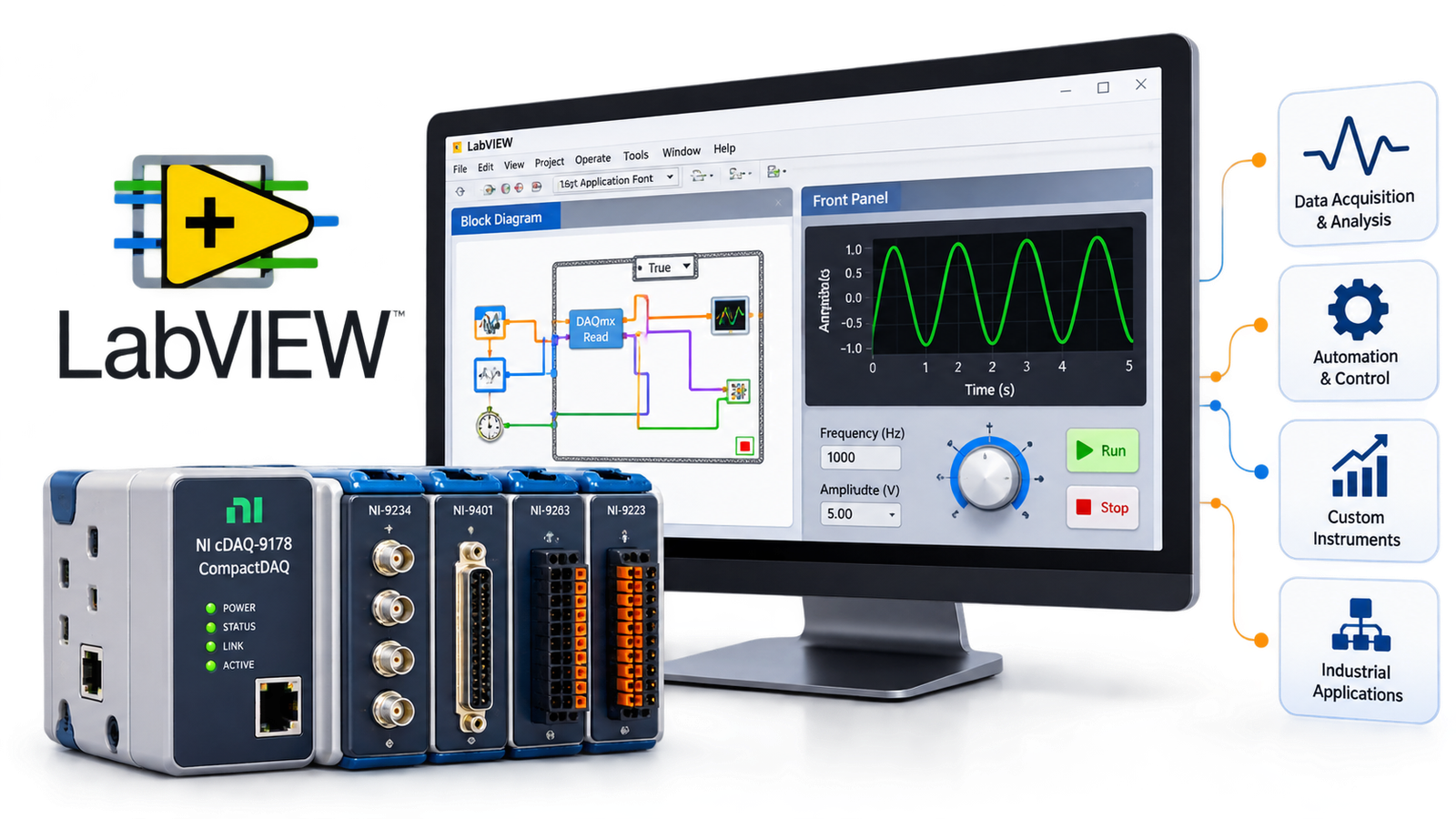
LabVIEW Application Development
Modular, scalable VIs built using Actor Framework, DQMH, and industry best practices for robust test execution.
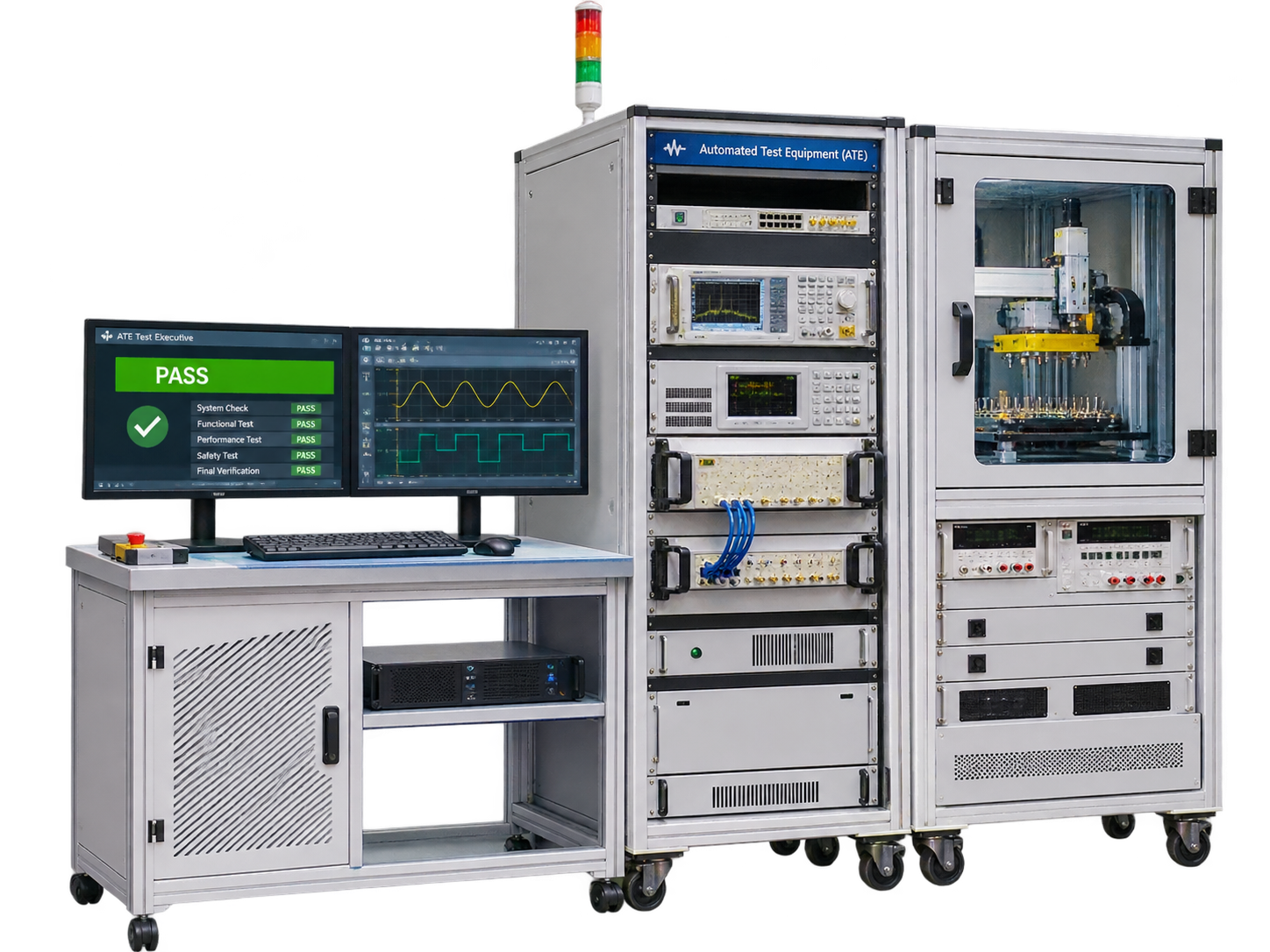
NI TestStand Architecture & Sequencing
Industry-standard test executive frameworks for automated sequencing, parallel multi-UUT testing, and automated SQL reporting.
.png)
Automated Test Systems
High-speed functional test benches, End-of-Line (EOL) testing, and automated test executive workflows.
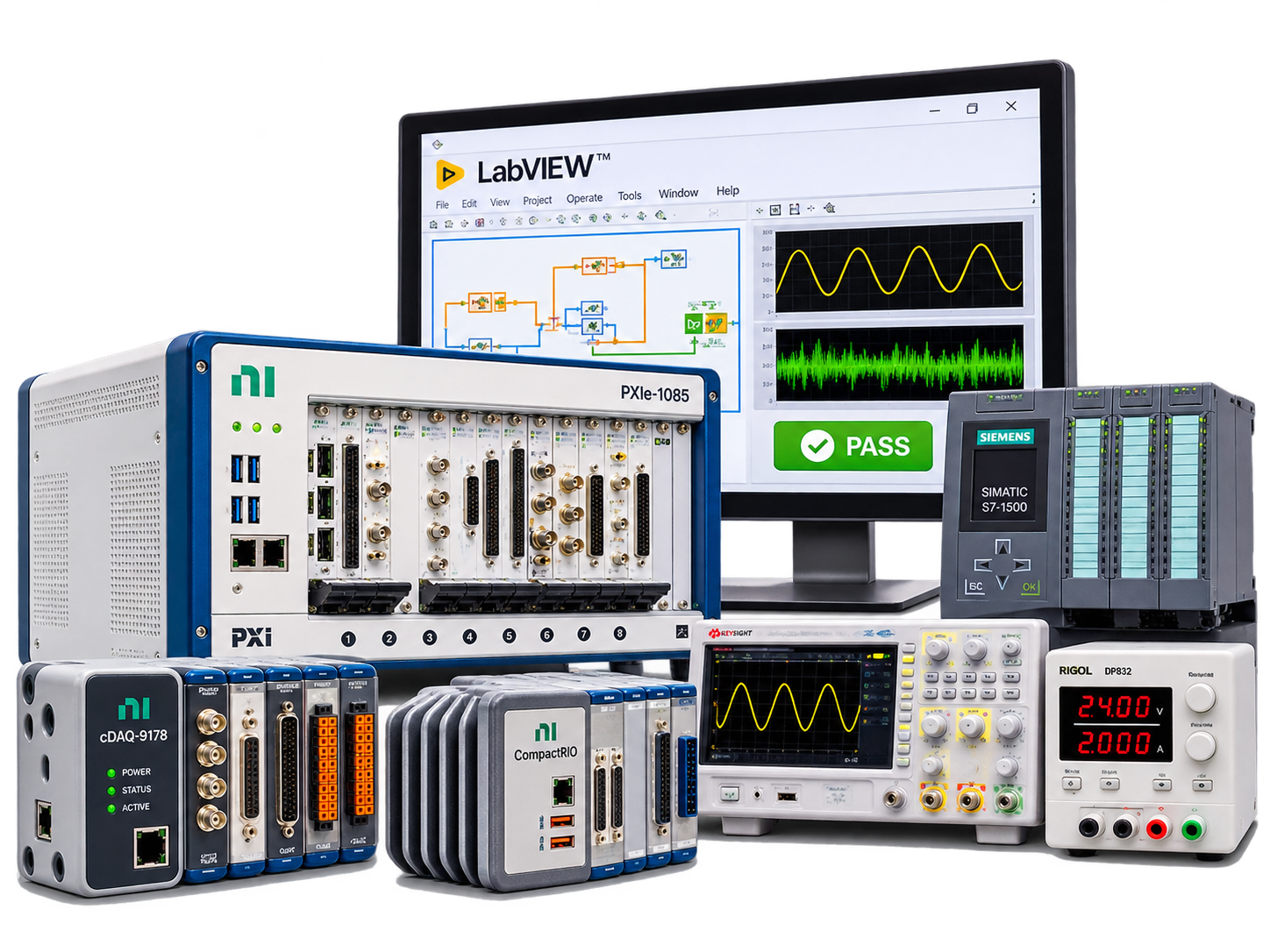
Hardware & Instrument Integration
Seamless interfacing with NI PXI, CompactDAQ, CompactRIO, PLCs, and third-party laboratory instruments.
.png)
Industrial Automation
Robust control systems, SCADA connectivity, PLC communication, and pneumatic or robotic testing cells.
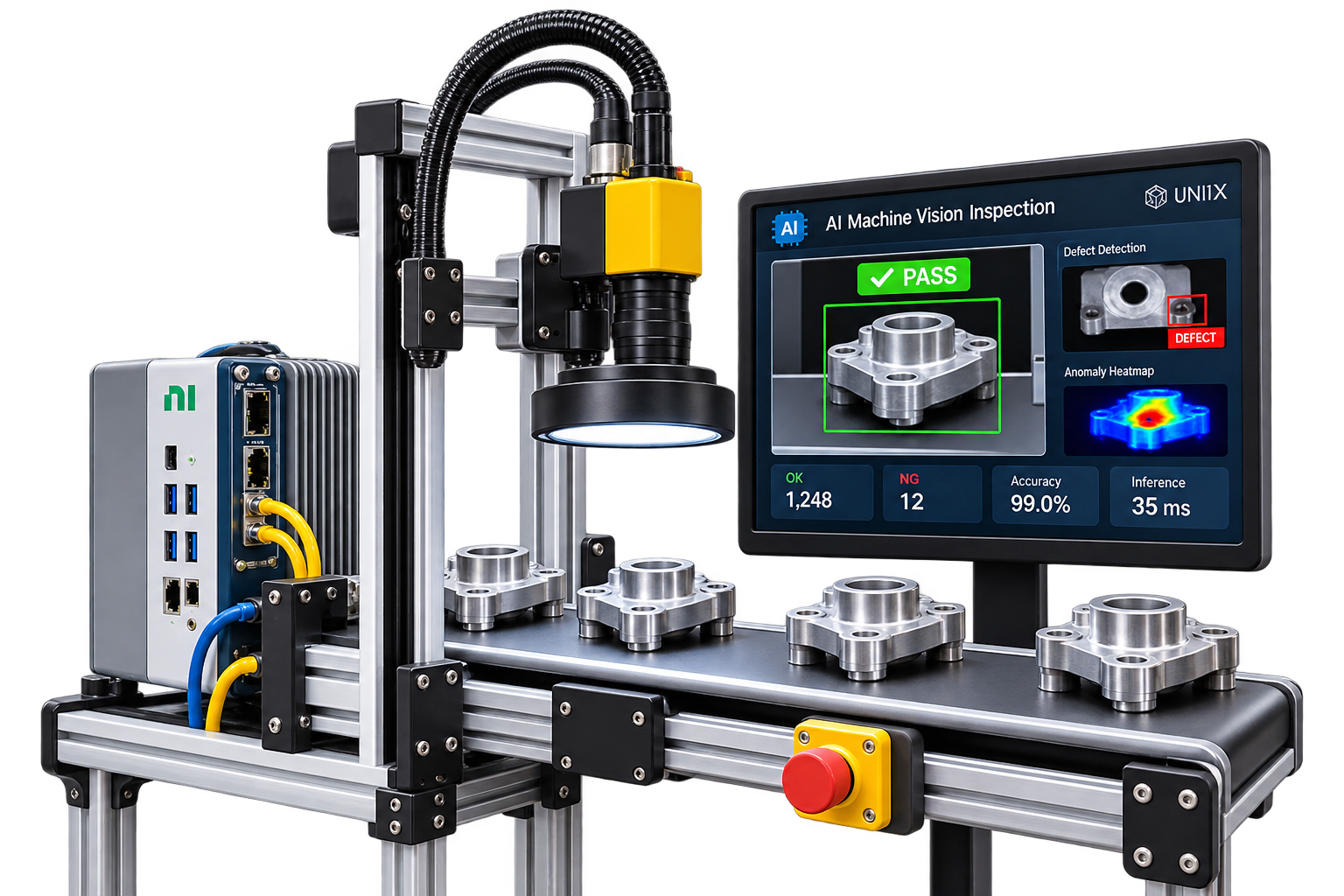
AI Machine Vision & Smart Testing
Automated defect inspection, predictive maintenance, and intelligent anomaly detection powered by ONNX.
.png)
Legacy Code Refactoring & Migration
Modernizing monolithic or obsolete LabVIEW codebases into clean, modular, maintainable architectures.
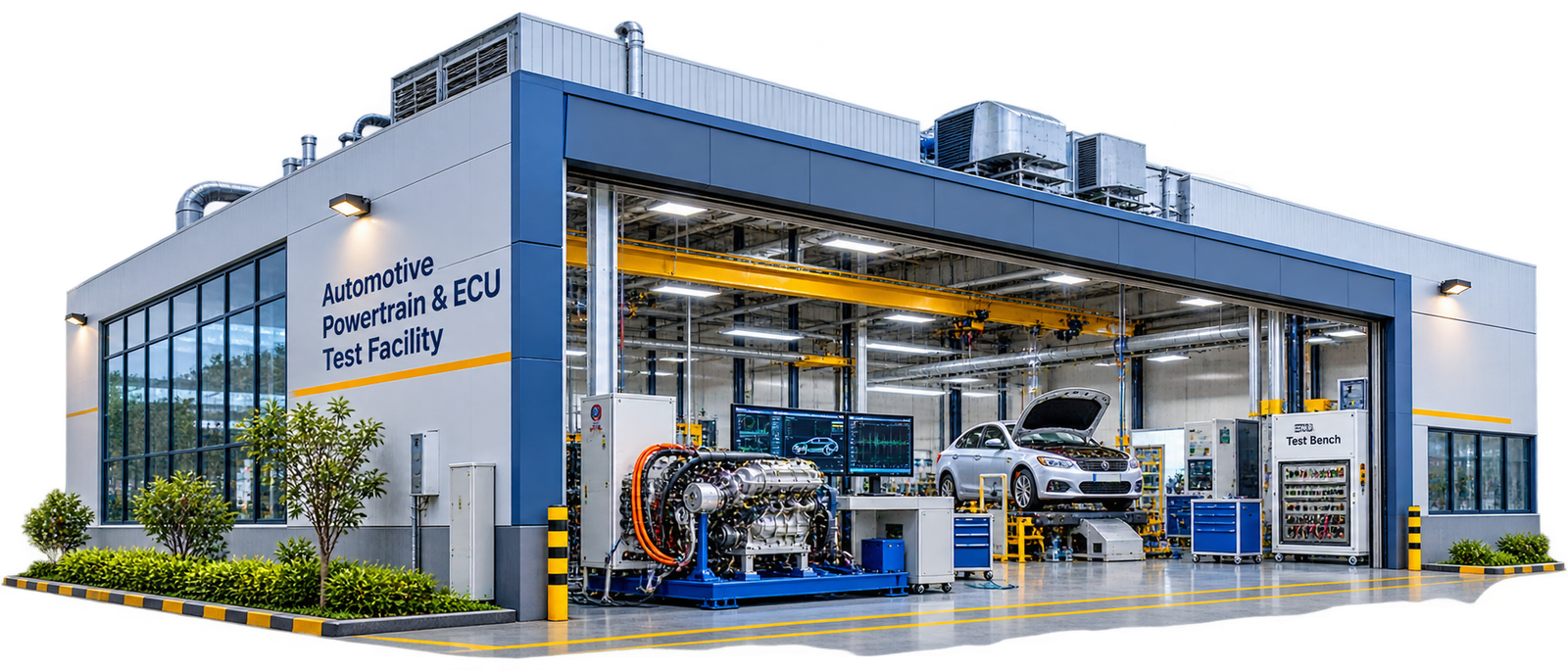
Hardware-in-the-Loop (HIL) Simulators
Validate mission-critical ECUs, flight computers, and control units using microsecond FPGA plant models and automated fault insertion.
Why Choose LabVIEW?
Engineering Intelligence. Advanced Automation. Precision Testing.
Beyond Conventional Programming – A Complete Engineering Ecosystem
In today's rapidly evolving industrial landscape, engineering teams require more than conventional programming tools. They need an integrated environment capable of connecting physical systems, acquiring high-speed measurements, executing complex test sequences, processing engineering data, and delivering actionable insights.
NI LabVIEW (Laboratory Virtual Instrument Engineering Workbench) provides a flexible graphical programming and system development environment for building sophisticated test, measurement, control, and automation applications.
From individual sensor measurements to distributed automated test facilities, LabVIEW enables engineers to design, integrate, deploy, and maintain application-specific engineering solutions.
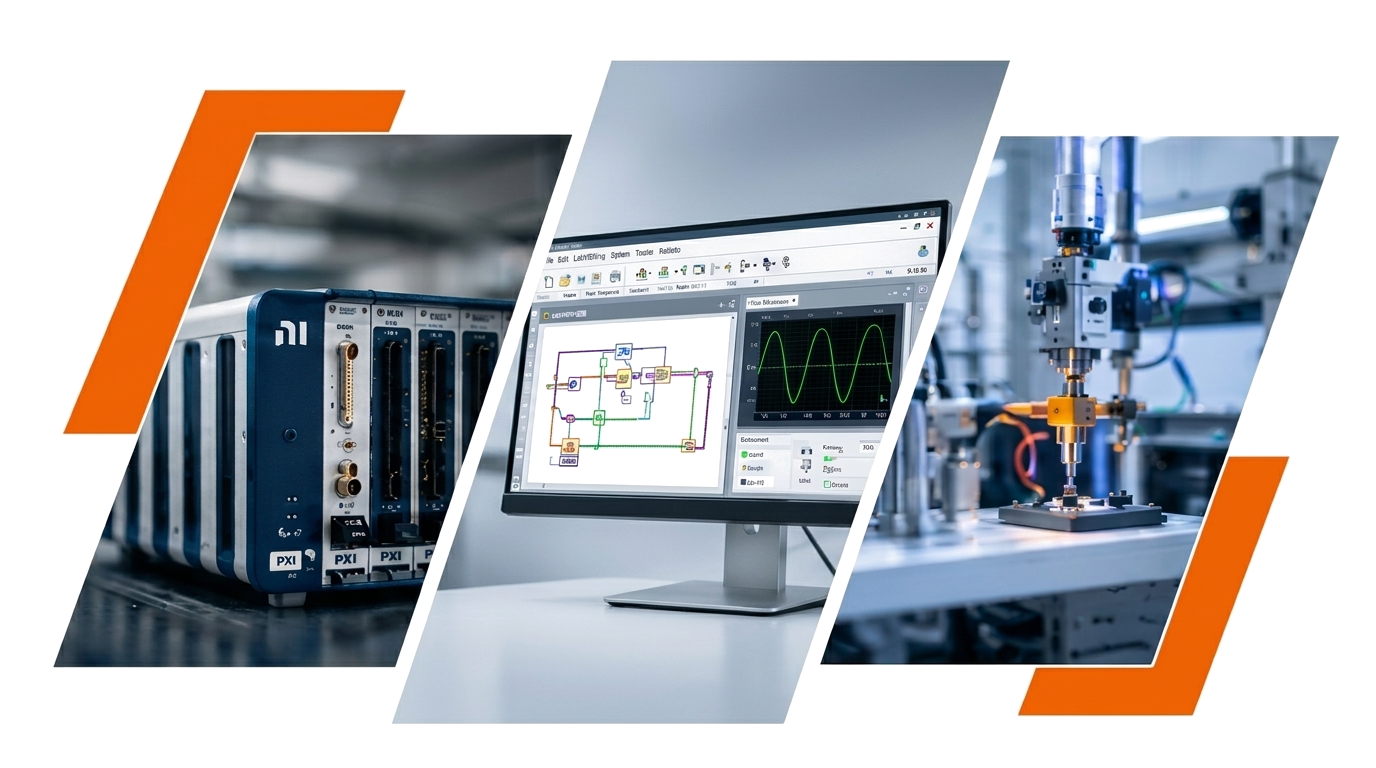
Comprehensive LabVIEW Engineering Services
From data acquisition and control to automated testing and system validation.
01. Advanced Test System Architecture
Develop customized test architectures that integrate hardware, software, instrumentation, signal acquisition, test execution, and result management.
02. High-Performance Data Acquisition & Instrumentation
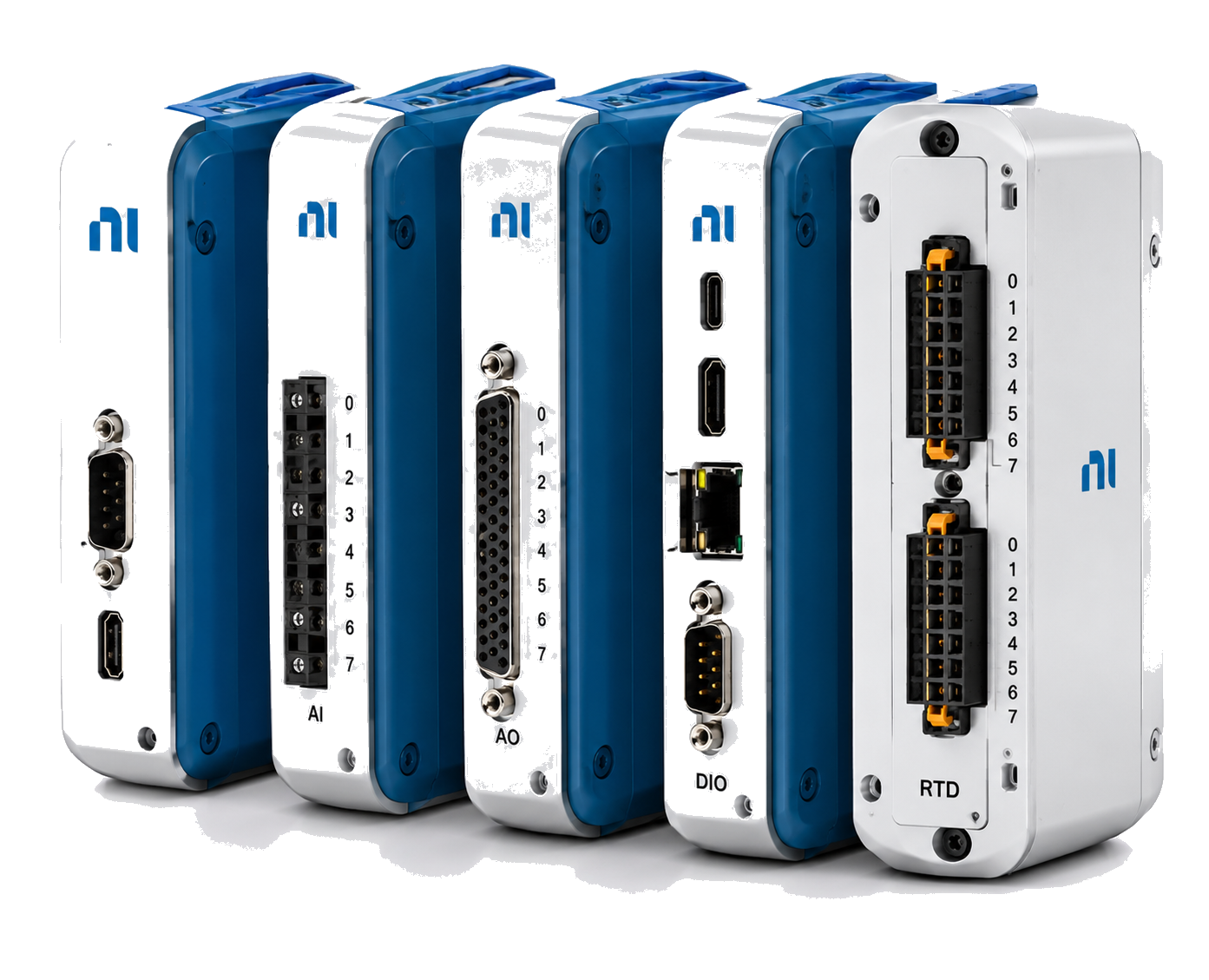
Transform physical measurements into meaningful engineering information through advanced data acquisition.
03. PXI, CompactDAQ & CompactRIO Integration
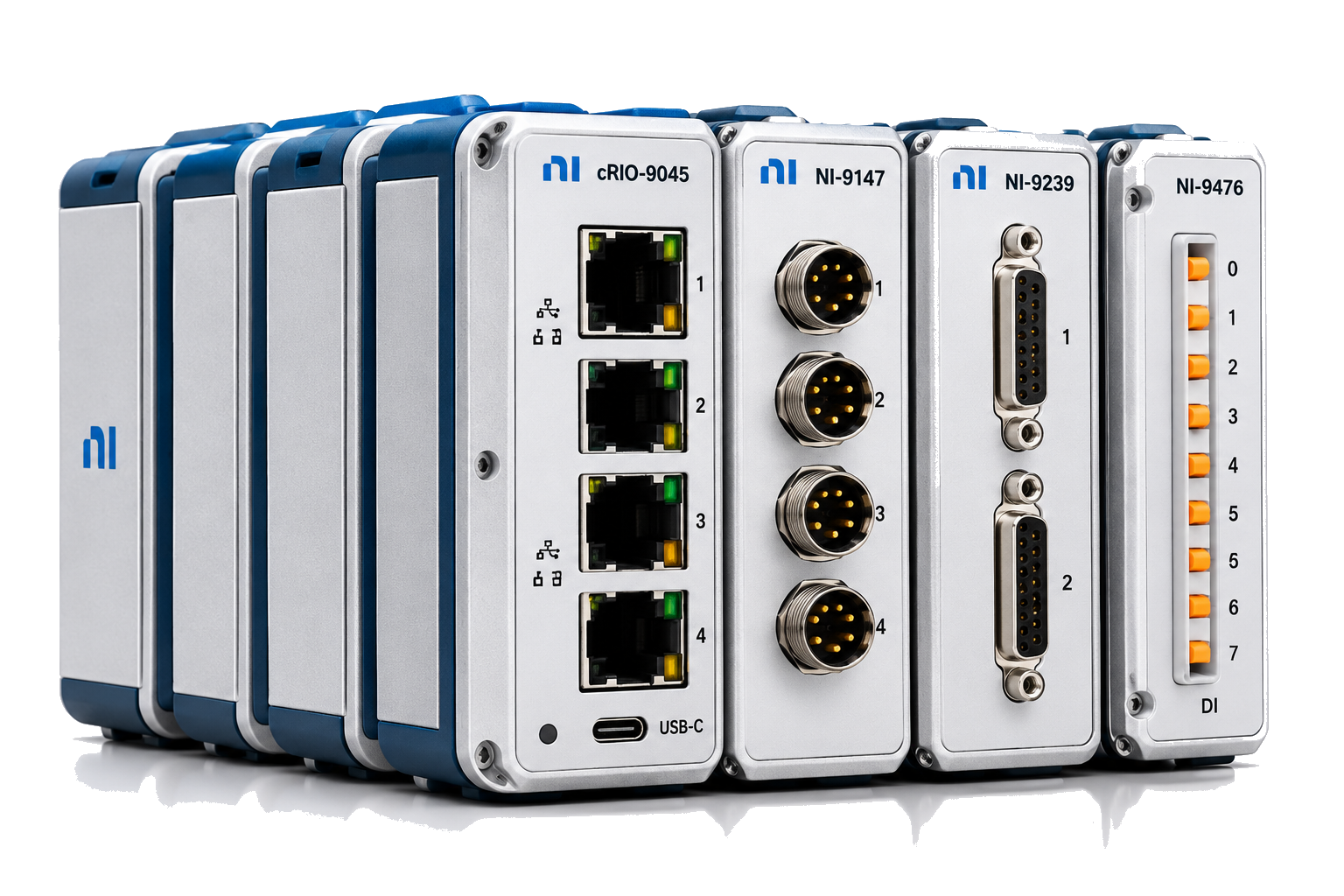
Build advanced measurement and automation systems using modular hardware platforms.
04. Real-Time Control & FPGA-Based Applications
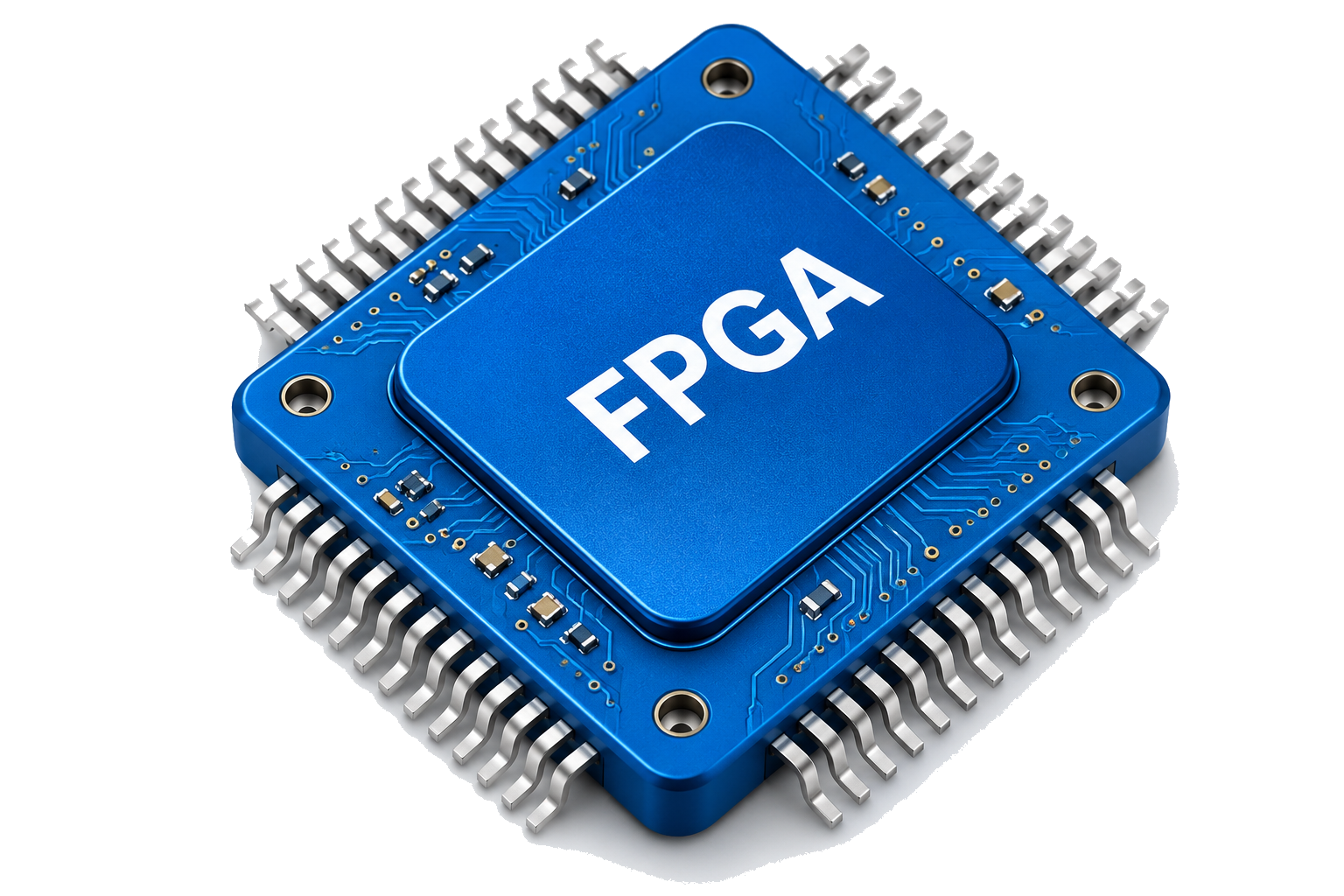
Develop deterministic control and monitoring applications for demanding environments.
05. Automated Test Equipment (ATE) & TestStand
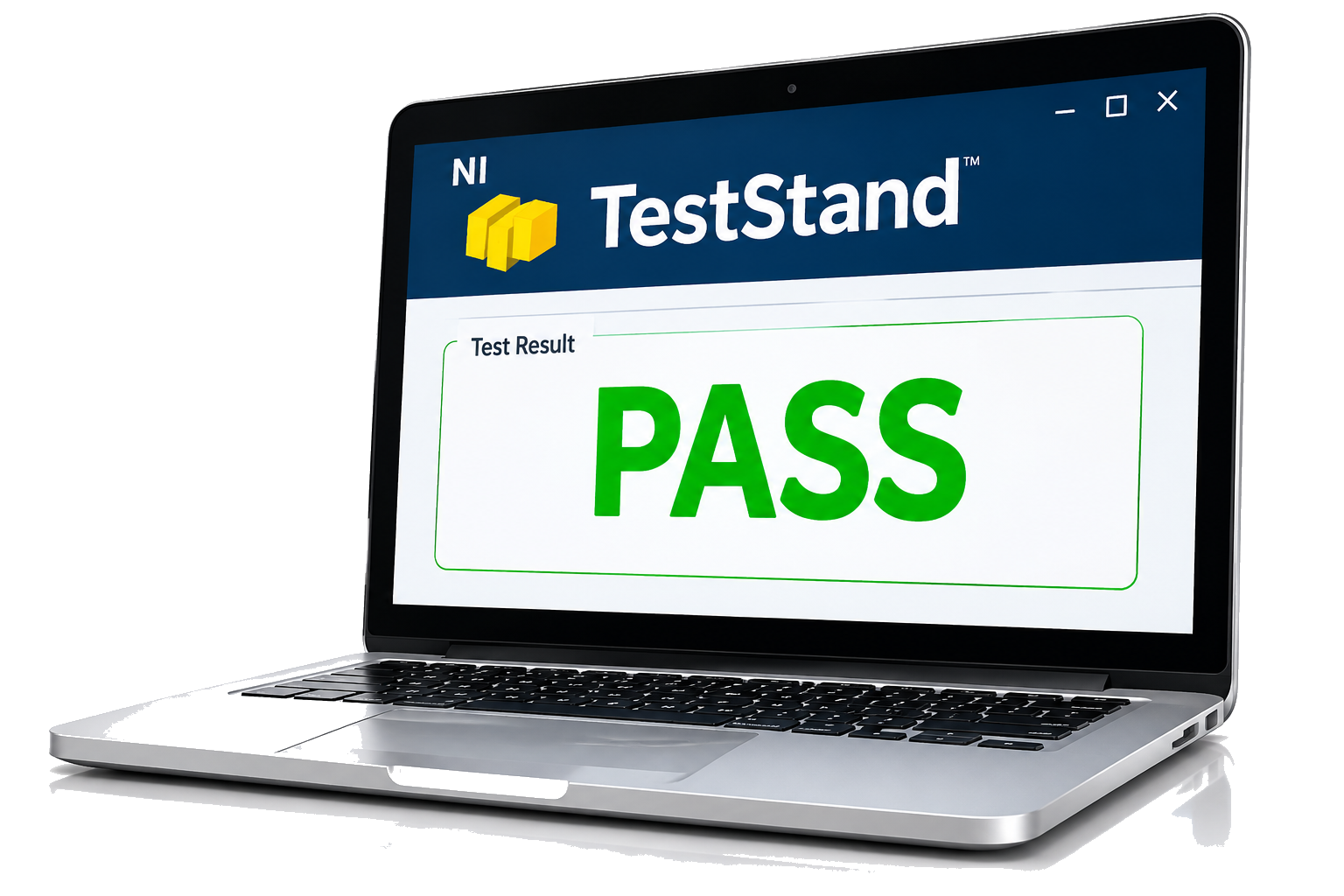
Create repeatable, scalable, and production-ready automated testing environments.
06. Advanced Signal Processing & Engineering Analytics
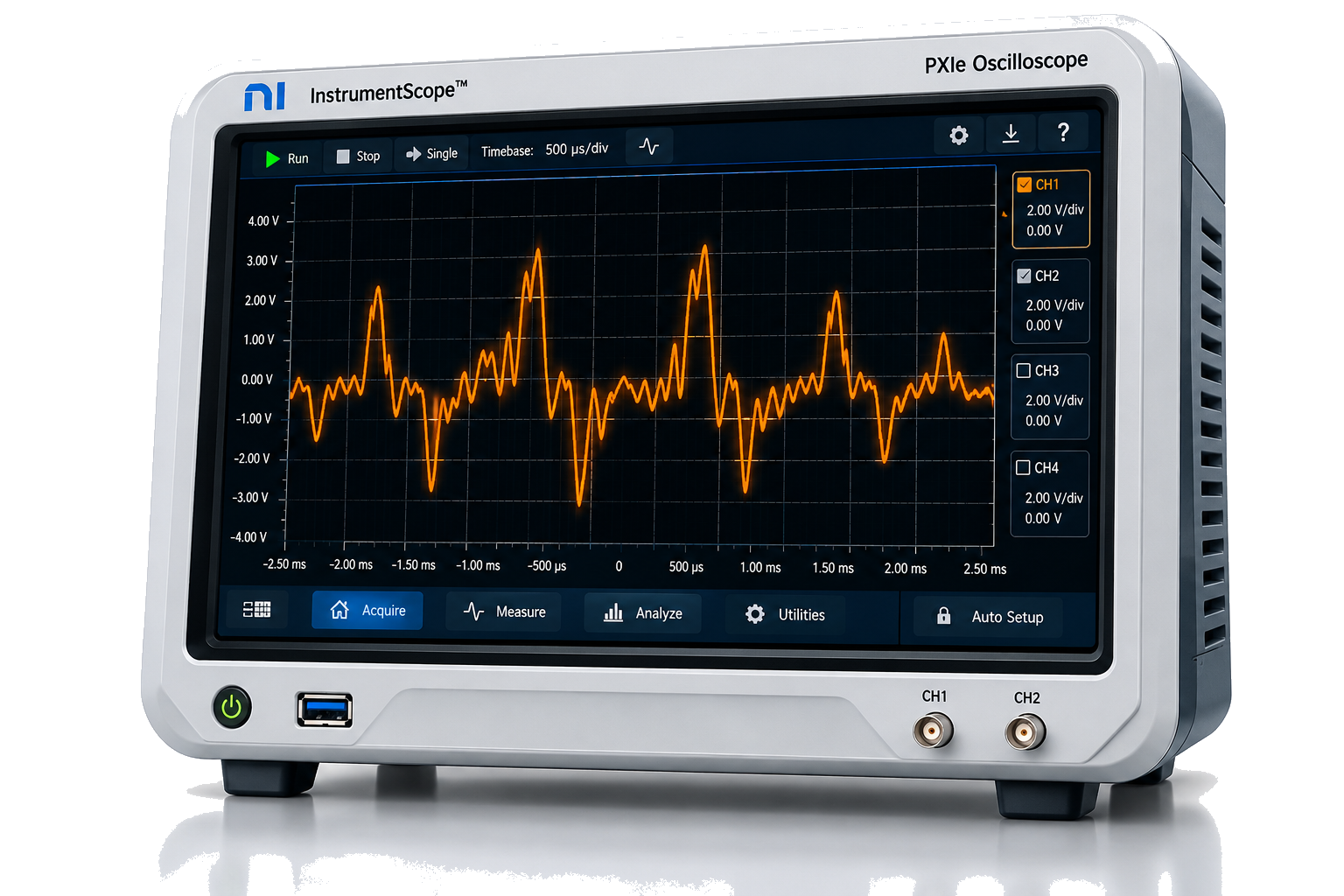
Convert raw measurement signals into engineering intelligence using advanced analysis and processing.
07. Industrial Communication & System Integration
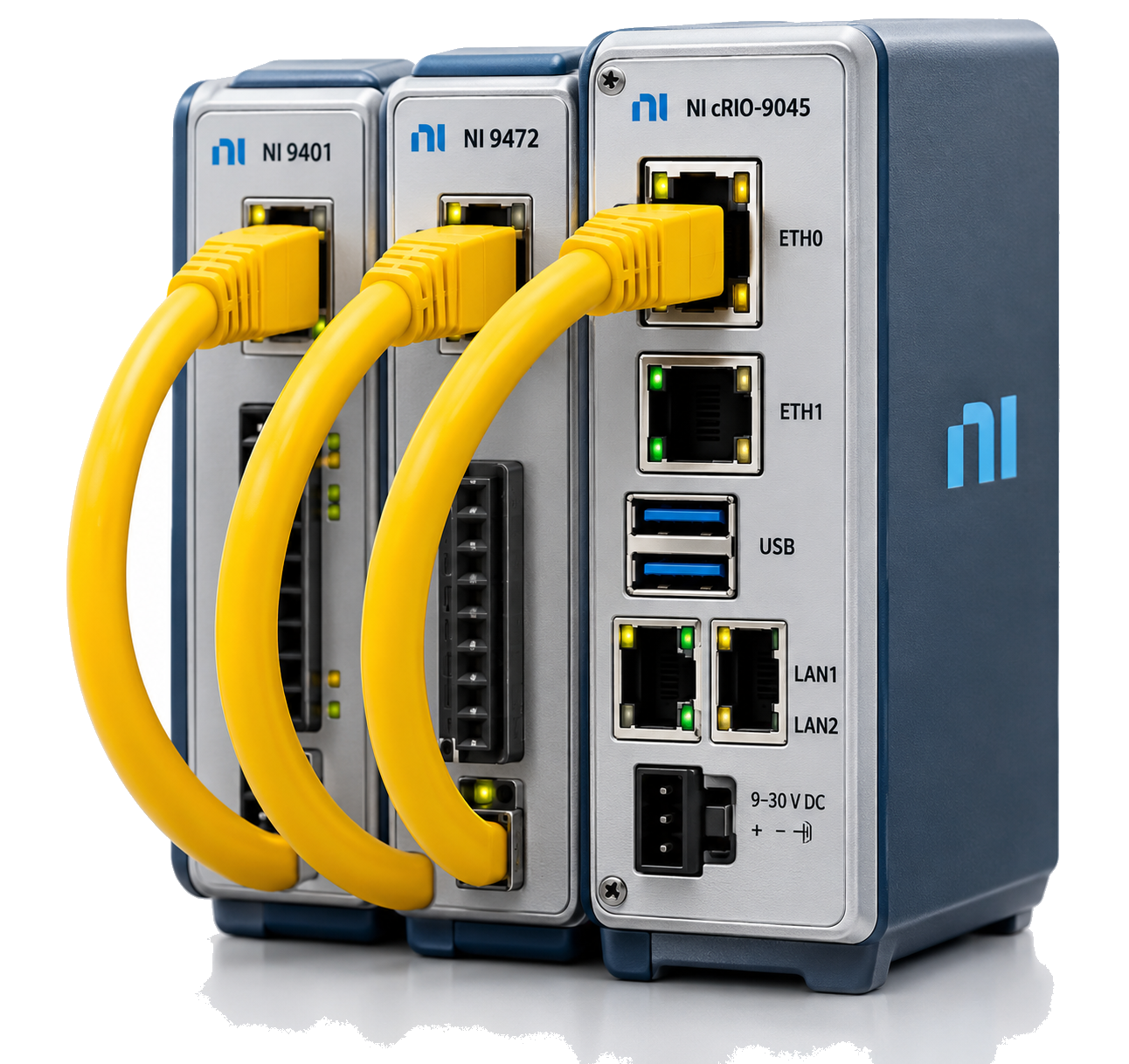
Connect diverse industrial devices, controllers, instruments, and engineering software through suitable communication interfaces.
08. Database, Traceability & Smart Reporting
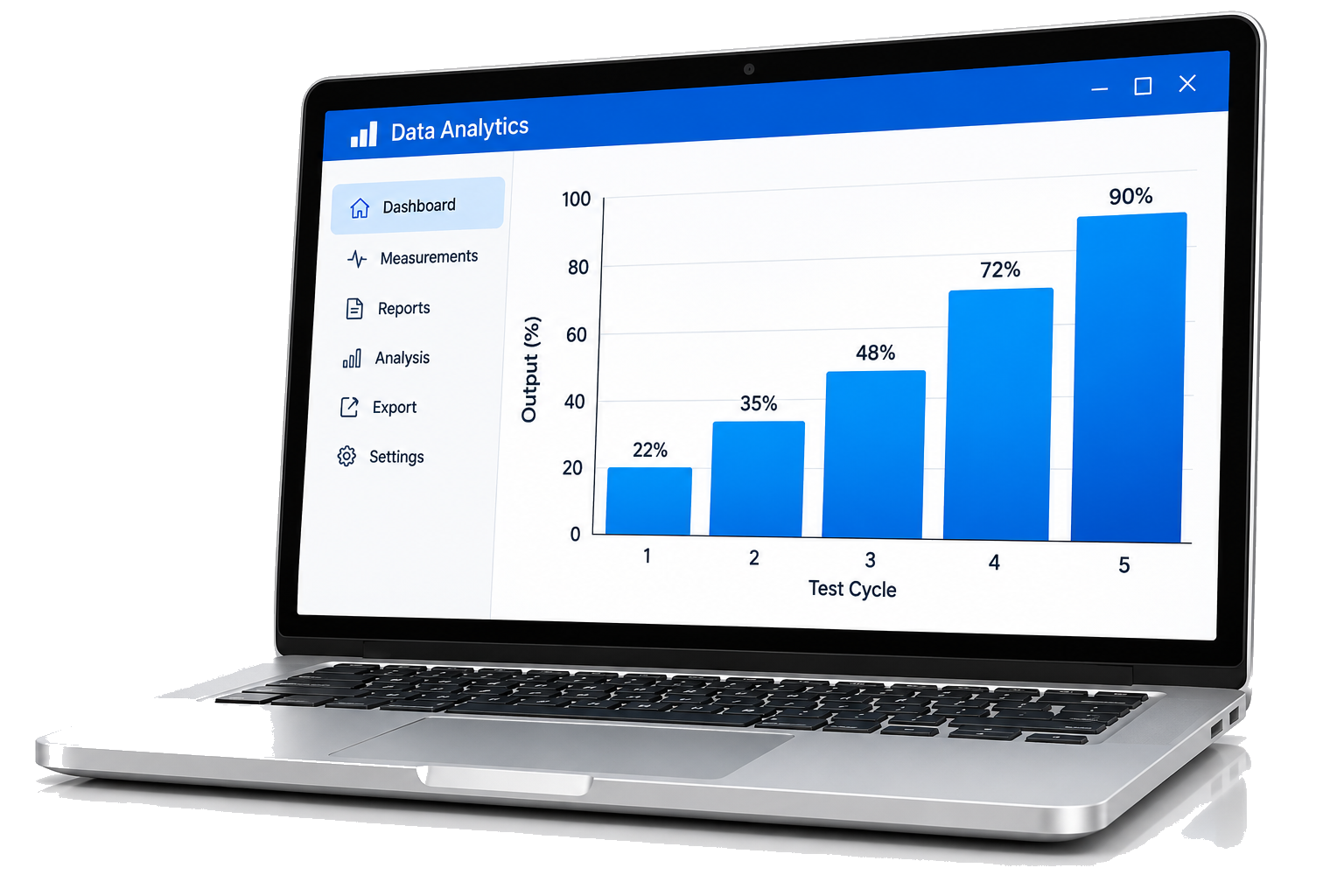
Build structured data management solutions that preserve measurement history and provide reliable access.
09. Hardware-in-the-Loop (HIL) & System Validation
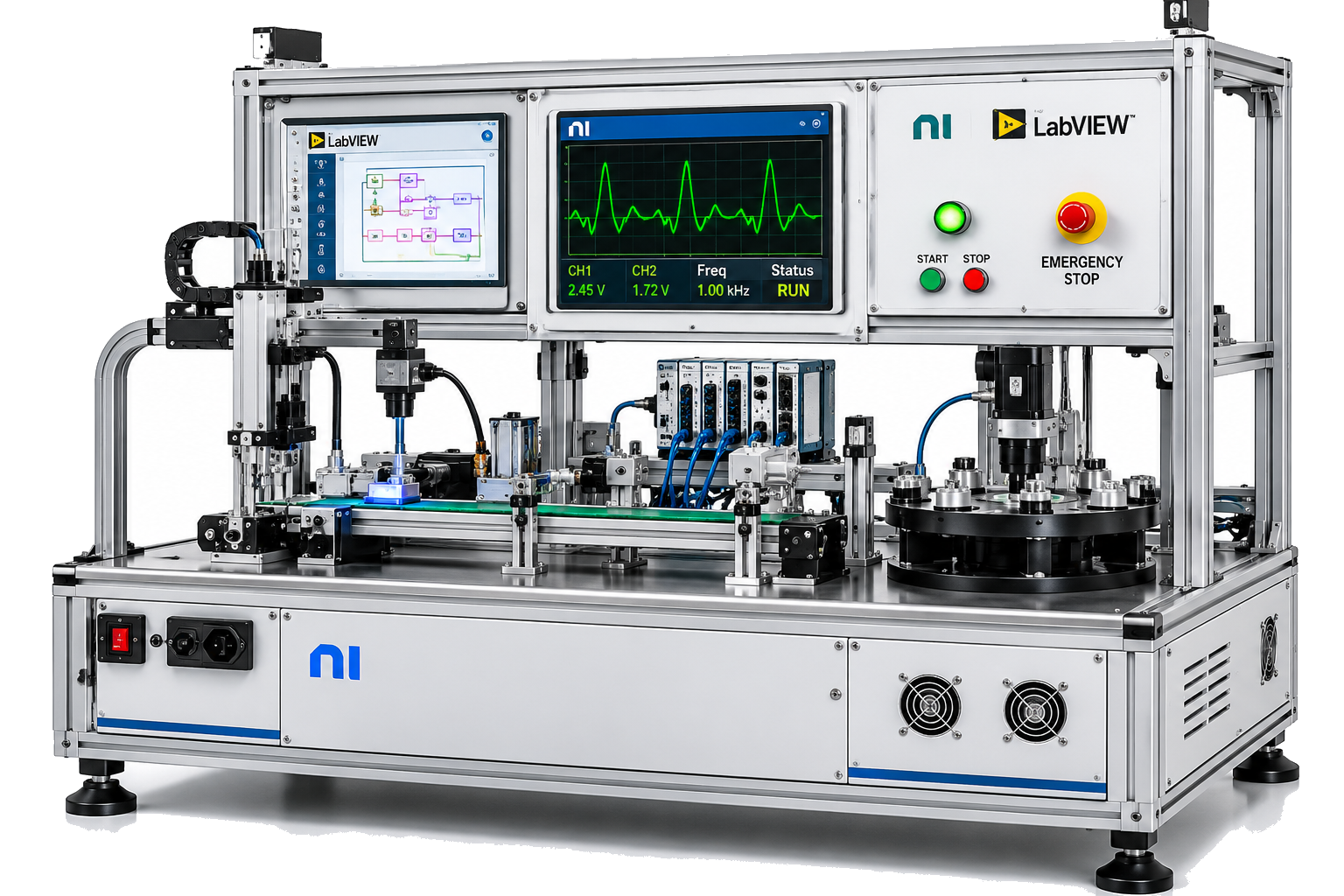
Validate embedded controllers and complex systems using simulation-based testing and hardware integration.
Why Architecture Matters: The Risks of Unstructured LabVIEW Code
Developing LabVIEW applications without proper architecture, modular design, or structured logic (often leading to monolithic or “spaghetti” code) introduces severe technical vulnerabilities. Here is what happens when code lacks professional structure:
Spaghetti Code & Monolithic Coupling
When block diagrams are entangled without modular subVIs or clean data flow, tracing errors becomes extremely difficult. Future modifications or adding features frequently breaks existing functionalities.
Race Conditions & Thread Collisions
Running multiple parallel while loops without proper data synchronization (such as Queues, Notifiers, or Semaphores) causes unpredictable execution orders, leading to data loss and erratic hardware control.
Memory Leaks & System Crashes
In continuous testing environments, poor error handling, unclosed references, and inefficient shift register management cause RAM usage to grow uncontrollably, leading to crashes during long test runs.
User Interface (UI) Freezing
Performing heavy data processing, file logging (TDMS/SQL), or intensive computations directly on the UI thread causes front panels to freeze, making buttons unresponsive and ruining operator experience.
Hardware Sync & Latency Issues
Interfacing with high-speed hardware (PXI, CompactRIO, DAQ, PLCs) without deterministic timing loops and proper driver configuration introduces severe latency, jitter, and inaccurate signal sampling.
Lack of Scalability
Monolithic code cannot easily scale. Adding new sensors, expanding channel counts, or integrating new test sequences requires rewriting major portions of the application from scratch.
Core Engineering Solutions for High-Precision Applications
Targeted, turnkey test automation, automated EOL validation, and industrial control architectures engineered for deterministic performance, high throughput, and mission-critical reliability.
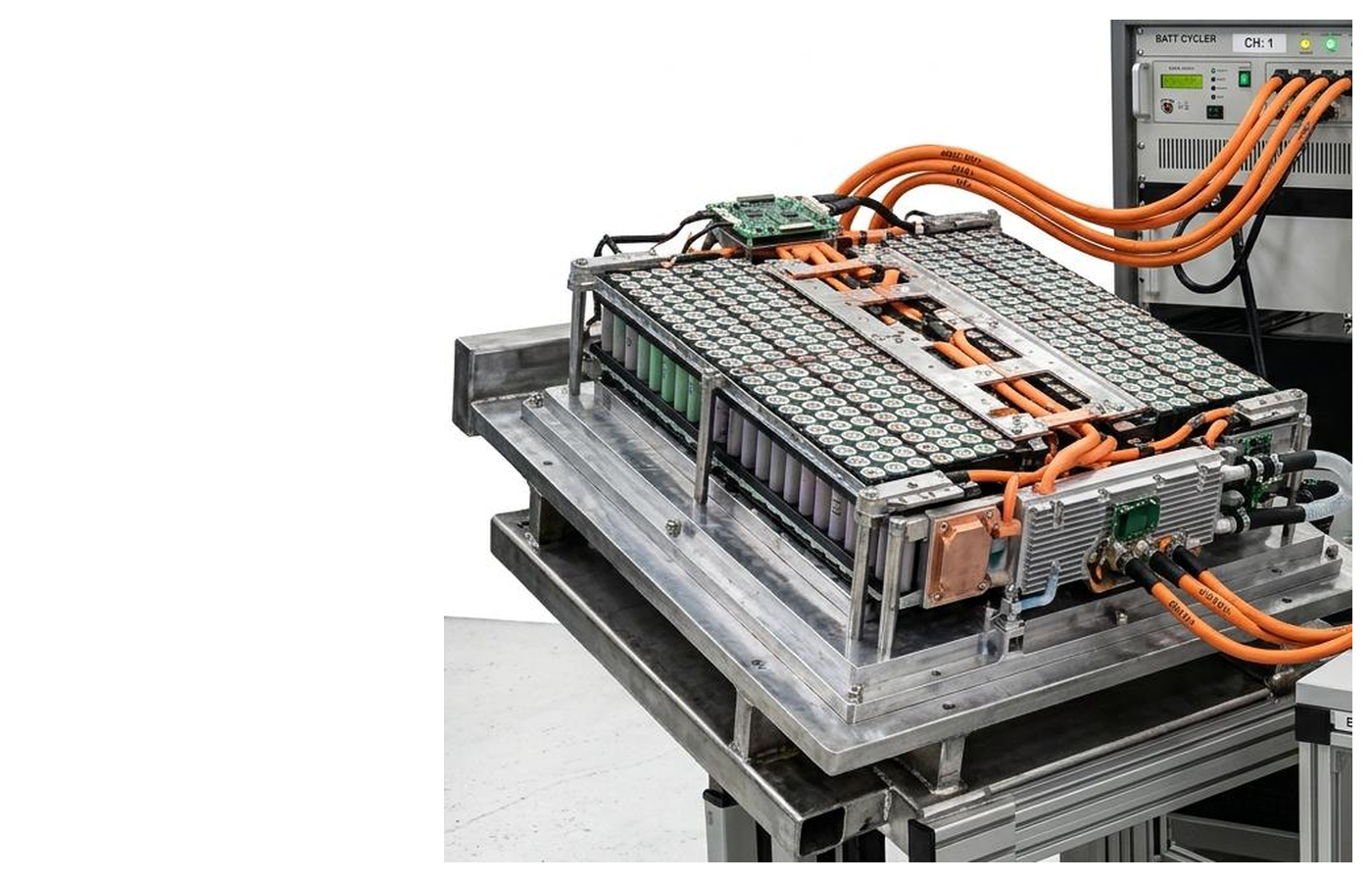
EV & Battery Test Benches
High-voltage battery cycling, thermal chamber control, and BMS communication validation test rigs designed with strict safety interlocks and deterministic data logging.
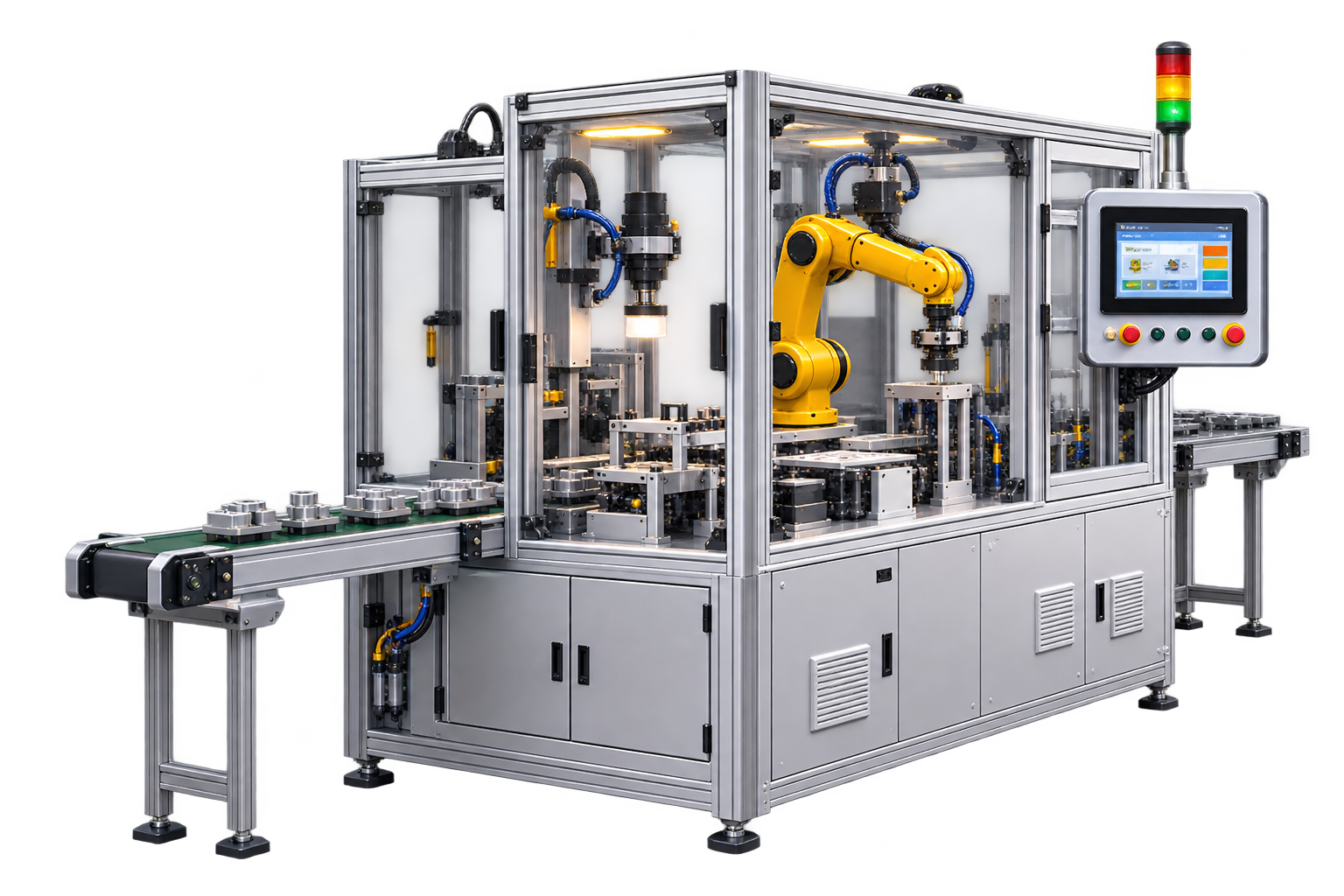
Automated End-of-Line (EOL) Testing
Turnkey manufacturing test stations integrating pneumatic fixtures, barcode scanners, electrical probes, and acoustic validation to ensure 100% product compliance.
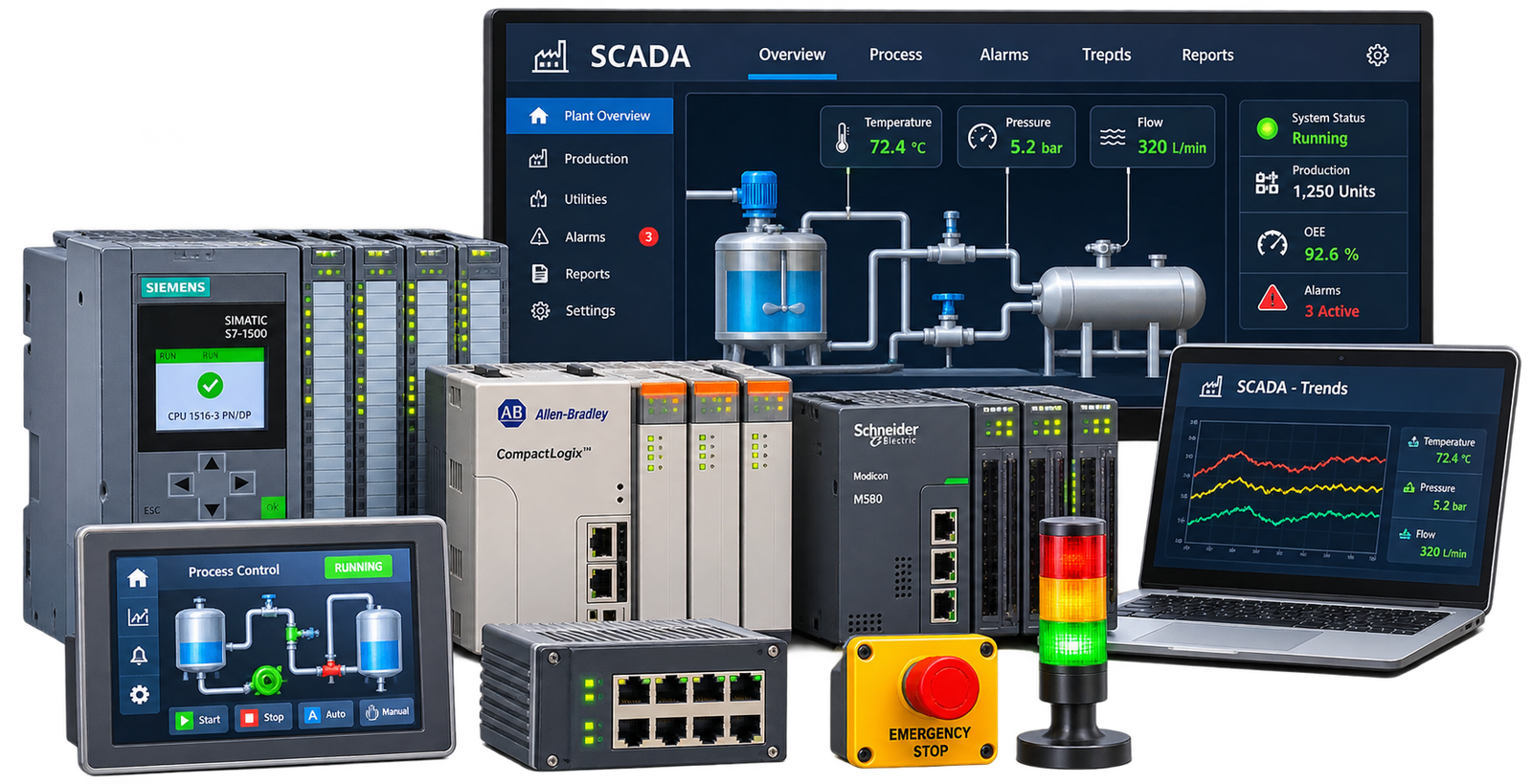
PLC & Industrial SCADA Integration
Bridging LabVIEW applications with industrial PLCs (Siemens, Allen-Bradley) via OPC UA, Modbus, and Ethernet/IP to provide intuitive plant-floor control dashboards.
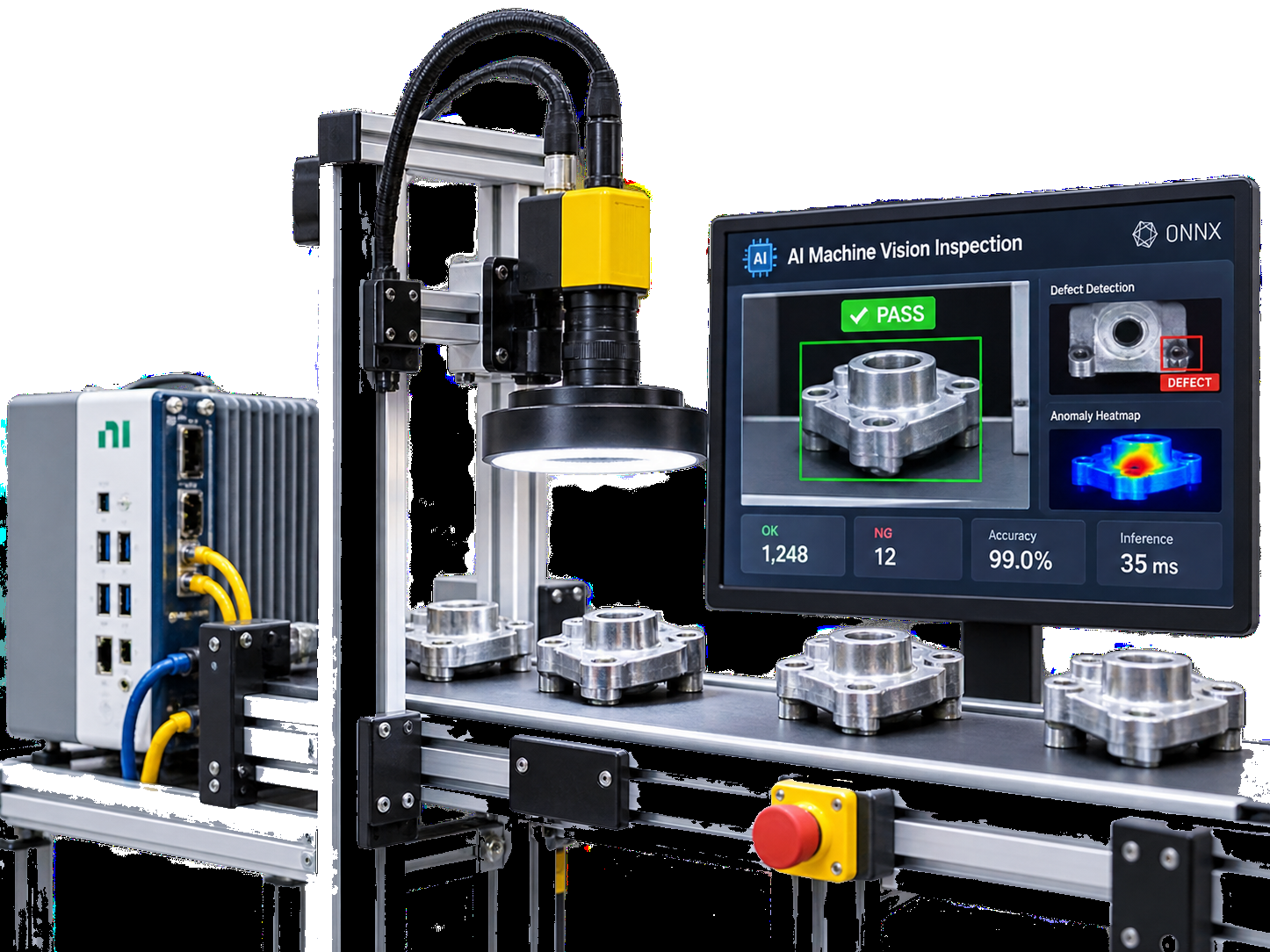
AI Machine Vision & AOI Systems
High-speed optical inspection for part presence, dimensional verification, surface defect classification, and OCR barcode reading using NI Vision and deep learning models.
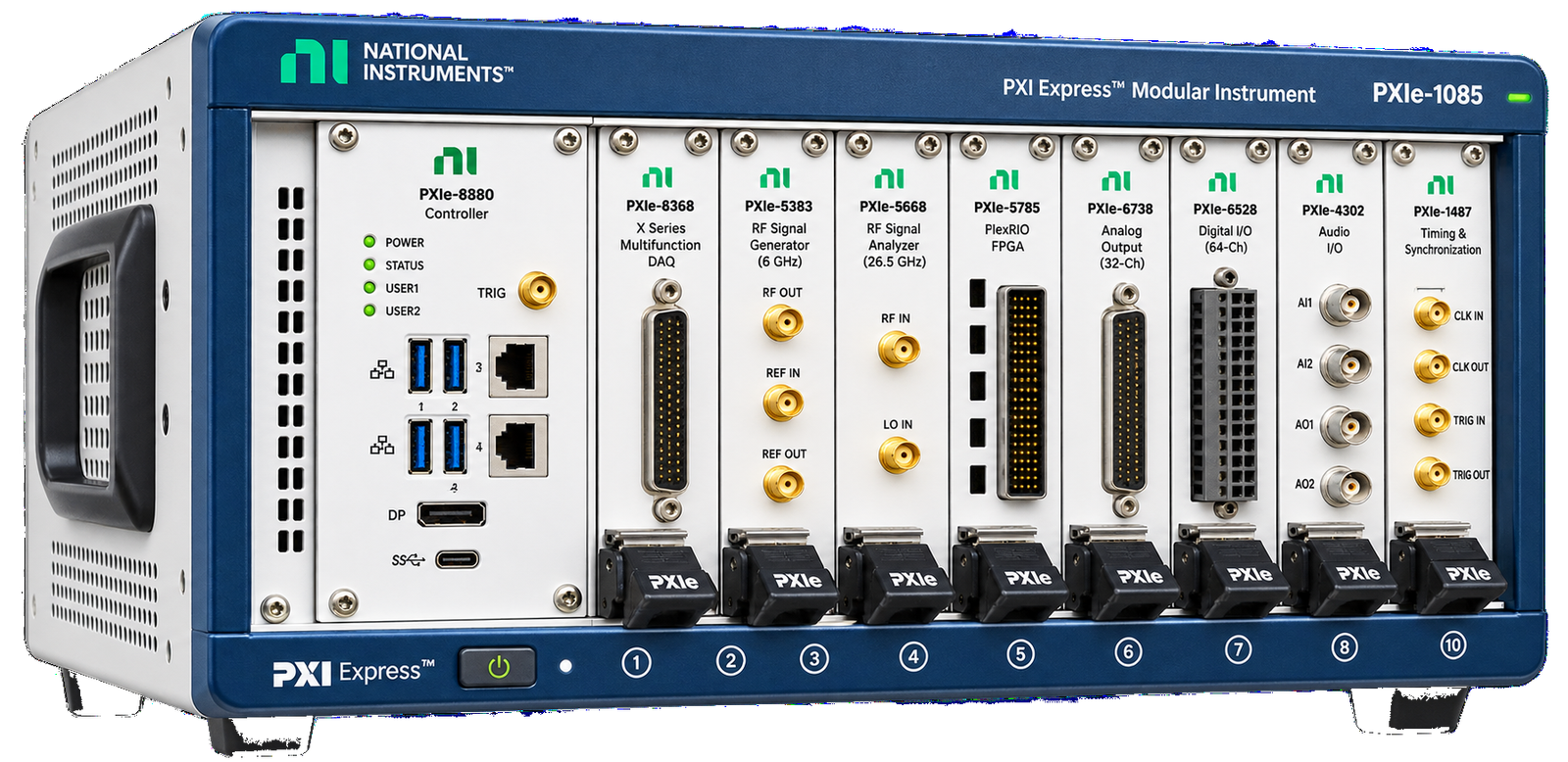
Hardware-in-the-Loop (HIL) Simulators
Simulating complex physical systems in real time using NI PXI and FPGA hardware to validate embedded control units (ECUs) prior to field integration.
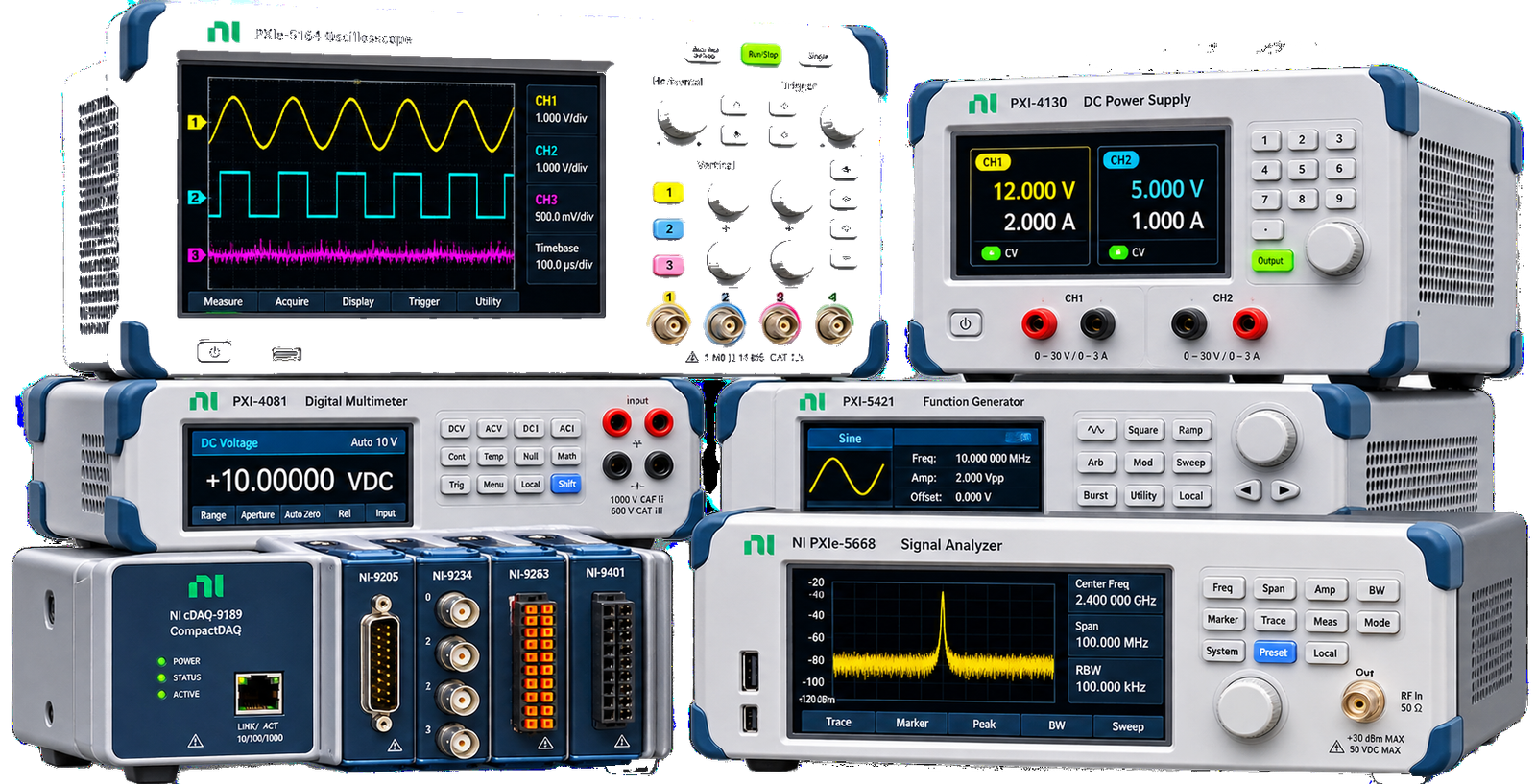
RF & Wireless Device Characterization
Automated measurement of S-parameters, gain, noise figure, and spectrum analysis for RF components and wireless modules across multi-GHz frequencies.
Hardware Platform Selection Guide
Use this page to select the NI platform best fit your needs. The features listed are typical decision factors and not an exhaustive list of capabilities. See the respective hardware section for your reference.
NI Hardware Products
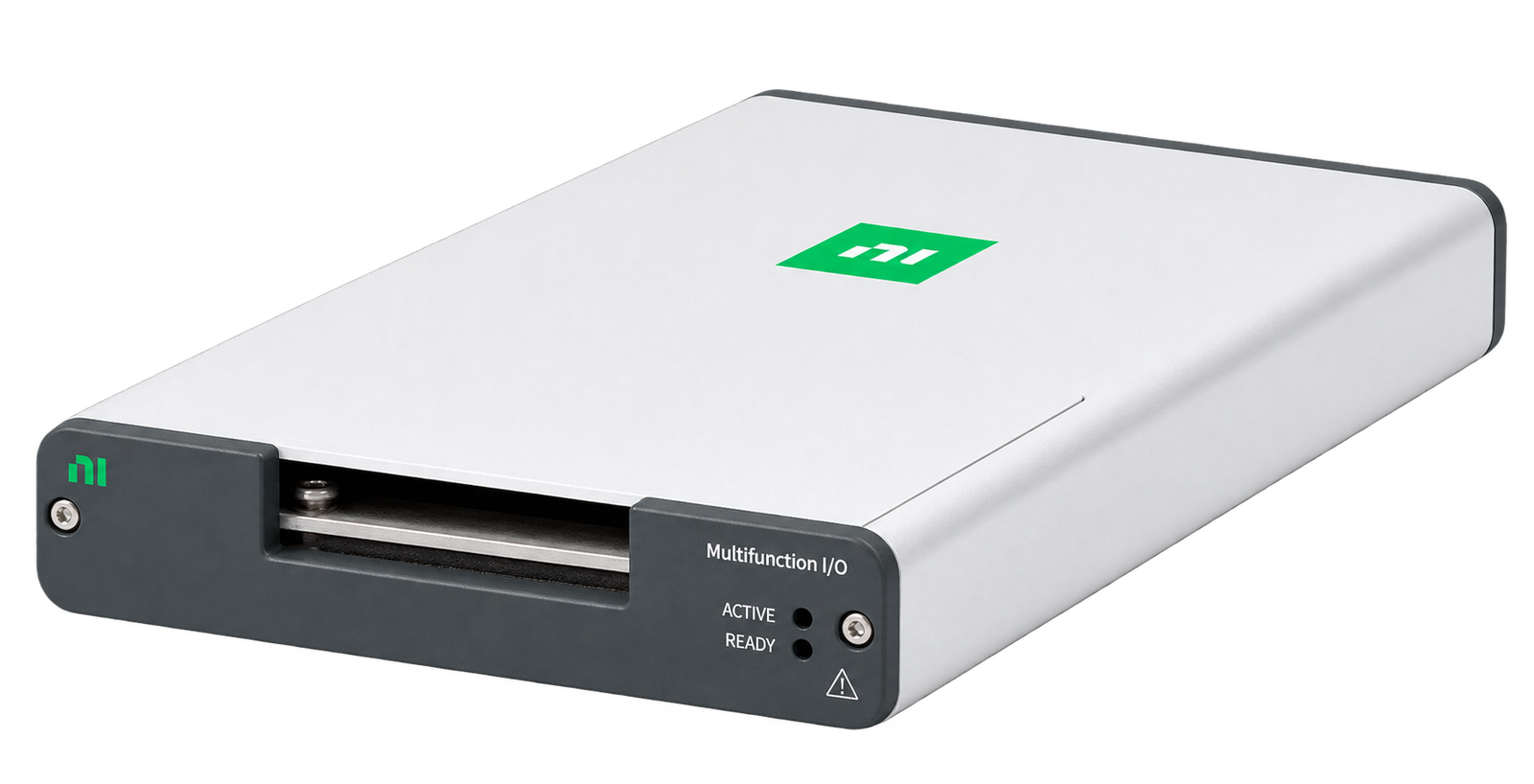
PC-Based Data Acquisition Systems
- •±10 V input/output options
- •TTL digital lines and counter/timer circuitry
- •Support for LabVIEW, Python, C/C++, .NET
Best for:
- •Cost-effective benchtop measurements
- •Standard voltage and digital signals
- •Install in PC as PCIe boards or connect over USB
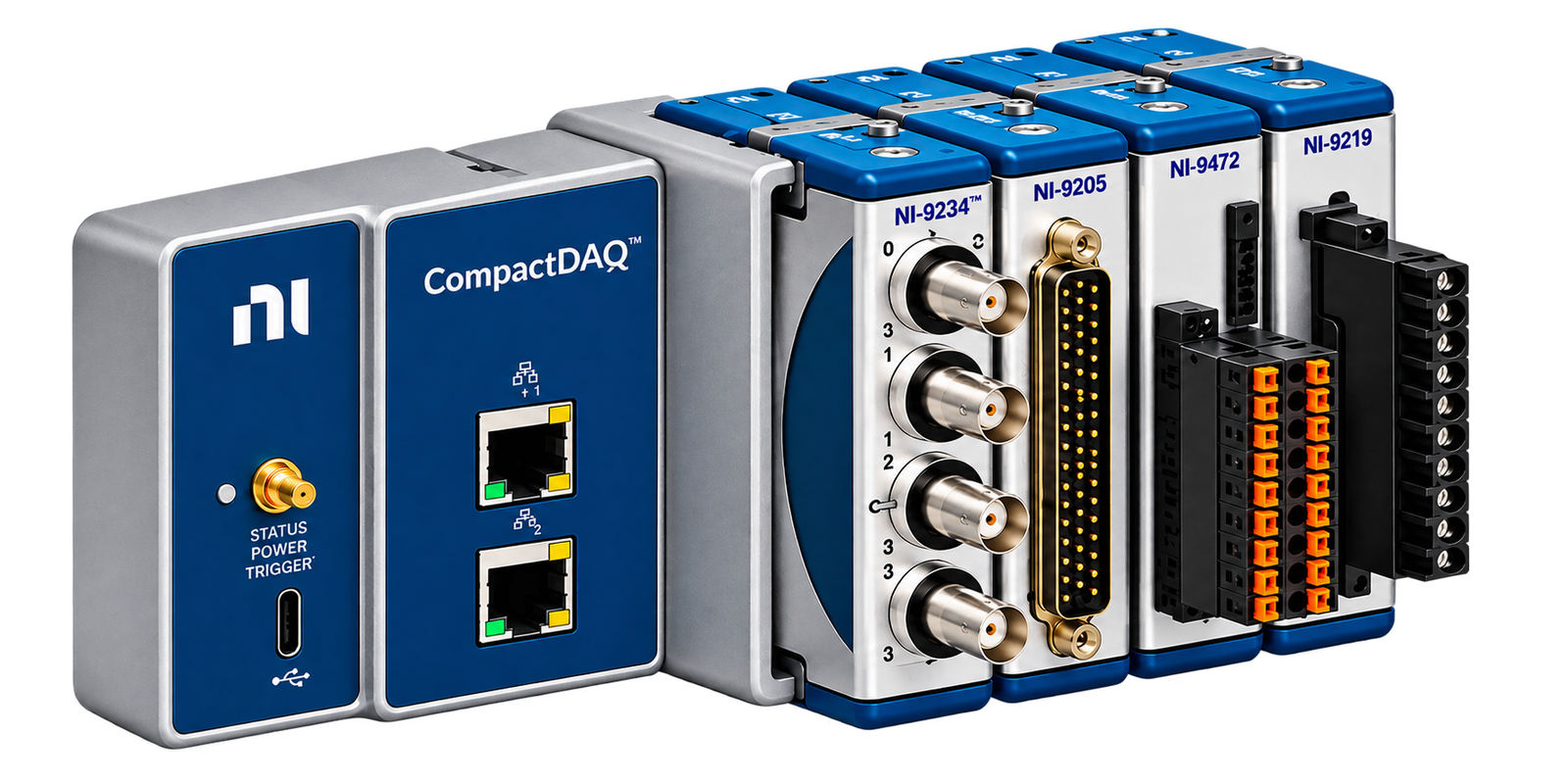
Modular Data Acquisition for Sensors and Electrical Signals (CompactDAQ)
- •Connects to PC via USB/ENET
- •Modular system for expansion
- •Rugged operating specs for temperature, shock, and vibration
- •Support for LabVIEW, FlexLogger, Python, C/C++, .NET
Best for:
- •High-speed sensor measurements
- •Portable or benchtop validation systems
- •Combining sensors and electrical measurements
- •Sensor measurements
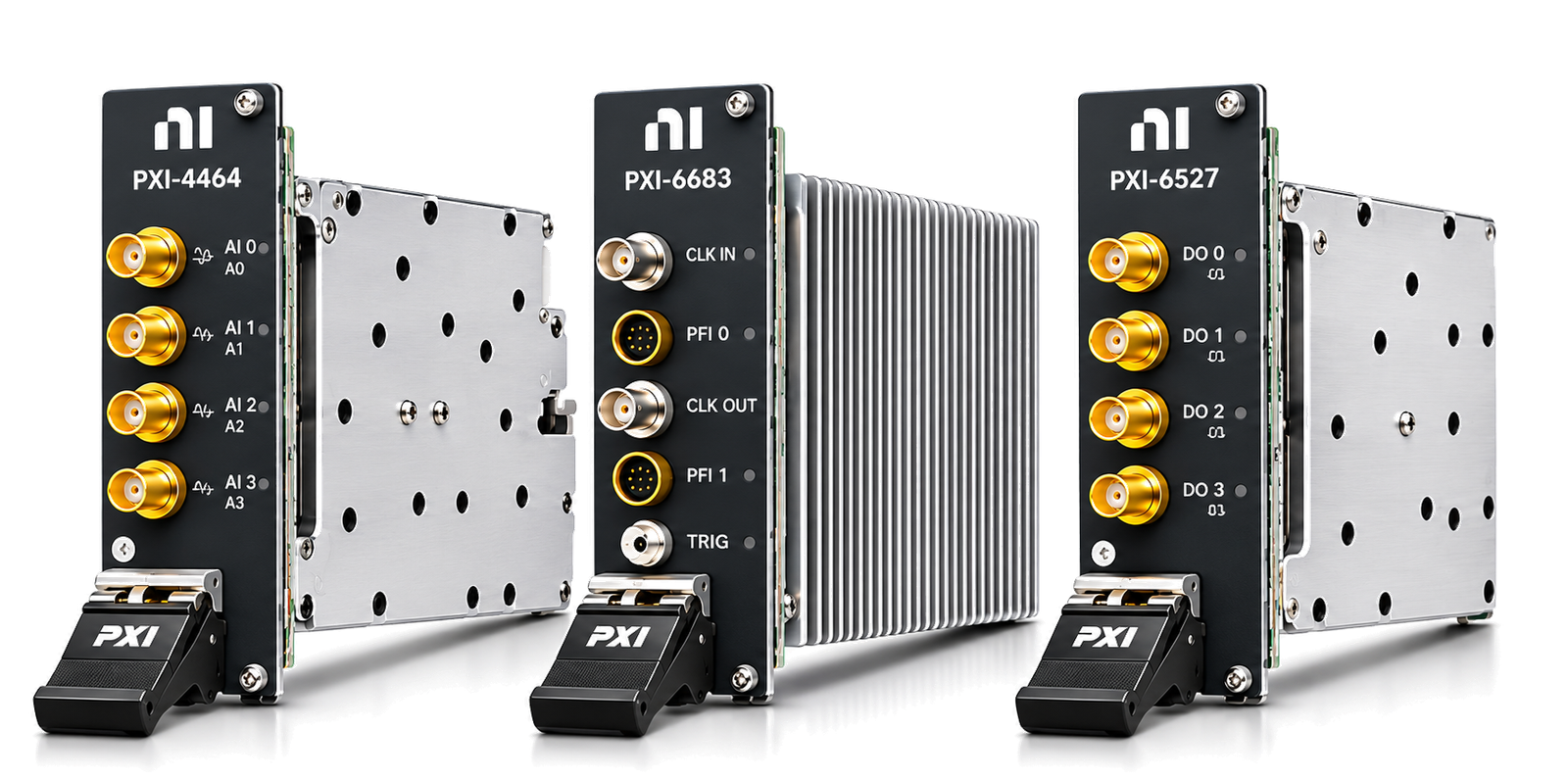
RF Hardware
- •Vector signal transceivers
- •USRP software defined radios
Best for:
- •Wireless design and test
- •RFIC validation and production testing
- •Radar prototyping
- •Multi-channel test beds
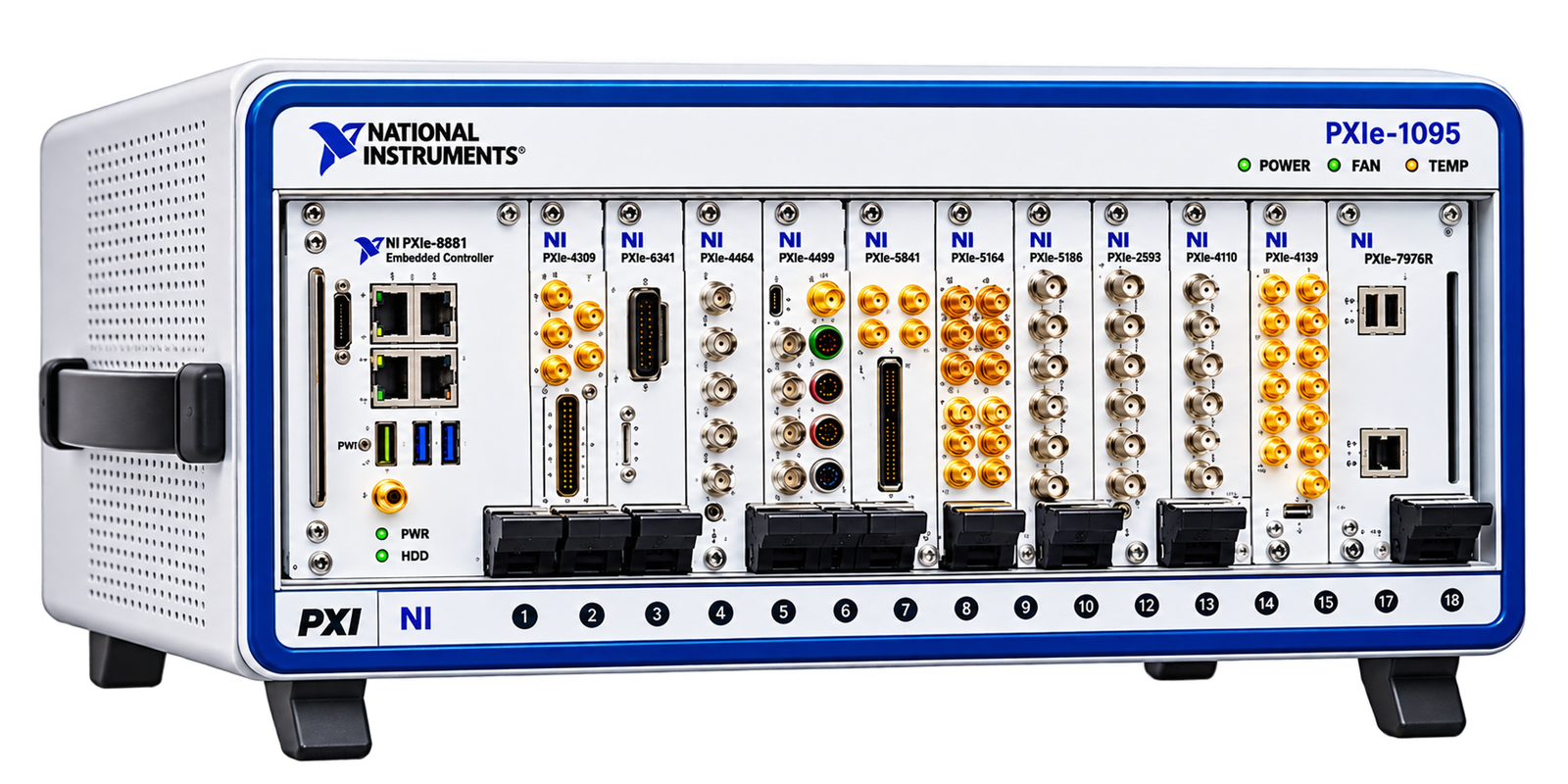
PXI (PCI Extensions for Instrumentation)
- •Combining instruments, sensor, and electrical measurements
- •Instruments and DAQ/sensors in one
- •Modules for scopes, DMMs, switch/relay, ARB, high-speed digitizer, RF, and more
- •Best synchronization
- •High-bandwidth connection between I/O, instruments, and processors
- •Run with on-board PXI controller (PC components) or connect to PC/laptop
- •Open standard: multiple PXI vendors in the T&M market
Best for:
- •Production test systems for electronic devices
- •Automated validation test
- •High-channel, high-speed test applications
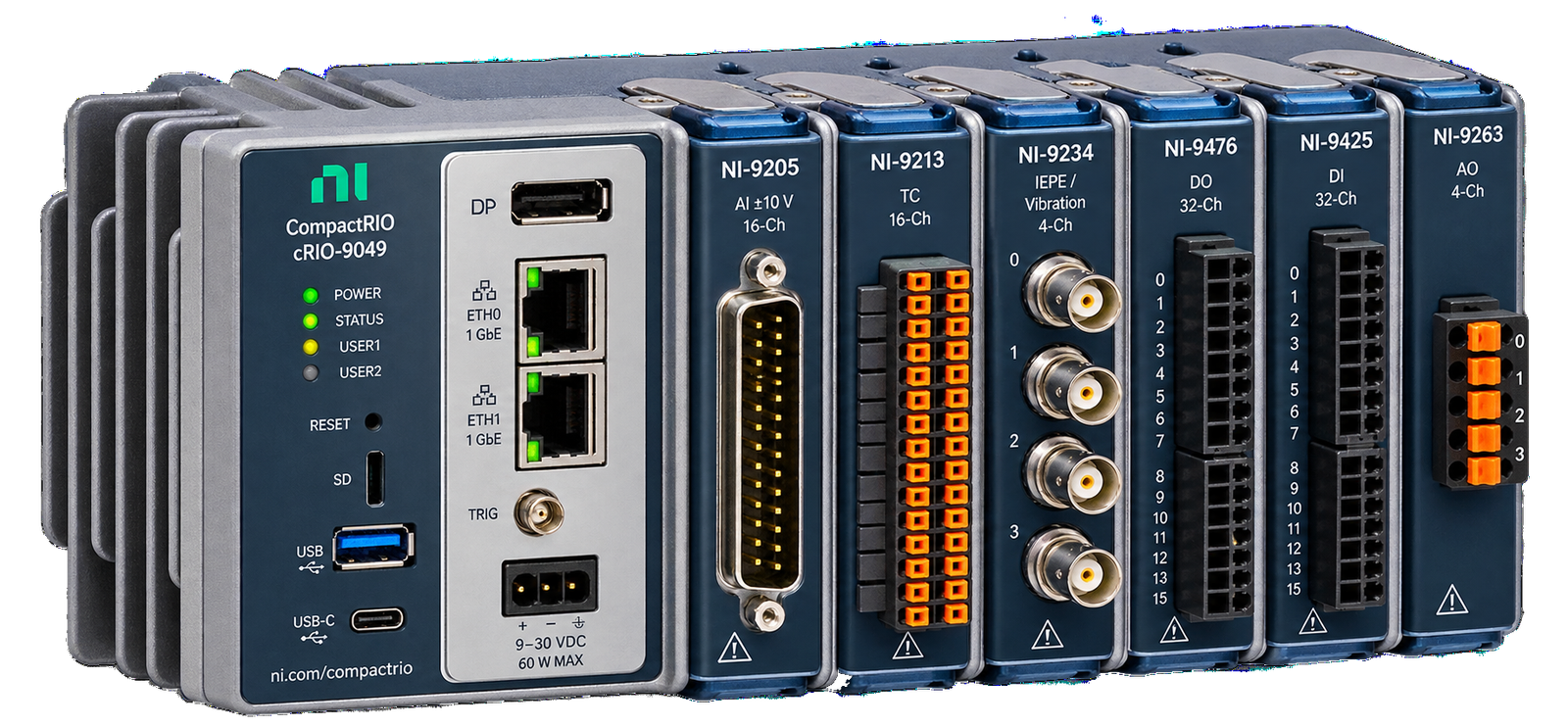
High-Speed Control with Built-In Computer (CompactRIO)
- •Similar hardware and measurements specs of CompactDAQ
- •Run code on built-in processor (no PC needed for runtime)
- •Program as a controller with sub-second loop rates
- •Programmable coprocessor (FPGA) for in-line processing/control from I/O modules
- •Program with LabVIEW only
Best for:
- •Rugged monitoring and control applications
- •High-speed signal and sensor data logging
- •Rapid control prototyping
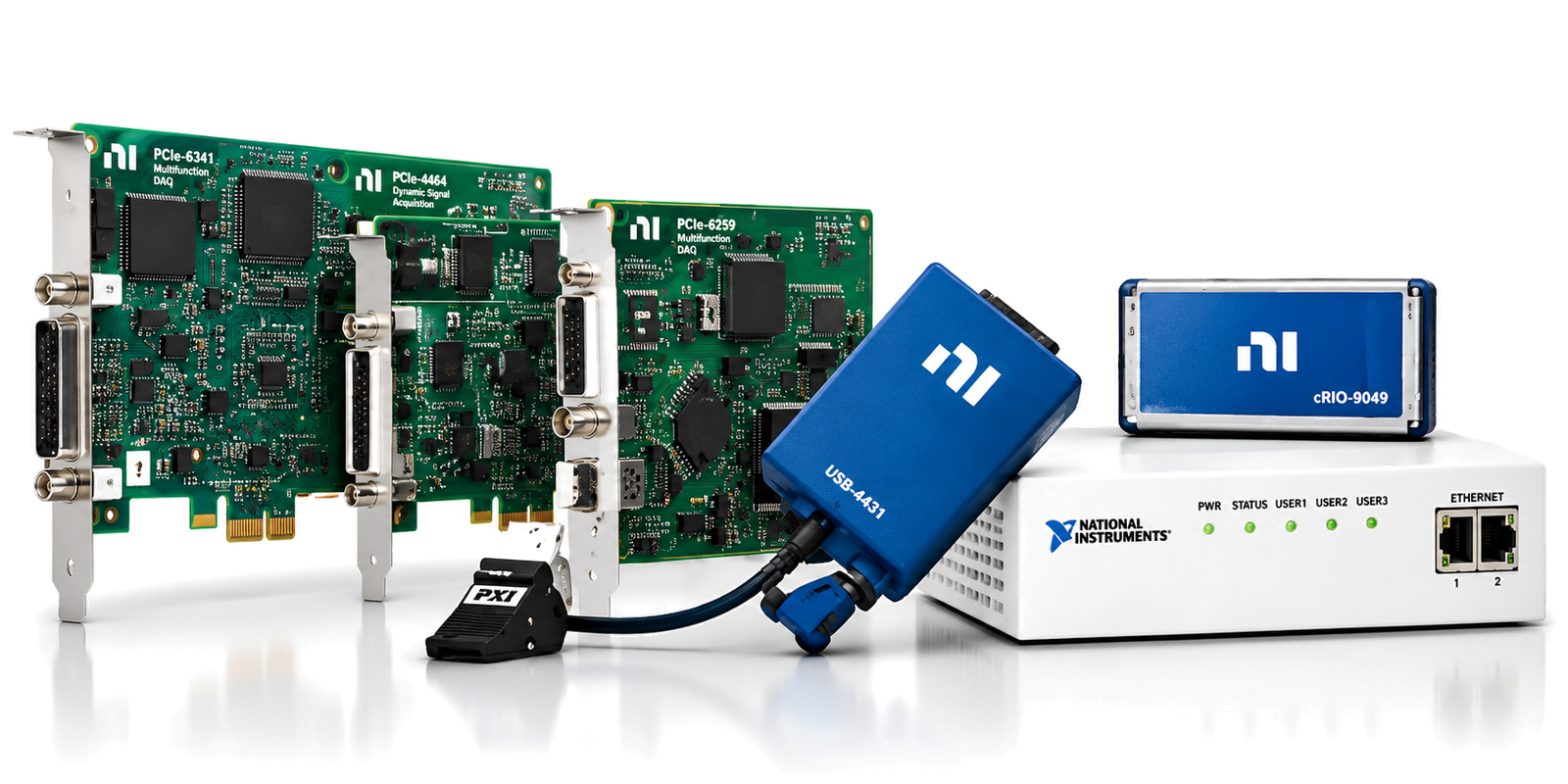
Instrument Control
- •GPIB and serial conversion to USB, PCI(e), and Ethernet
- •Simplified instrument control using LabVIEW prebuilt drivers
Best for:
- •Connecting your PC to boxed instruments from companies such as Keysight, Rohde & Schwarz, and Tektronix
Make Your Test Systems Smarter
Combining deterministic LabVIEW execution with cutting-edge AI and machine learning models (PyTorch / ONNX Runtime) for superior industrial outcomes.
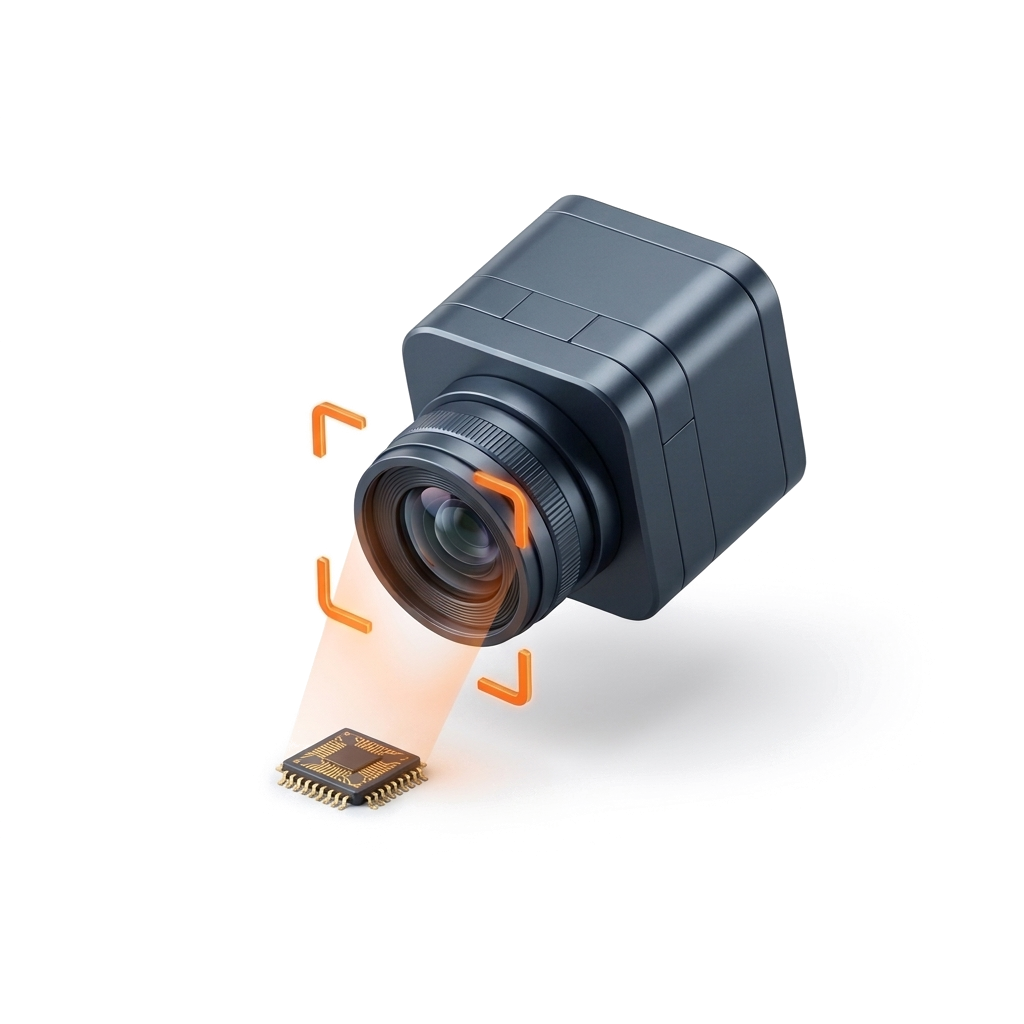
AI Machine Vision & Defect Detection
Real-time identification of microscopic component defects, scratches, and assembly errors.
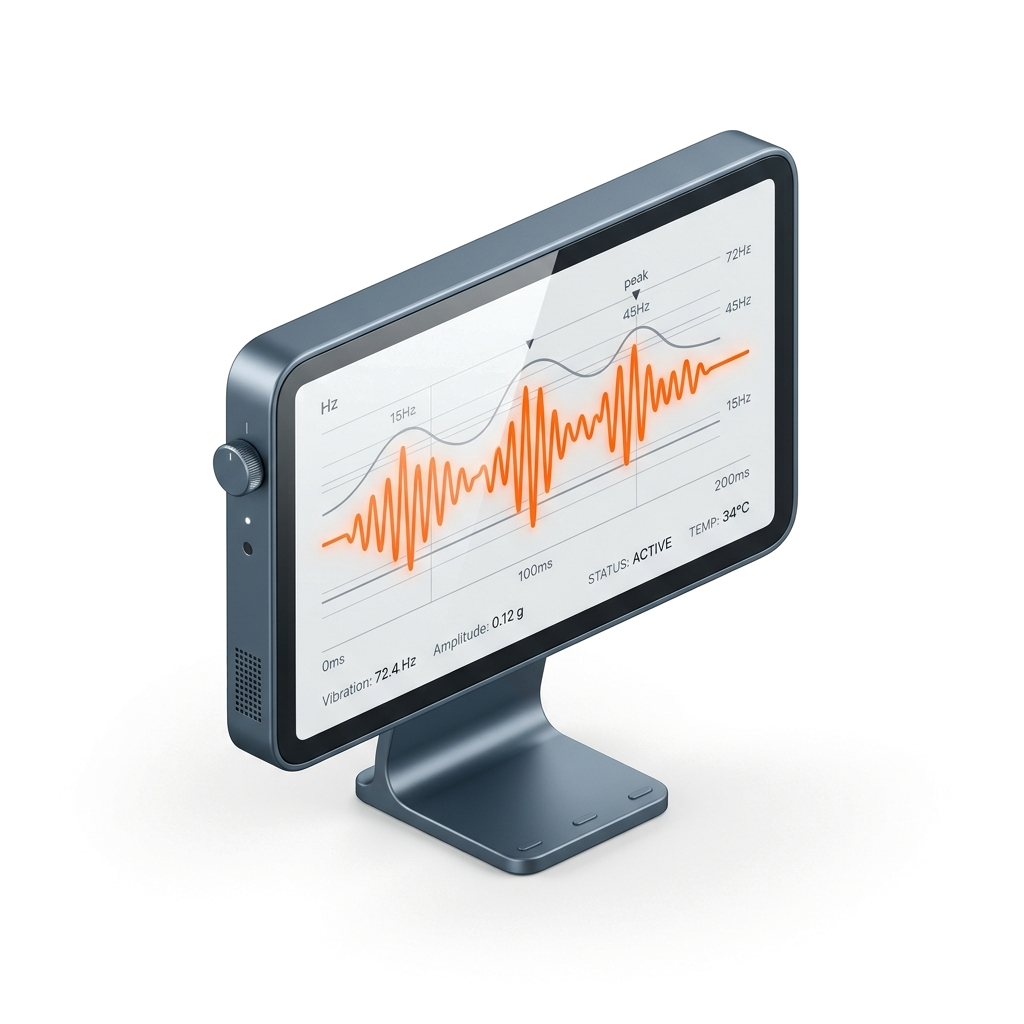
Predictive Maintenance & Monitoring
Continuous vibration and thermal analysis to predict equipment failure before it occurs.

Intelligent Test Data Analytics
Automated classification of large volume test datasets and parameter correlation.

Real-Time Anomaly Detection
Instant identification of unexpected sensor drift or test rig abnormal behavior.

AI-Assisted Report Analysis
Natural language summaries and automated root-cause insights embedded into PDF reports.
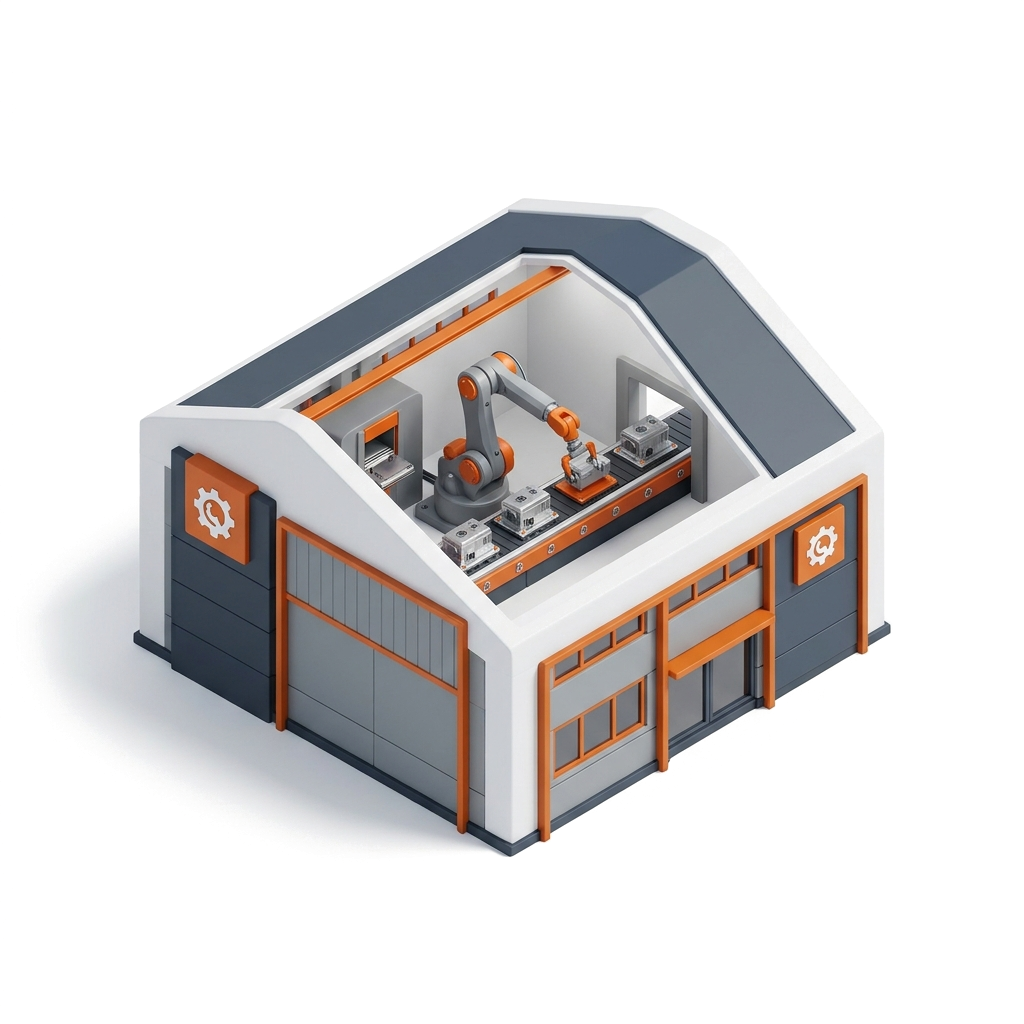
Production Performance Insights
OEE optimization and bottleneck identification across manufacturing test lines.

Intelligent Quality Inspection
Adaptive pass/fail criteria adjusting dynamically based on historical batch trends.
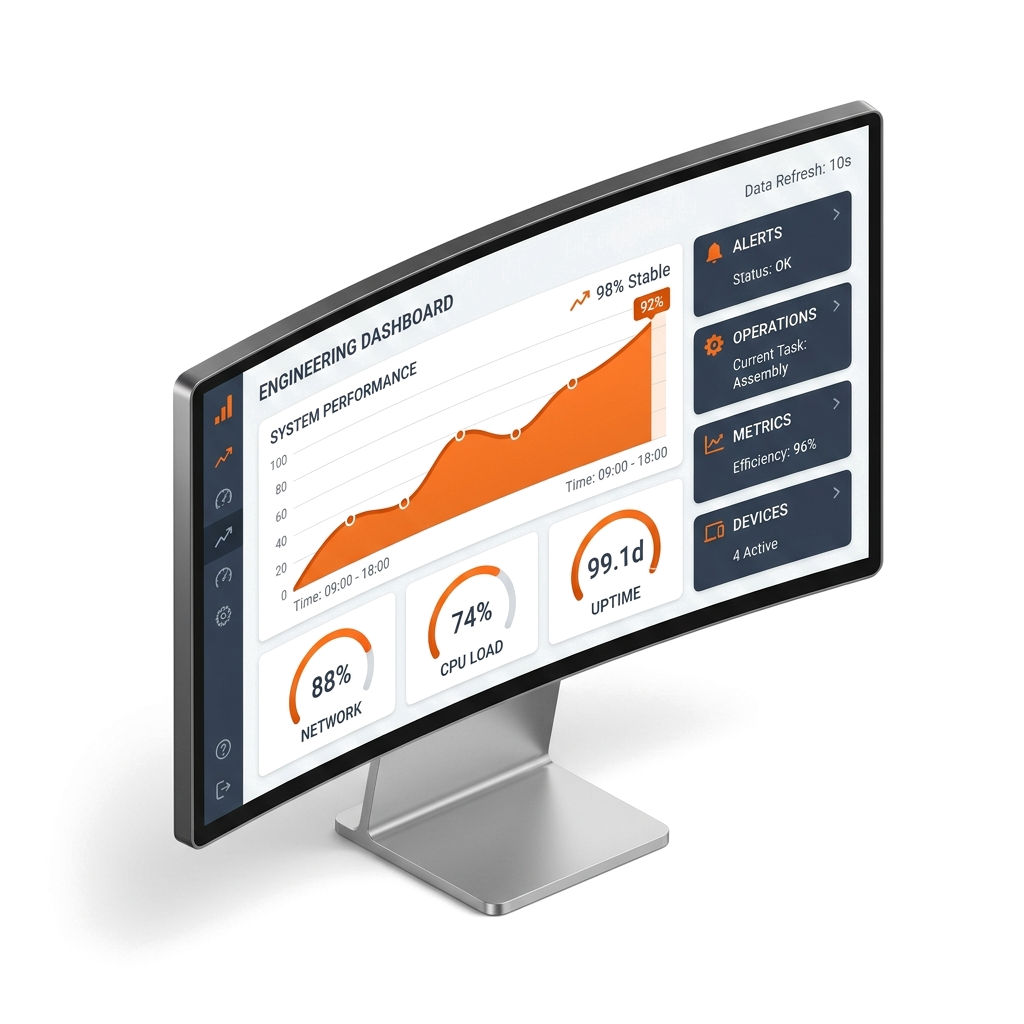
AI-Enabled Engineering Dashboards
Executive web and local dashboards showcasing predictive health metrics in real time.