Hardware-in-the-Loop Real-TimeSimulators (HIL)
Validate mission-critical ECUs, flight computers, and embedded control units prior to field integration using microsecond FPGA plant models and automated fault insertion.

Turnkey HIL Capabilities
High-throughput test and measurement capabilities engineered to eliminate spaghetti code and deliver deterministic factory-floor execution.
Microsecond FPGA Plant Model Execution
Simulate high-speed electrical motors, inverters, hydraulic servos, and combustion physics on user-programmable Xilinx FPGAs.
- ✓Sub-microsecond model loop rates
- ✓MATLAB / Simulink C-code compilation
- ✓Electric motor PMSM / BLDC emulation
- ✓Non-linear sensor transfer functions
Automated Fault Insertion Unit (FIU) Matrix
Programmatic relay matrices that inject physical electrical faults directly onto ECU signal pins to verify safety recovery.
- ✓Pin-to-pin short circuits
- ✓Short-to-battery / short-to-ground
- ✓Open circuit / broken wire injection
- ✓Intermittent contact and contact bounce
Electronic Sensor & Actuator Emulation
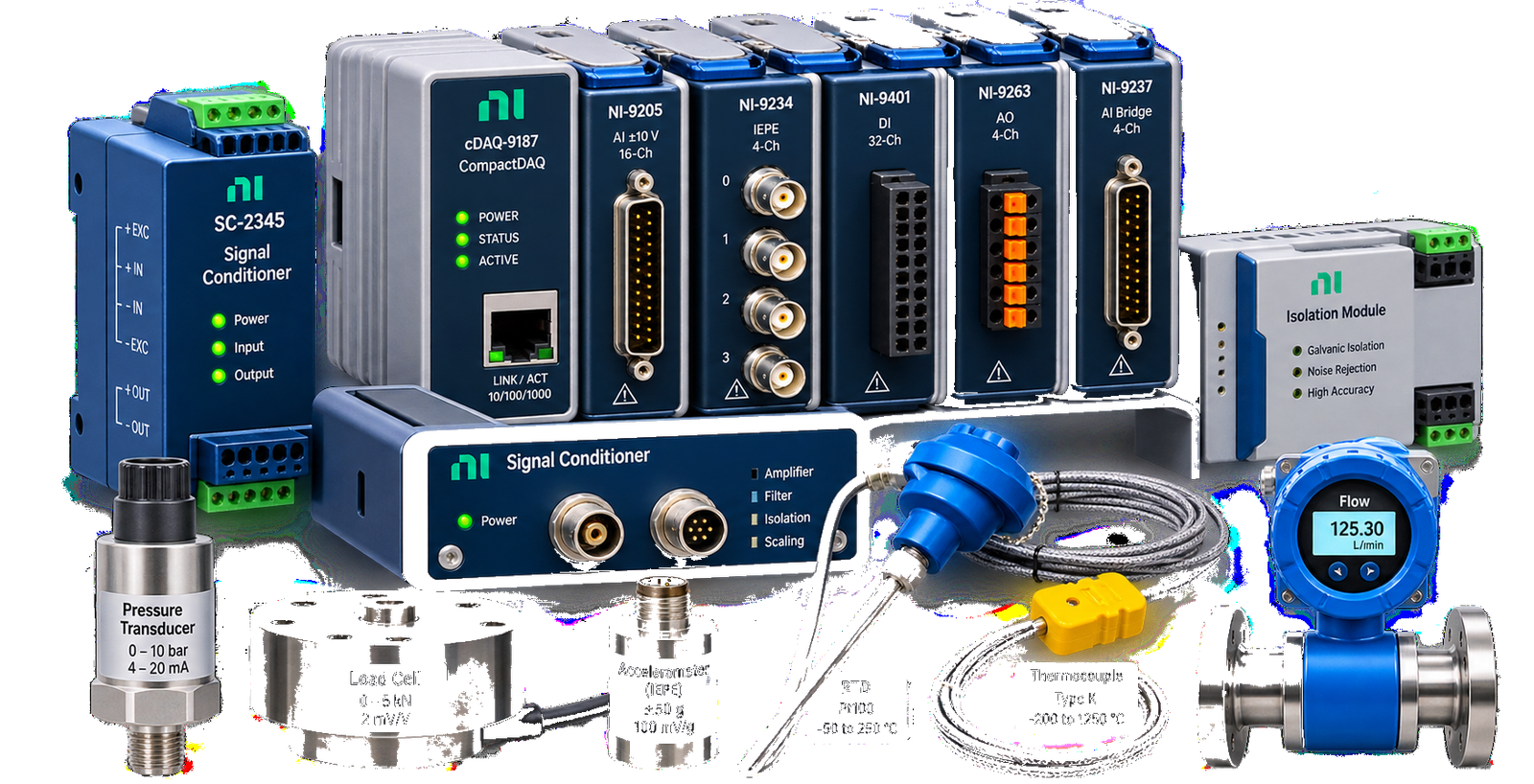
Generate precision electrical signals that emulate real physical transducers without needing physical sensors.
- ✓Variable Reluctance (VR) & Hall wheel speed
- ✓Thermocouple, RTD & strain gauge simulators
- ✓LVDT & RVDT resolver position emulation
- ✓Electronic load banks for actuator driver outputs
Multi-Bus Network Simulation (Rest-Bus)
Simulate absent ECUs across automotive, aerospace, and industrial buses with microsecond message timestamping.
- ✓CAN 2.0B, CAN-FD & LIN rest-bus simulation
- ✓FlexRay & Automotive Ethernet (100BASE-T1)
- ✓MIL-STD-1553 & ARINC 429 avionics buses
- ✓Automated network error frame injection
Automated TestStand Regression Campaigns
Execute continuous 24/7 test campaigns covering thousands of test cases, generating ISO 26262 and DO-178C compliance reports.
- ✓Automated nocturnal regression suites
- ✓Traceability mapping to system requirements
- ✓Automated pass/fail limit verification
- ✓Comprehensive PDF and XML compliance logging
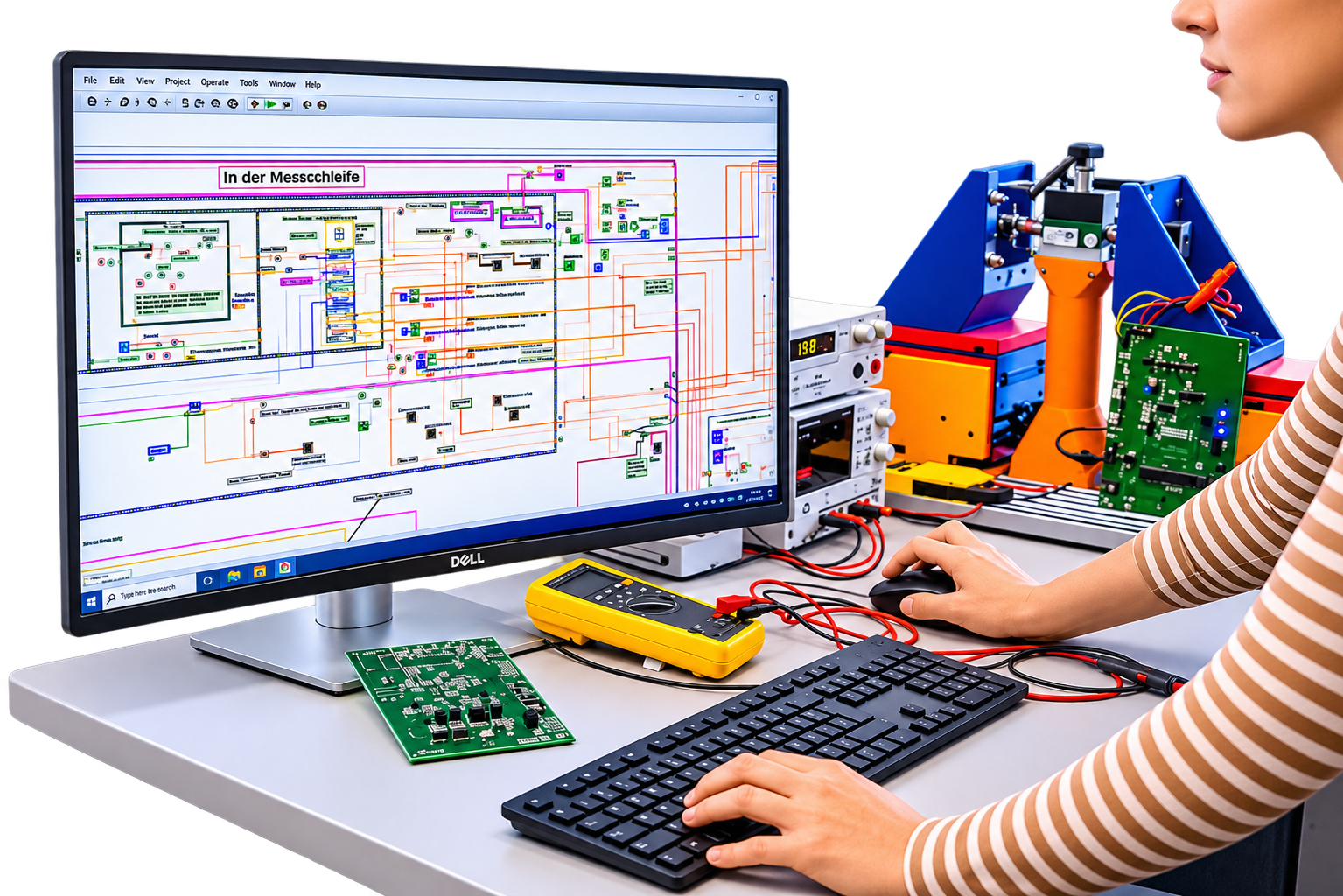
Deterministic Verification for Safety-Critical Embedded Controllers
VEST Solutions designs and builds turnkey Hardware-in-the-Loop (HIL) simulators that trick embedded control units (ECUs) into believing they are operating inside a real physical aircraft, vehicle, or power grid. We emulate real-world sensors, actuators, and communication networks with sub-microsecond determinism.
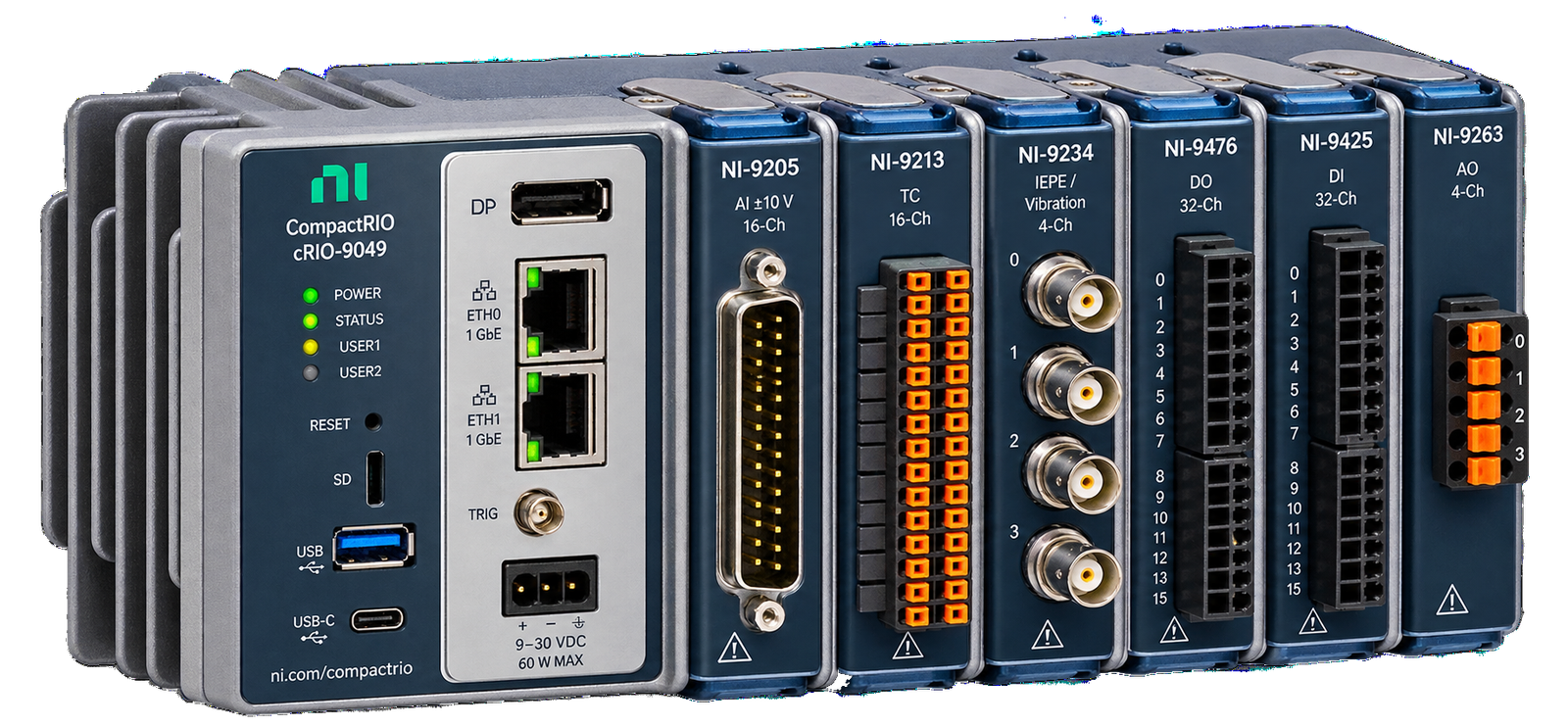
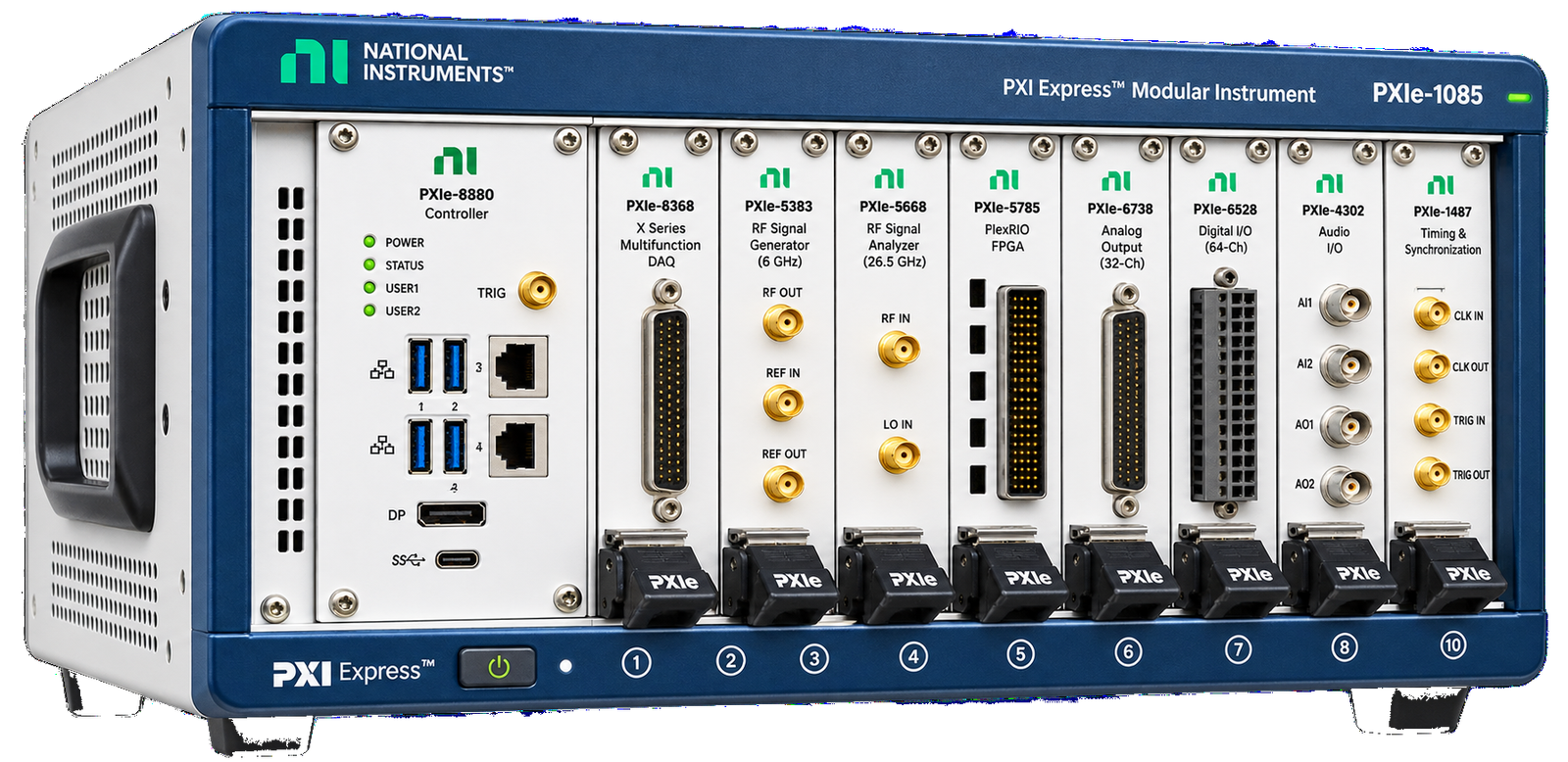
By running mathematical plant models on NI PXI Real-Time and FPGA hardware, our HIL systems execute thousands of automated regression tests, edge-case failure simulations, and Fault Insertion Unit (FIU) tests without endangering expensive physical prototypes or personnel.
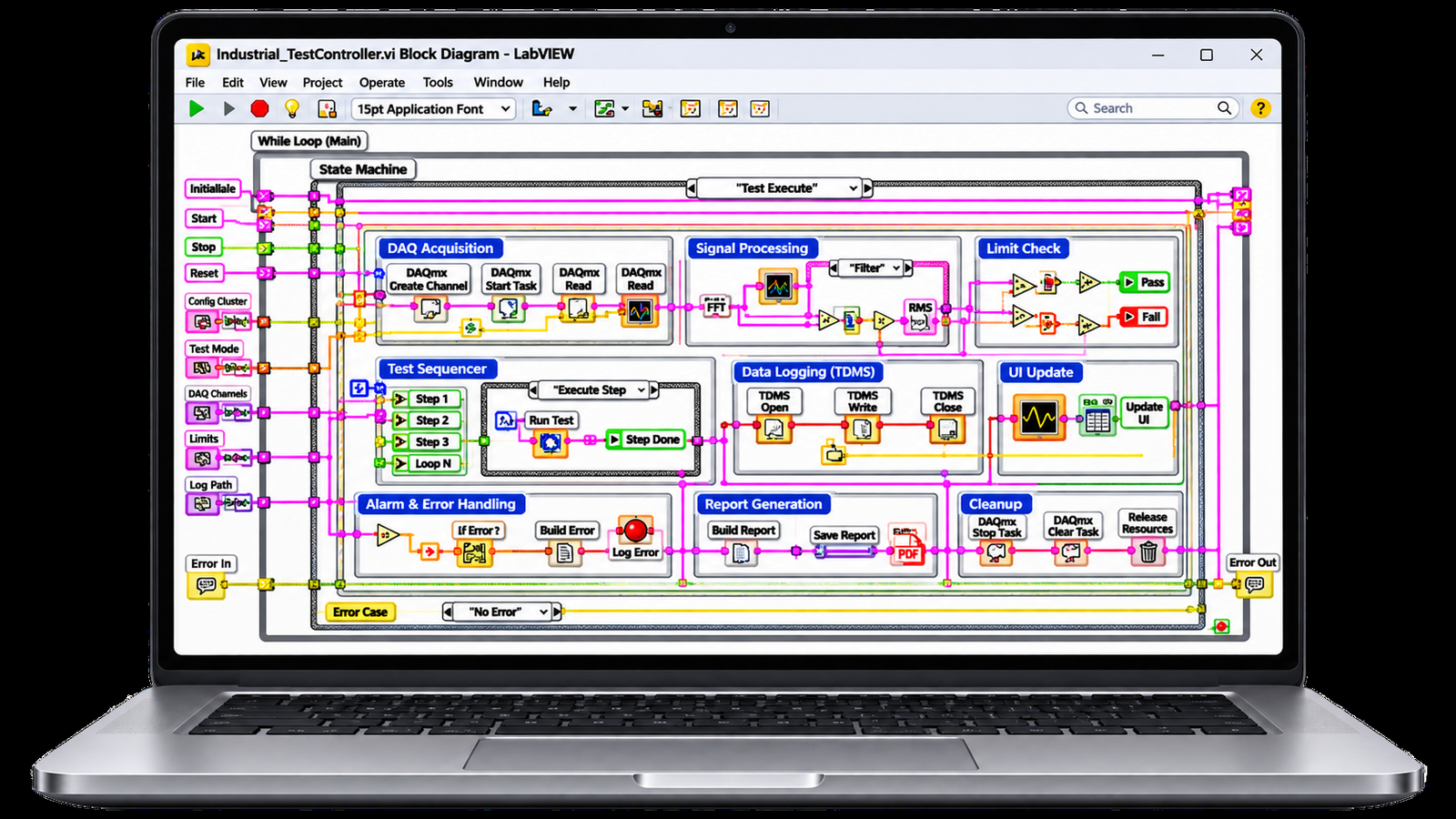
Deterministic HIL Architecture Patterns
Industrial-grade design patterns engineered to replace monolithic code with modular, testable, and maintainable LabVIEW frameworks.
FPGA-Accelerated Co-Simulation
High-frequency components (inverter PWM, motor commutation) execute on FPGA at 1 MHz, while slower vehicle physics execute on Linux RT at 1 kHz.
Non-Blocking Signal Conditioning Layers
Custom hardware abstraction that converts engineering units (RPM, km/h, bar) into calibrated DAC voltages and PWM frequencies automatically.
Hardware-Synchronized Fault Injection
FIU relays triggered directly by FPGA event comparators, allowing fault injection at precise crank angles or message frames.
Asynchronous Telemetry Streamer
Streams hundreds of simulation variables to high-capacity SSDs without imposing latency on the deterministic real-time control loop.
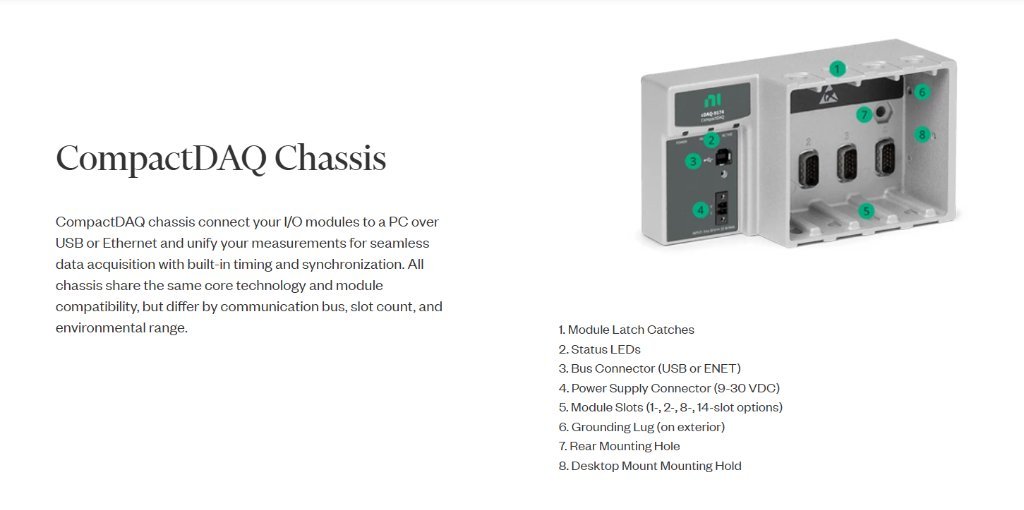
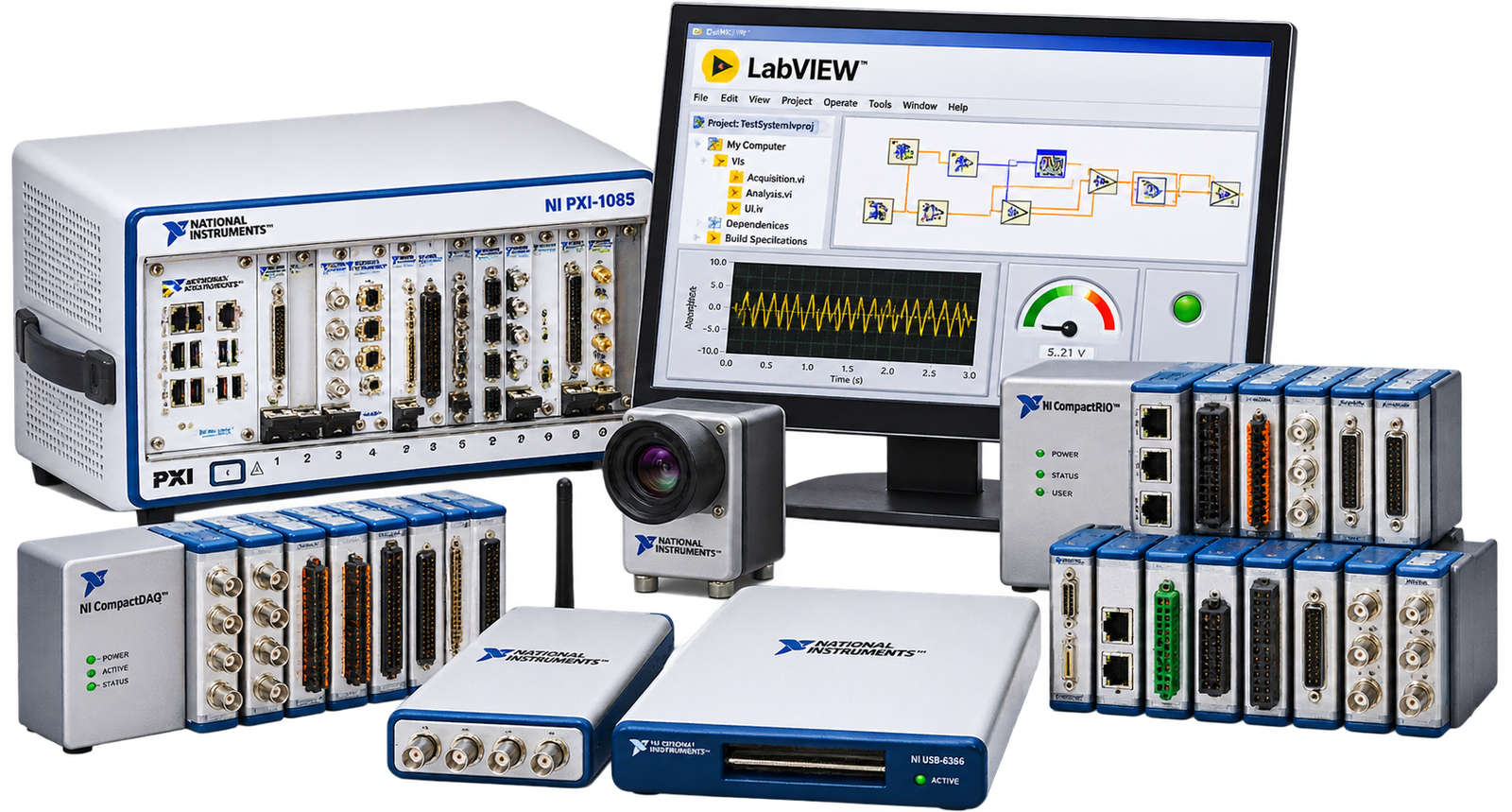
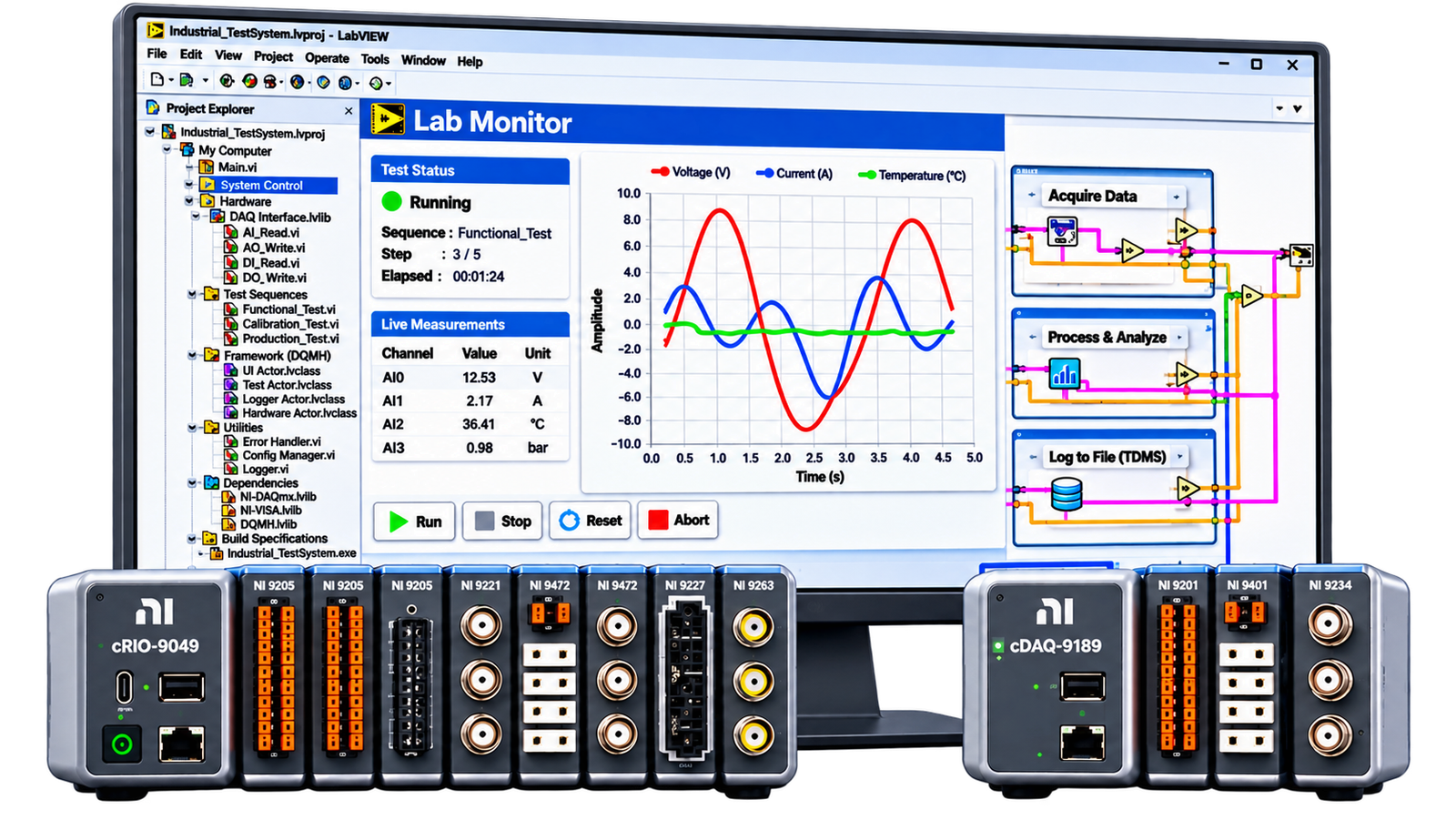
HIL Chassis, FIU & Breakout Hardware
Seamless integration with industry-leading measurement hardware, controllers, sensors, and communication protocols.
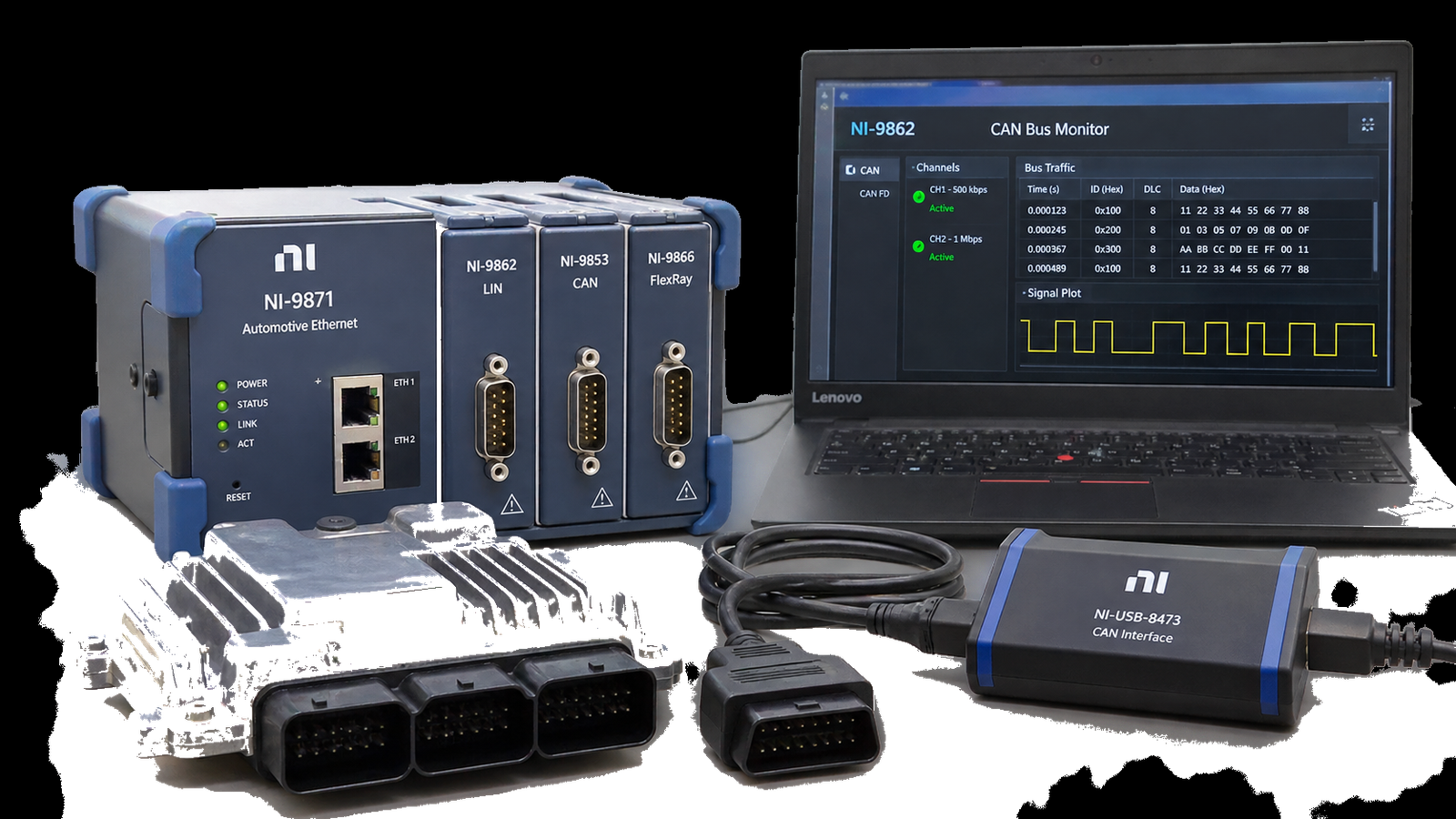
Simulation Precision & Timing Benchmarks
True Hardware-in-the-Loop simulation requires absolute temporal determinism.
Deterministic Fidelity
- Dedicated FPGA hardware logic guaranteeing microsecond loop execution
- NI Linux Real-Time OS with thread priority isolation
- Point-to-point shielded wiring to eliminate digital crosstalk
- Calibrated voltage/current outputs conforming to ECU sensor ranges
Automated Verification
- Continuous nocturnal execution of thousands of boundary test vectors
- Automated fault injection without human technician intervention
- Full requirement traceability conforming to ISO 26262 ASIL D
- Instantaneous detection of ECU reboot or watchdog reset events
Turnkey HIL System Delivery Process
From initial requirements elicitation to automated FAT/SAT deployment, our deterministic engineering lifecycle ensures zero runtime regressions.
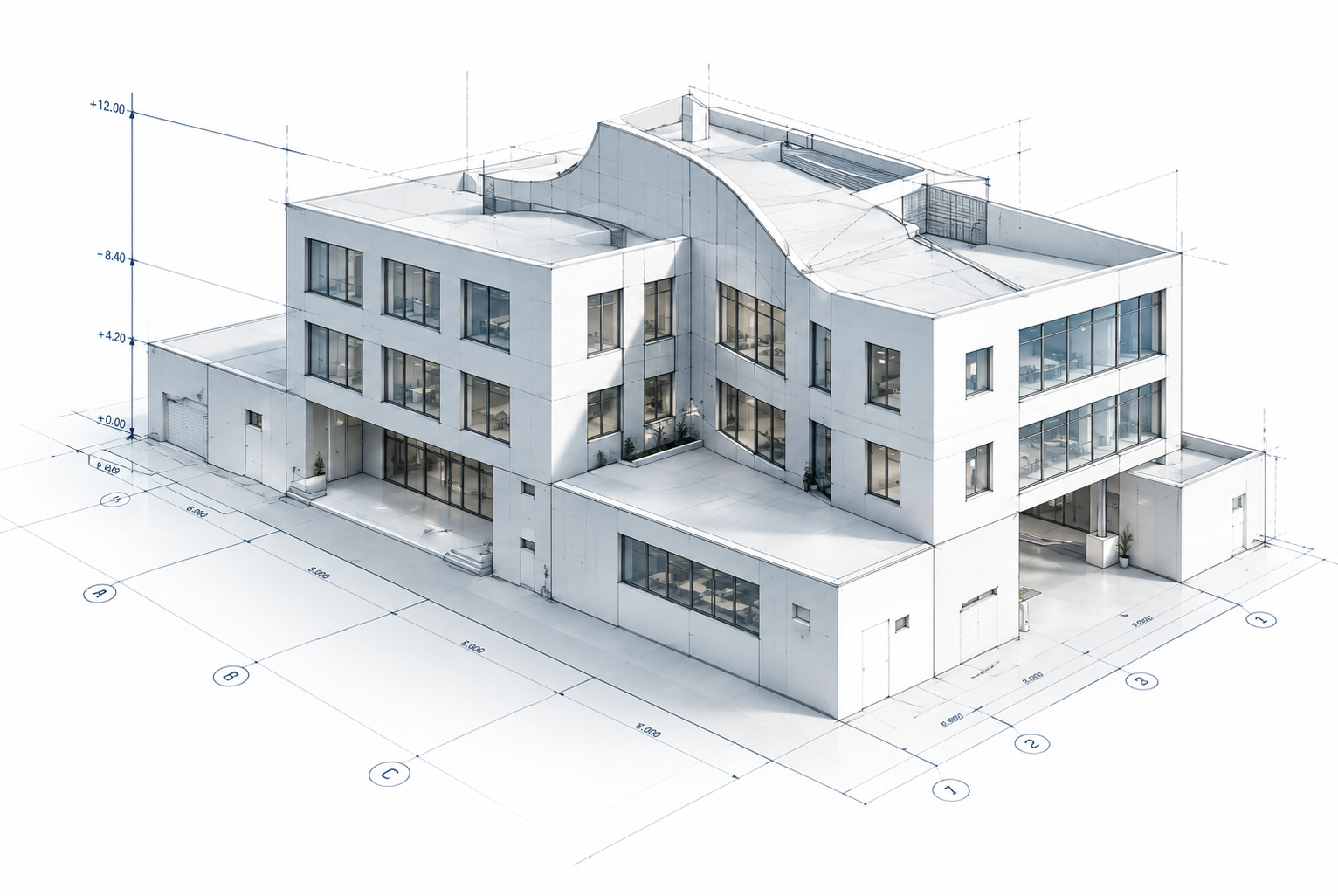
ECU Pinout & Interface Audit
Catalog all ECU analog inputs, digital drives, communication buses, and electrical load requirements.
- Test Routine Specification
- Signal Limit Matrix
- User Access & Audit Trail
- Initial FAT Criteria
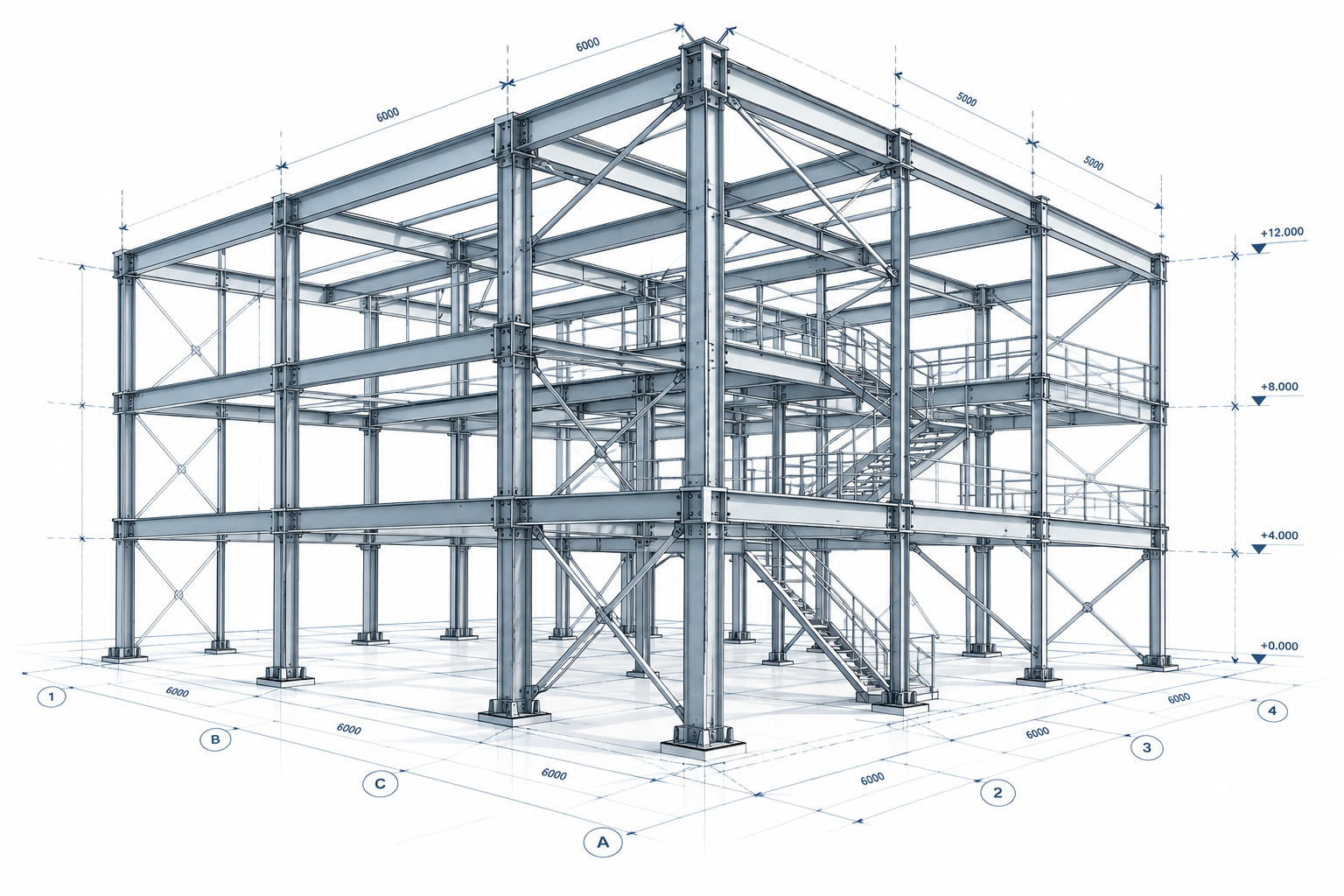
Plant Model Integration
Import customer MATLAB/Simulink models, partition between RT and FPGA, and verify offline simulation.
- Module Class UML Diagrams
- Queue / Event Channel Protocols
- Actor Tree & DQMH Modules
- HAL Interface Definitions
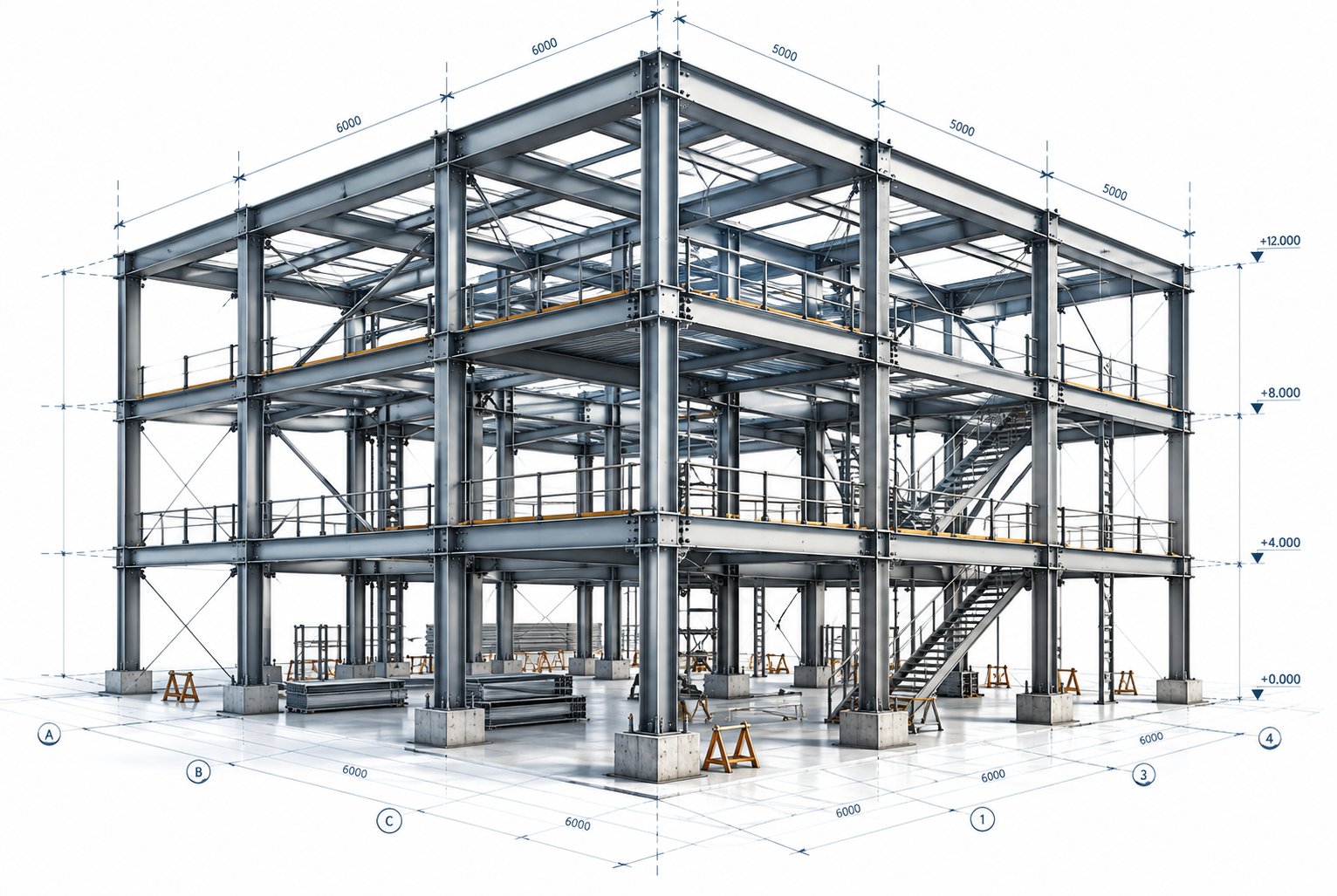
Rack Design & Wiring Schematics
Design 19-inch HIL rack, mass interconnect interface, breakout panels, and FIU routing in EPLAN.
- Interchangeable Instrument Drivers
- SCPI / VISA Protocol Adapters
- Offline Simulation Stubs
- Hardware Loopback Verification
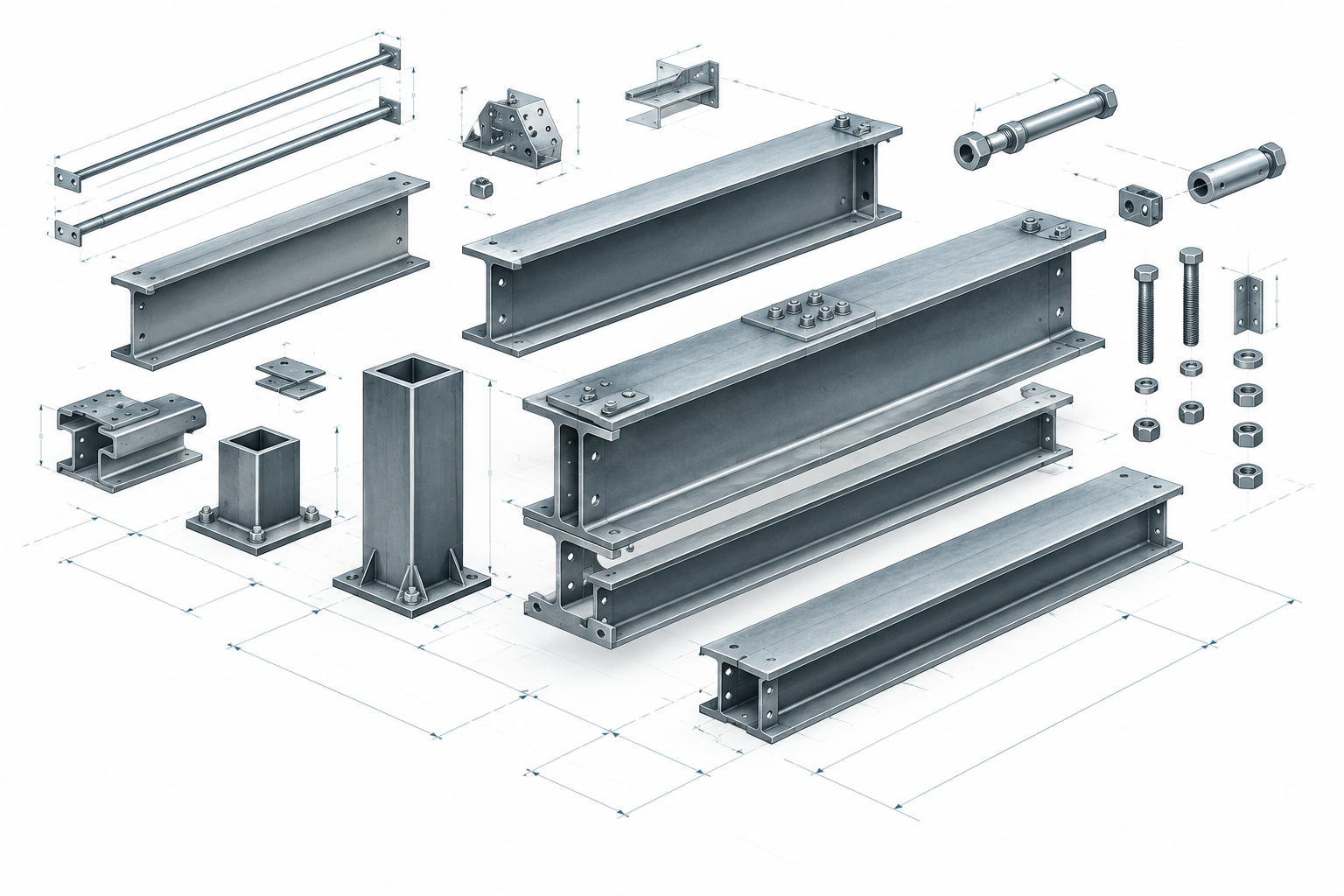
Signal Conditioning PCB Build
Fabricate custom breakout fixtures, dummy electronic loads, and sensor conditioning filters.
- Asynchronous Engine Implementation
- State Transition Handlers
- TDMS / Database Logging Engines
- SubVI Error Cluster Routing
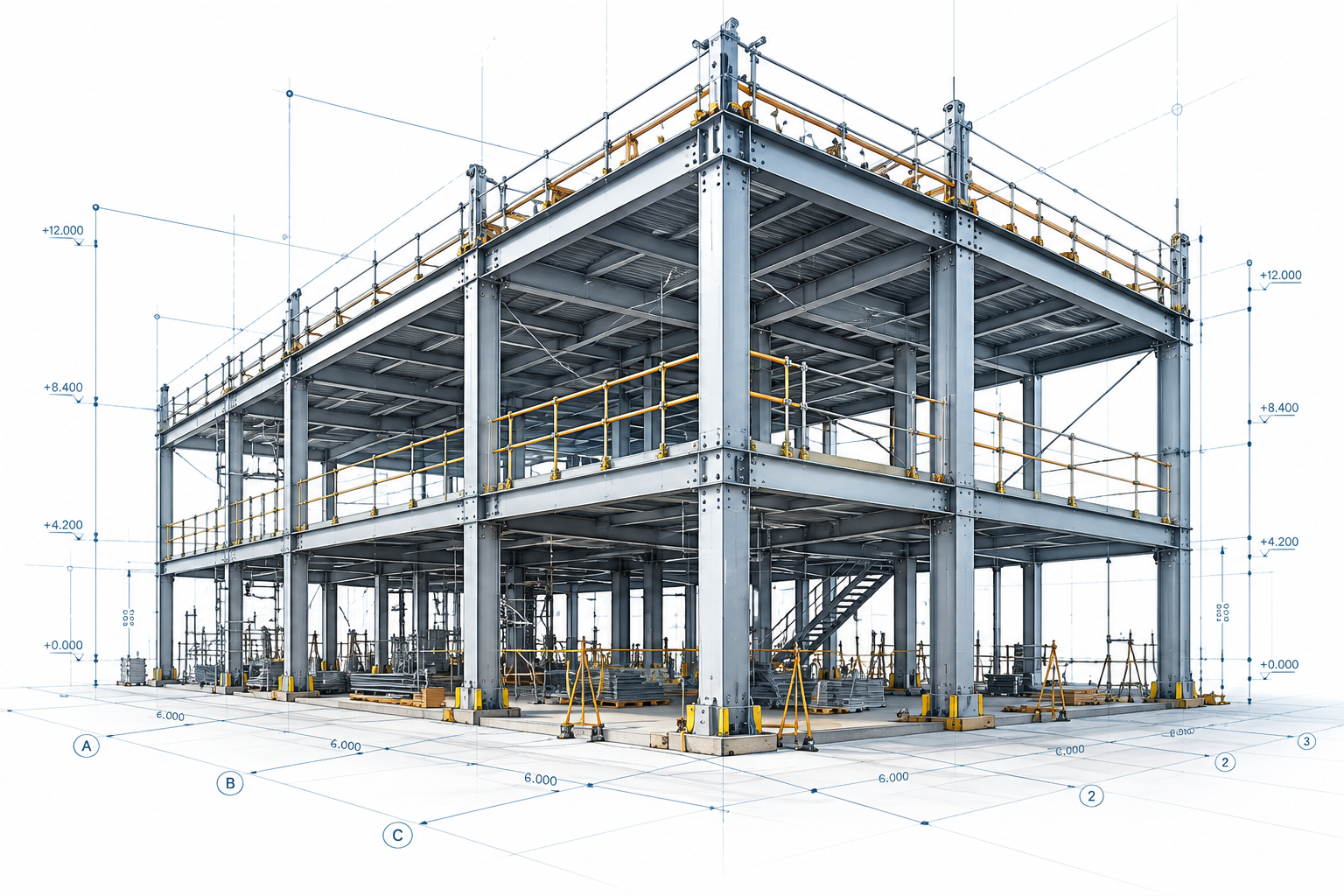
VeriStand / TestStand Programming
Configure real-time I/O mapping, rest-bus simulation, and automated test campaign sequences.
- Dynamic Subpanel Framework
- 24/7 Dark/Light Operator HMI
- Interactive Calibration Wizards
- Automated Recipe Batch Loaders
Open-Loop & Closed-Loop Verification
Validate simulator outputs with oscilloscopes, connect physical ECU, and verify closed-loop control.
- 72-Hour Continuous Run Benchmark
- DETT Reference Leak Eradication
- Thread Execution Trace Report
- VI Analyzer Automated Code Score
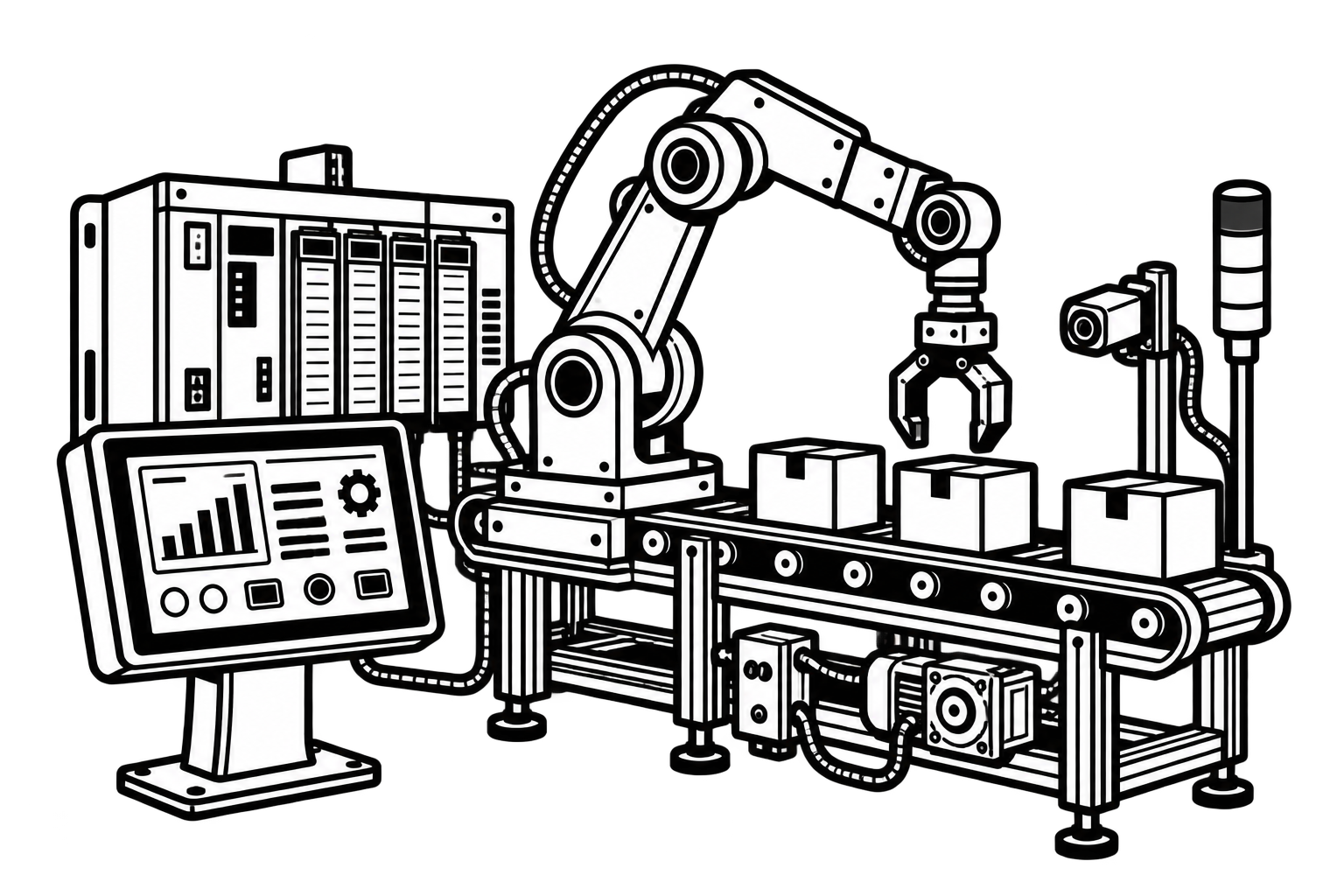
On-Site Commissioning & Training
Deploy to customer laboratory, integrate with automated CI/CD pipeline, and train controls team.
- Final Standalone Executable (.exe)
- Factory Acceptance (FAT) Sign-Off
- Site Commissioning (SAT) Protocol
- Complete Uncompiled VI Source Code
What You Receive
A useful proposal starts with useful data. Every system we deliver is validated for throughput, hardware determinism, error recovery, and comprehensive lifecycle operating criteria.
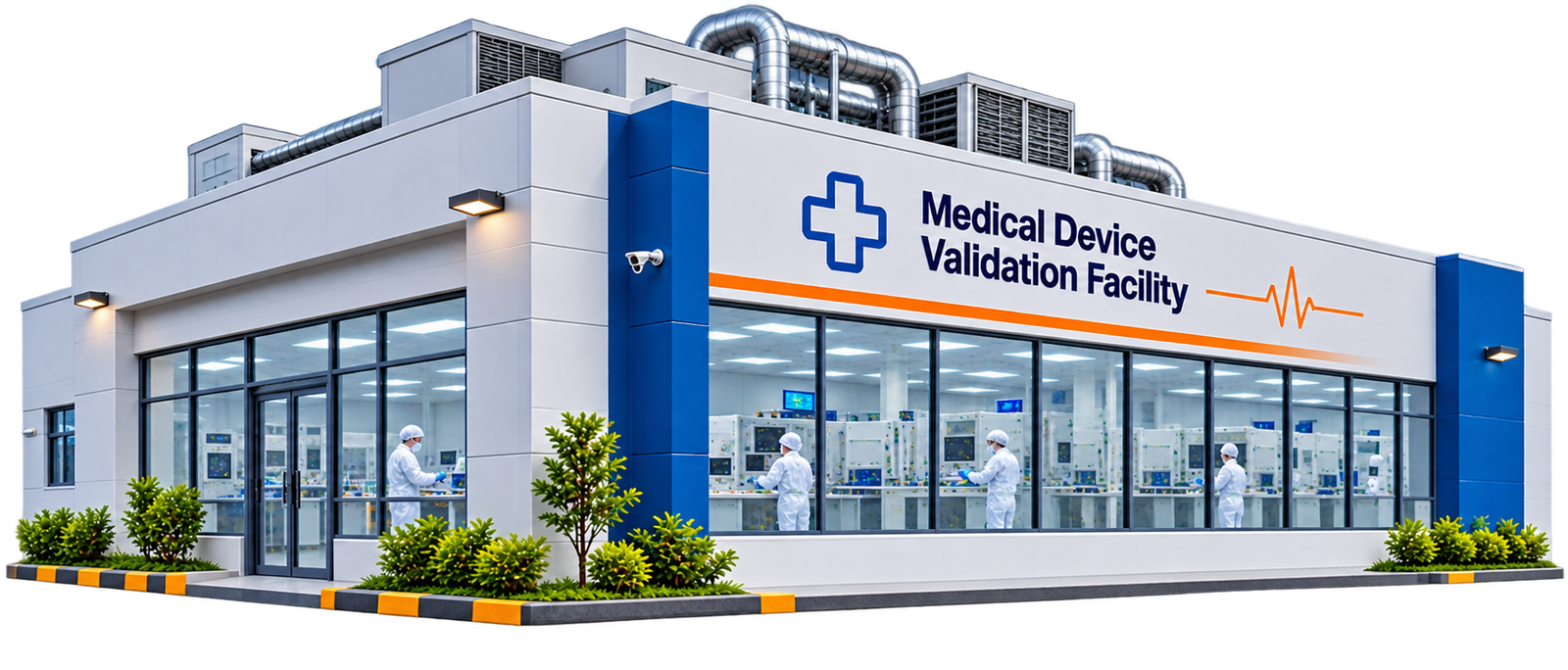
Mission-Critical HIL Deployments
Proven test, measurement, and automated validation platforms deployed across mission-critical global industrial sectors.
Automotive Powertrain & ADAS ECUs
Validating engine control units, electronic stability control (ESC), and radar/camera emergency braking logic under extreme corner-case conditions.
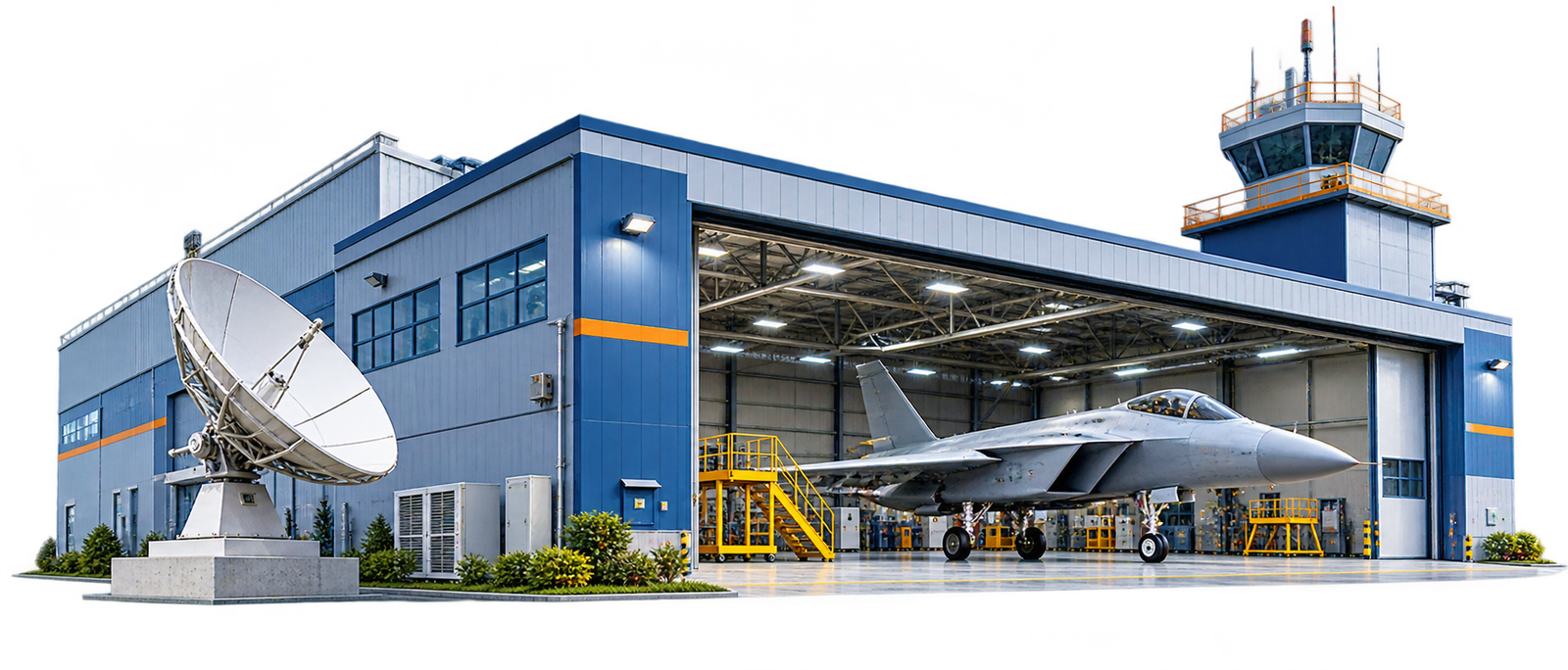
Aerospace Flight Control Computers (FCC)
DO-178C qualification of fly-by-wire flight control computers, actuator servos, and avionics bus communication.
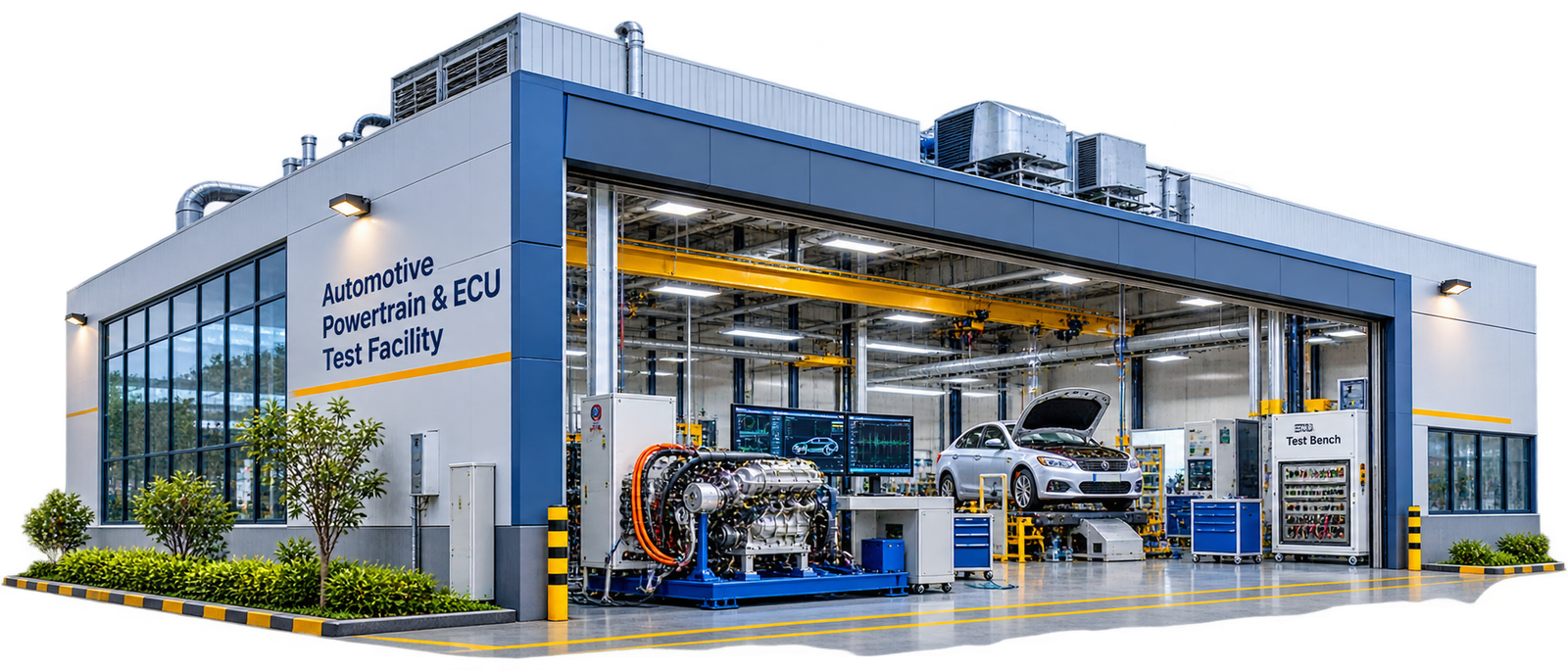
Electric Vehicle Inverters & Motor Drives
Microsecond FPGA simulation of permanent magnet synchronous motors (PMSM) to test inverter gate driver firmware.
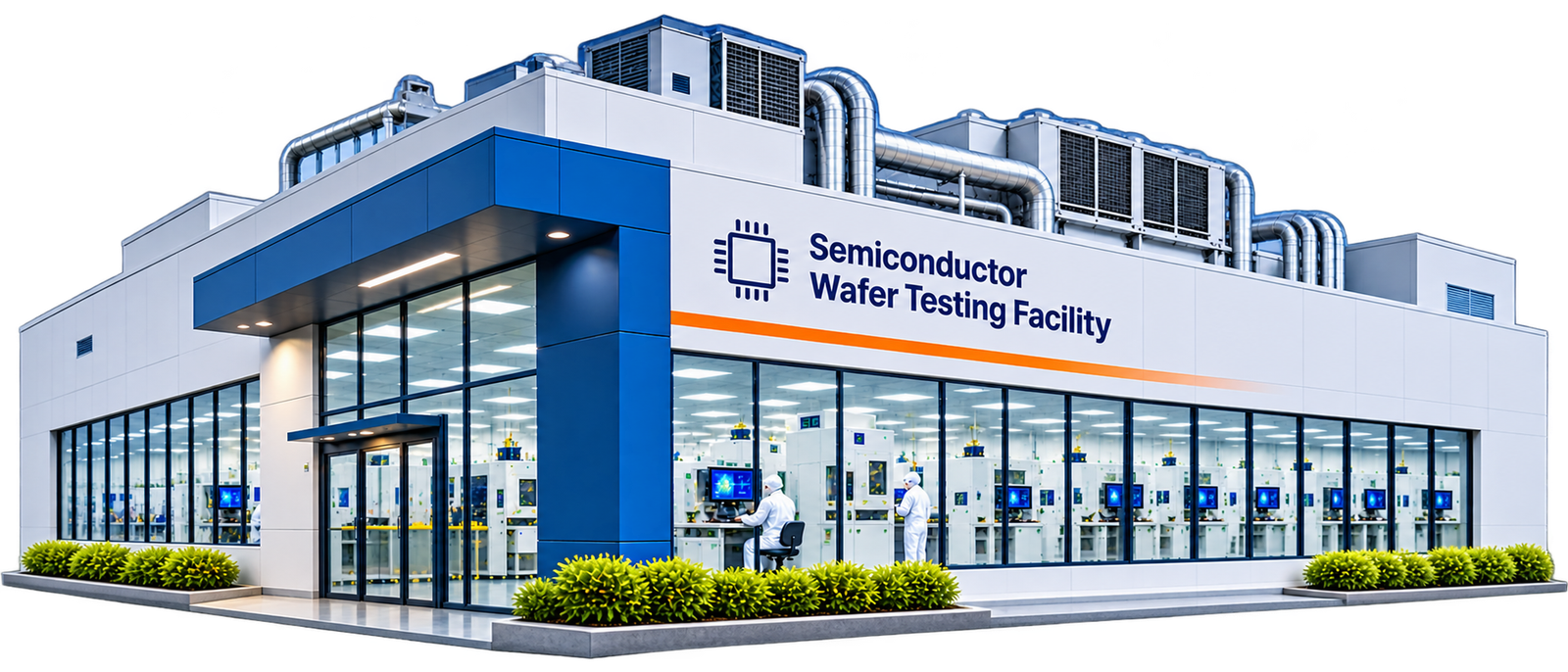
Renewable Power Grid & Inverter Microgrids
Testing microgrid controllers and utility solar inverters against simulated grid frequency transients and lightning faults.
Why VEST Solutions
Why Choose VEST Solutions?
Certified LabVIEW Architects and Hardware Integration Specialists delivering zero-defect deterministic automation.
Deep expertise in both NI Real-Time/FPGA hardware and MATLAB/Simulink plant modeling
Turnkey mechanical, electrical, and software engineering: no hand-waving between contractors
Extensive experience with Fault Insertion Units (FIU) and safety-critical automotive standards
Custom signal conditioning PCB design for exotic or high-power ECU signals

Mass interconnect engineering allowing one HIL rack to test multiple ECU variants
Proven track record with Tier-1 automotive and aerospace defense contractors
100% open source delivery of all VeriStand models, TestStand sequences, and wiring files
Comprehensive training ensuring your engineering team can modify plant models in-house
Engineering Truth: Find Bugs in HIL, Not in Flight
Testing software edge cases on a physical prototype vehicle is dangerous, expensive, and slow. True HIL simulation allows you to inject thousands of electrical catastrophes before the physical vehicle is even built.
What HIL does that physical testing cannot
- Inject short-to-battery faults on sensor wires without blowing up real prototypes
- Run 10,000 automated regression cycles overnight while engineers sleep
- Simulate extreme sub-zero Siberian starts and Death Valley thermal overloads in seconds
- Achieve full DO-178C and ISO 26262 regulatory test coverage with automated logs
What physical testing must still verify
- Physical mechanical vibration, acoustic resonances, and structural fatigue
- Electromagnetic compatibility (EMC) in full anechoic chambers
- Physical wire harness chafing and environmental seal degradation
- Final human driver perception, ergonomics, and tactile pedal feel
Common HIL Simulation Mistakes
Architectural pitfalls that turn scalable test systems into unmaintainable legacy technical debt.
Underestimating motor model execution latency
Electric motor inverters switch at 20 kHz. Running motor models on standard CPUs introduces phase lag that destabilizes the ECU. We use 1 MHz FPGA models.
Using resistive loads instead of inductive loads
ECU drivers behave differently when driving real inductive solenoids versus simple resistors, causing false fault flags. We build true reactive load banks.
Neglecting power supply voltage drop during crank
ECU reset behavior during engine cranking is critical. We use programmable power supplies that faithfully replay automotive battery drop curves.
Hardwiring ECUs directly without a mass interconnect
Hardwiring ECU harnesses directly to PXI cards turns cable replacement into a nightmare. We install Virginia Panel mass interconnect receivers.
Skipping rest-bus simulation of missing network nodes
If absent dashboard or sensor ECUs are not simulated on CAN-FD, the target ECU enters limp mode and refuses to execute main routines.
No plan for automated night-time test runs
Using an expensive HIL simulator only for manual interactive testing wastes 70% of its value. We automate TestStand campaigns for 24/7 testing.
Frequently Asked Questions
Answers to technical questions regarding architecture patterns, instrument drivers, FAT/SAT deployment, and full source code ownership.