Hardware & Bench Instrument Integration forAutomated Testing
Sub-millisecond synchronization and deterministic control across NI PXI, CompactDAQ, CompactRIO, and multi-vendor laboratory bench instruments.
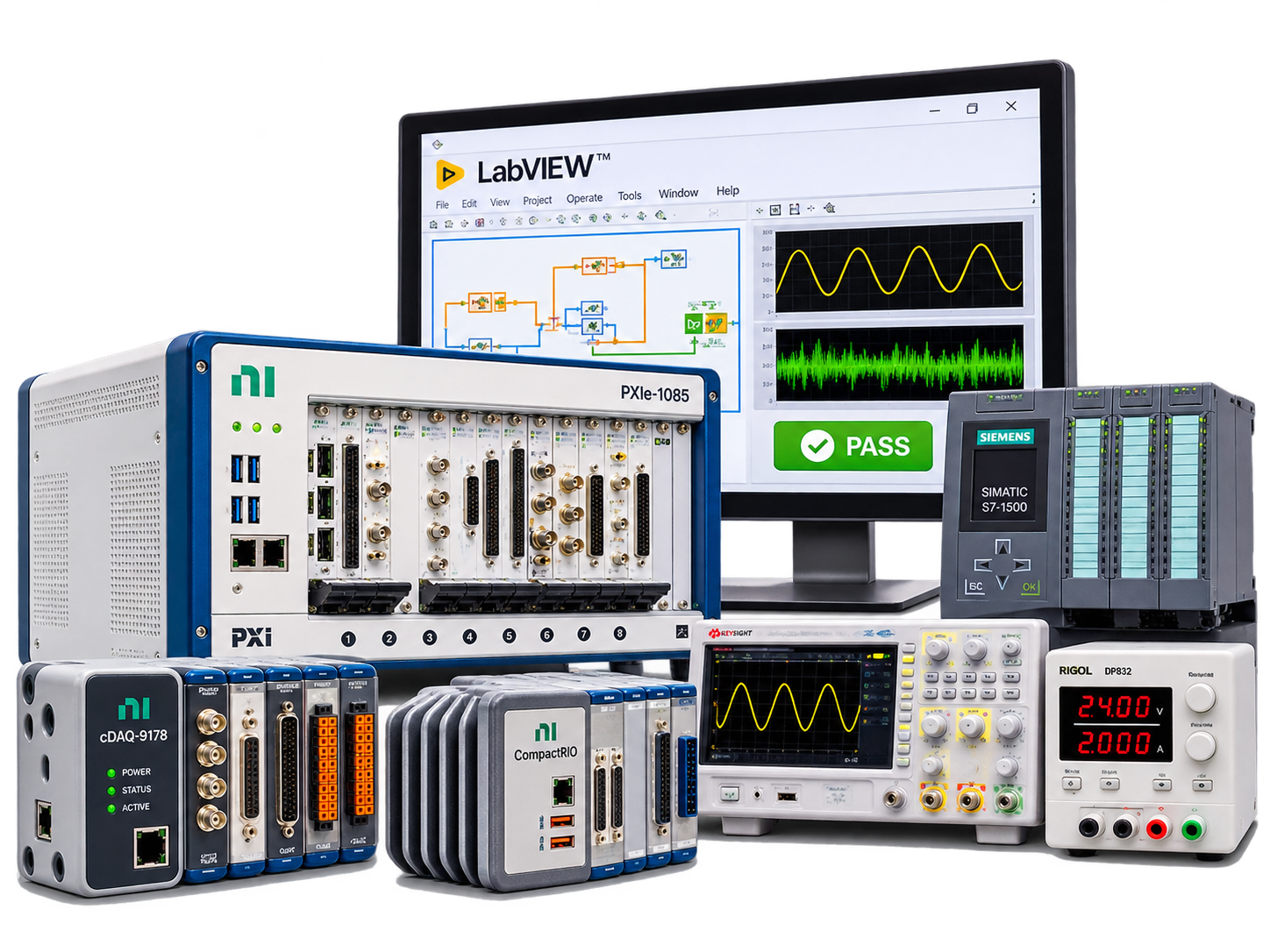
Hardware Interfacing Capabilities
High-throughput test and measurement capabilities engineered to eliminate spaghetti code and deliver deterministic factory-floor execution.
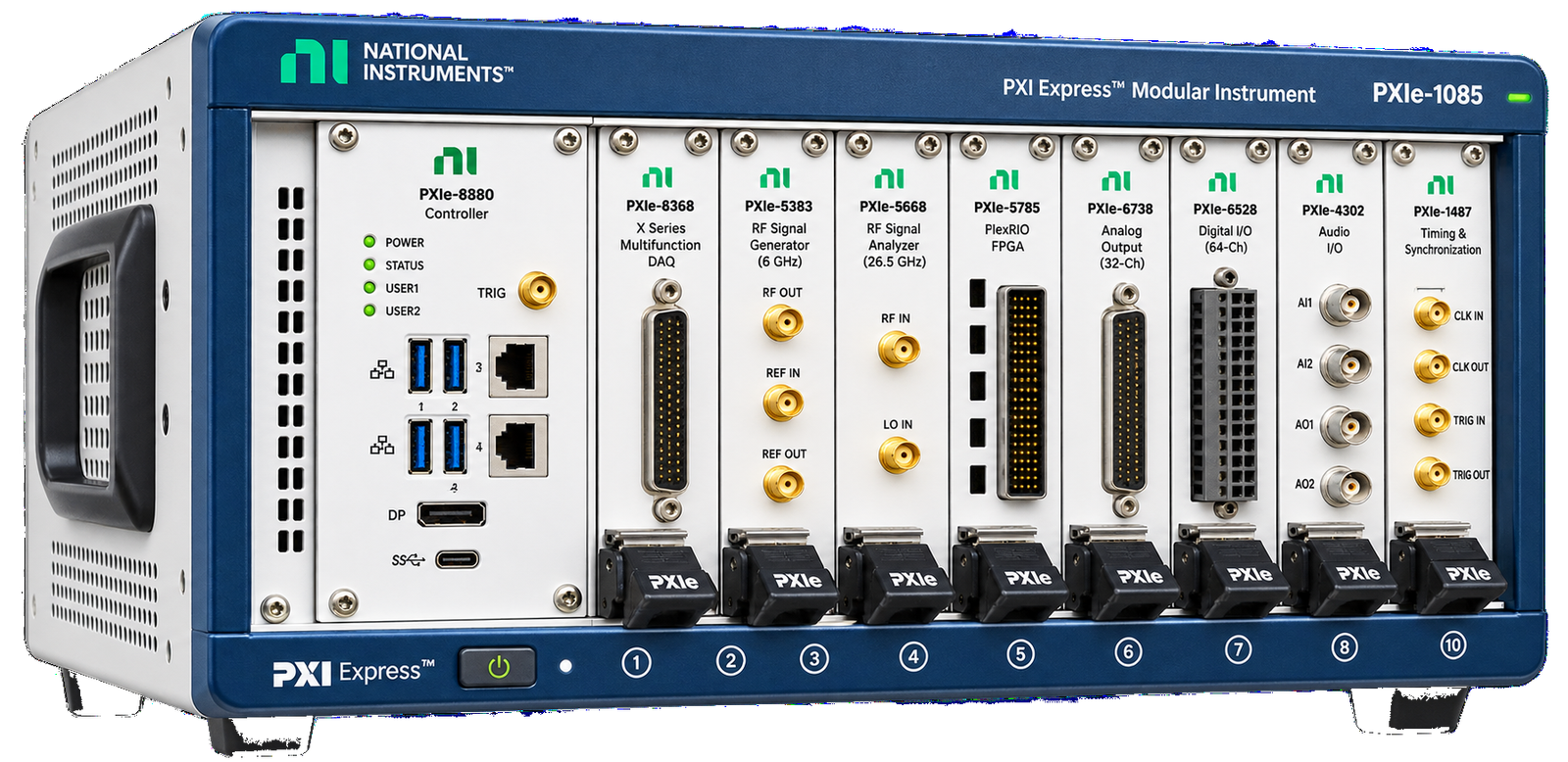
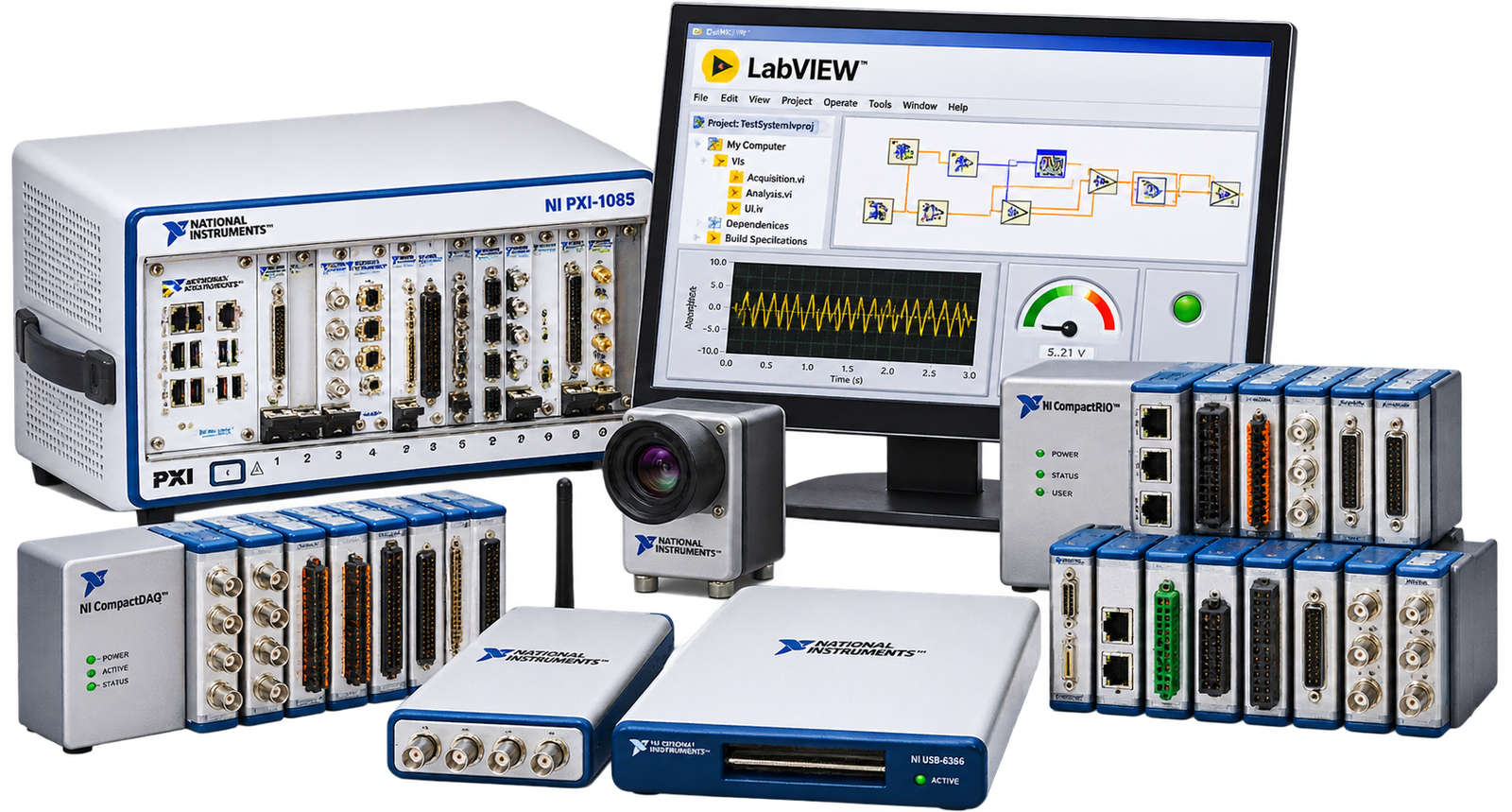
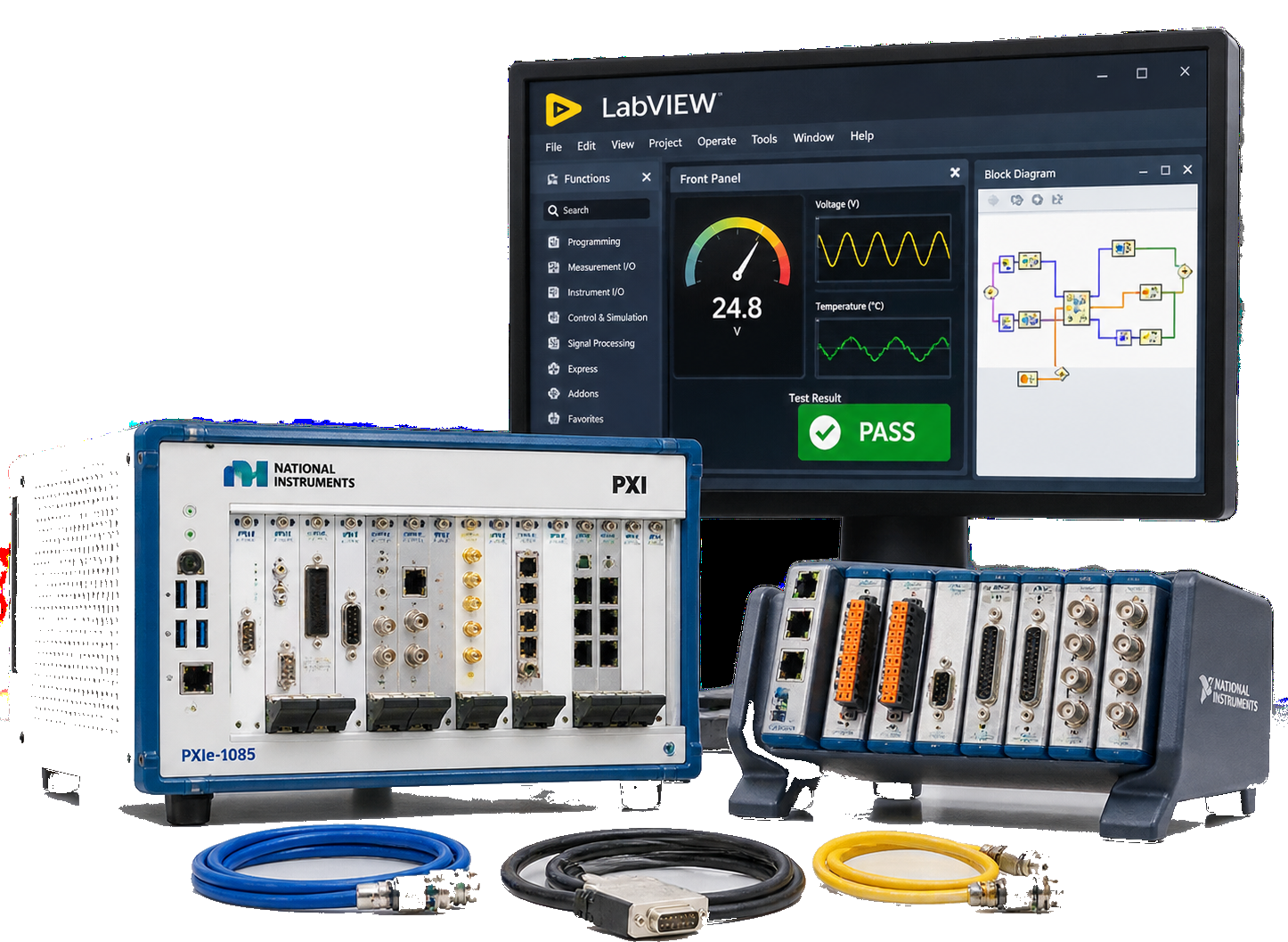
NI PXI & Modular Instruments
High-bandwidth automated test architectures leveraging PXIe backplane trigger buses and picosecond clock synchronization.
- ✓Multi-chassis PXIe star trigger sync
- ✓Direct Memory Access (DMA) streaming
- ✓High-speed digitizers & AWGs
- ✓Sub-nanosecond phase alignment
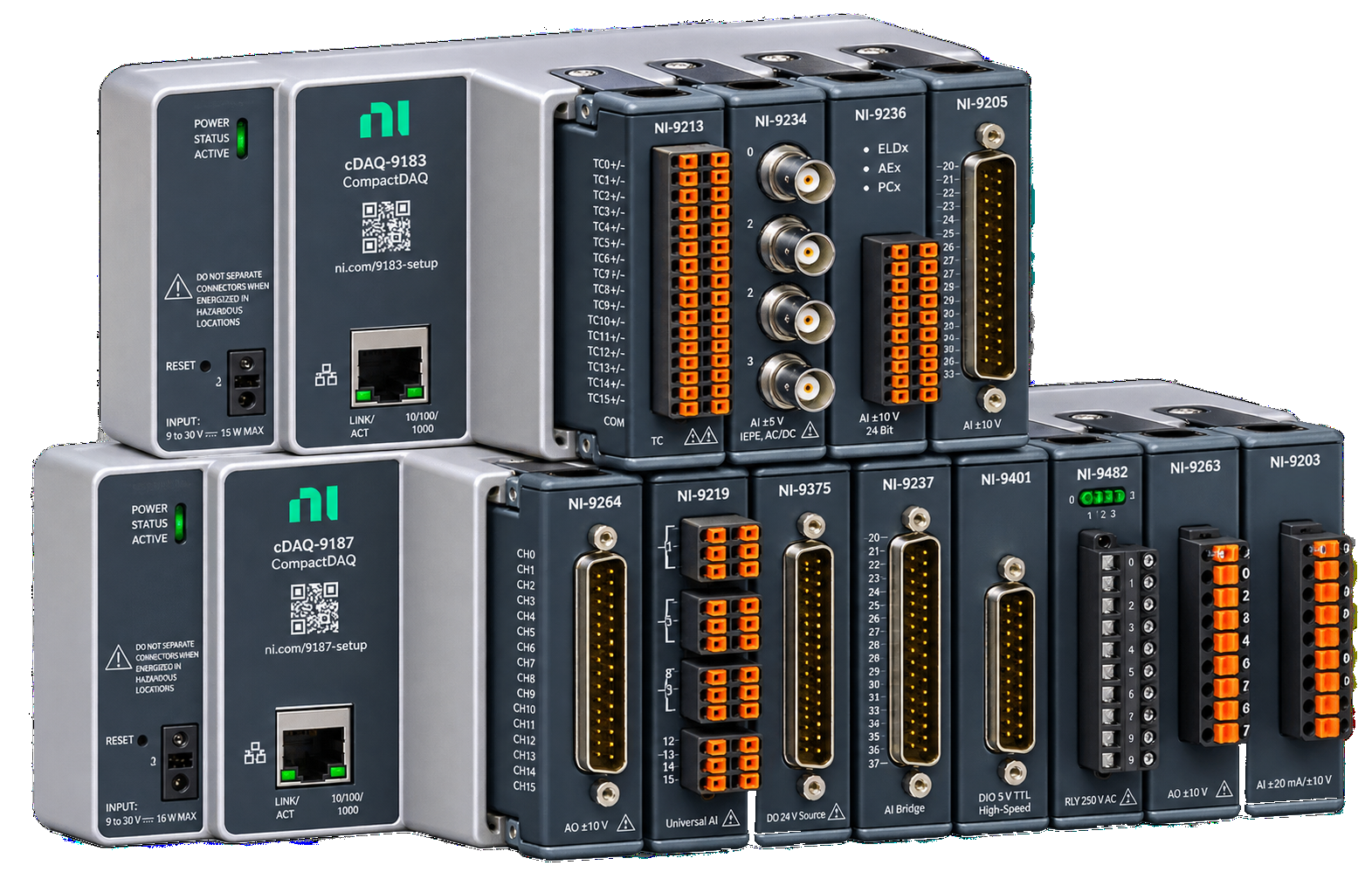
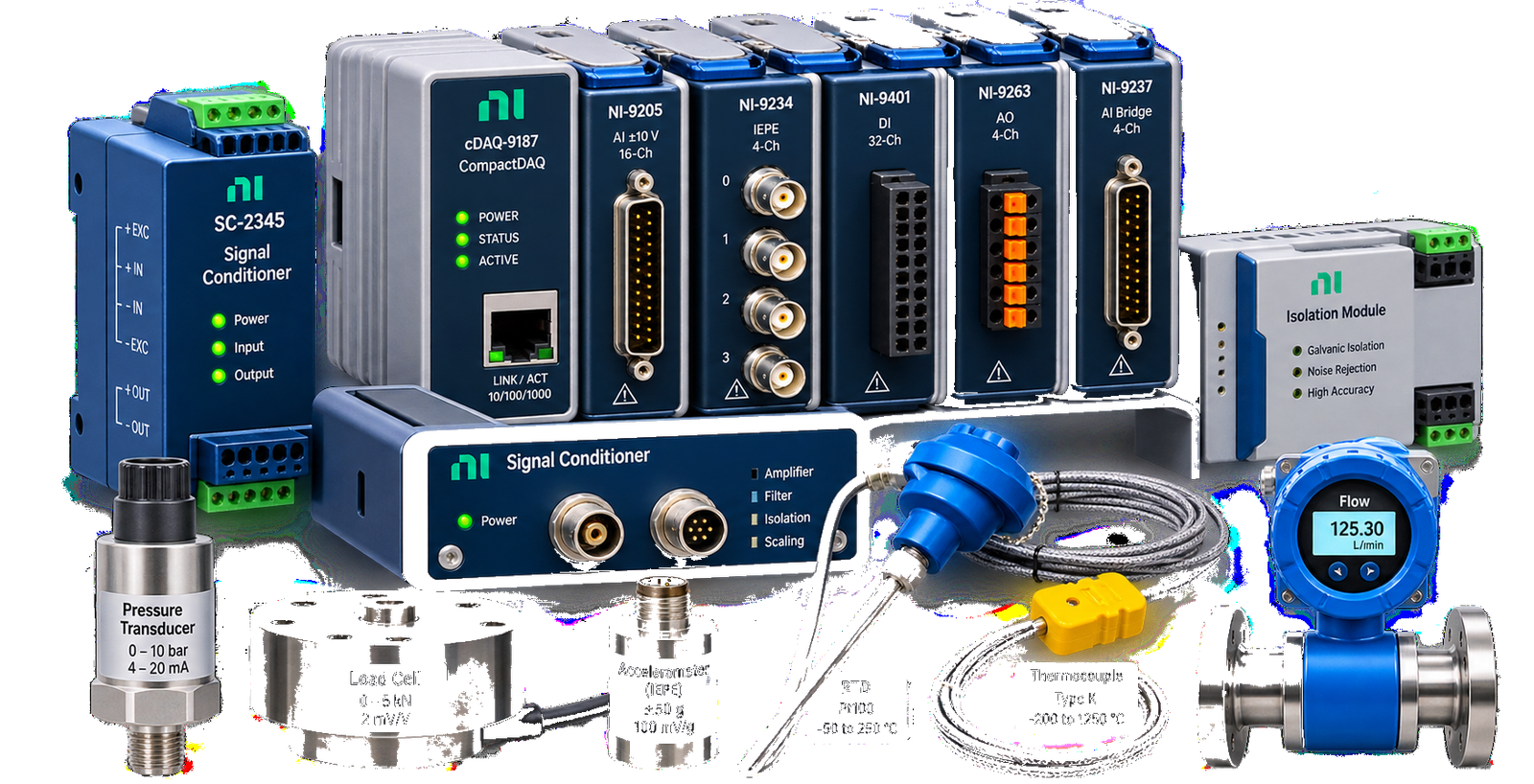
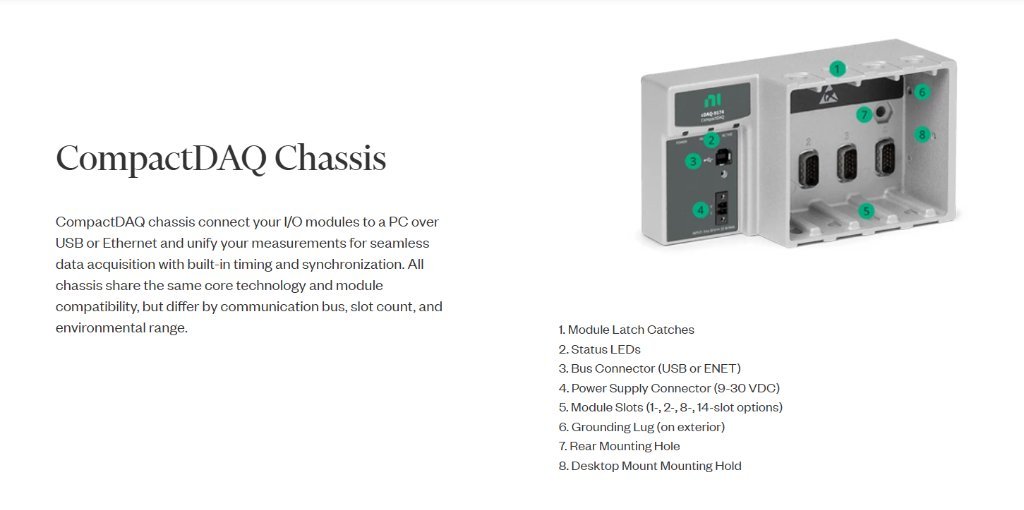
CompactDAQ & Field DAQ
Modular sensor measurement systems for temperature, strain, pressure, acceleration, and high-voltage isolation.
- ✓Hot-swappable C Series modules
- ✓Time Sensitive Networking (TSN) sync
- ✓NI-DAQmx high-speed task buffering
- ✓Rugged IP67 field enclosures
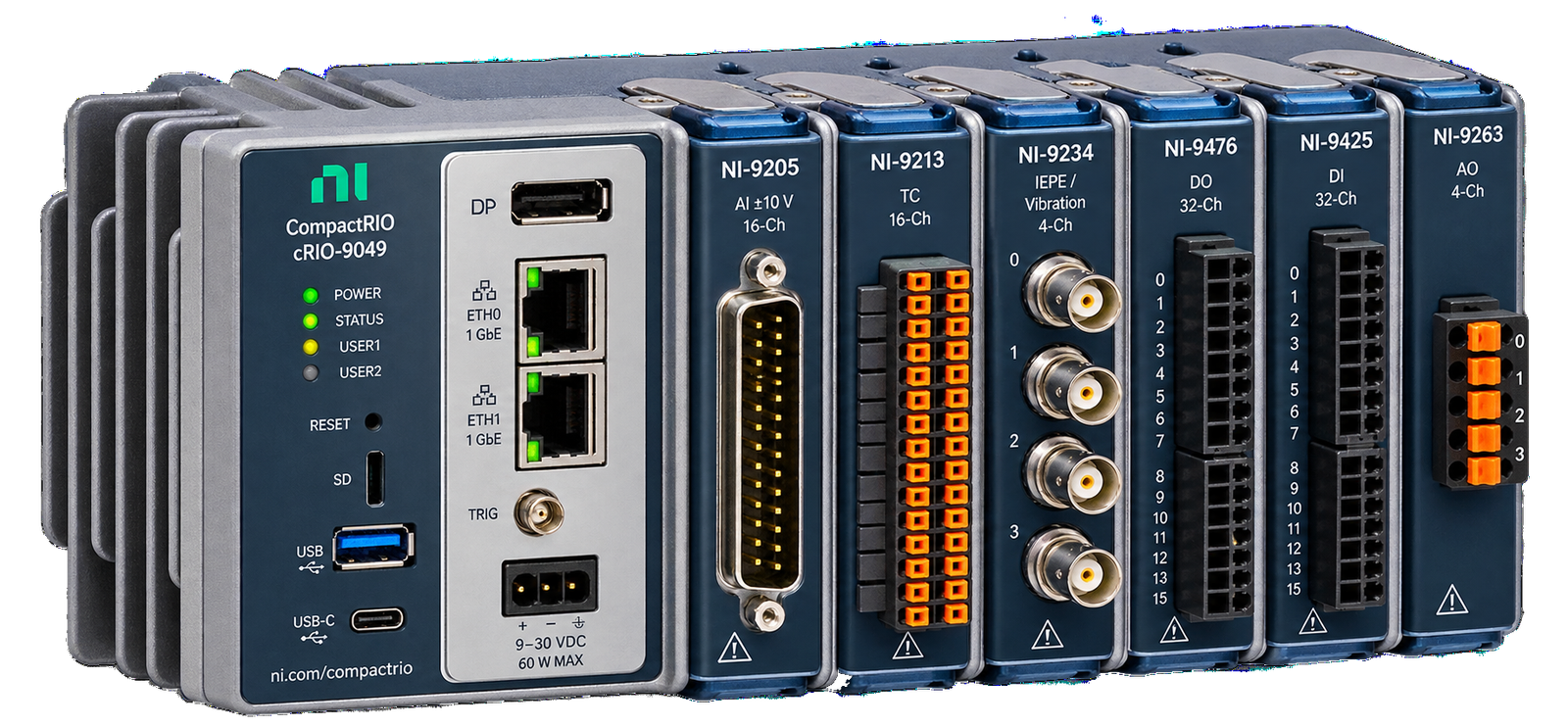
CompactRIO RT & FPGA
Rugged embedded control systems combining real-time processors with user-programmable Xilinx FPGAs for microsecond loops.
- ✓Deterministic hardware interlocks
- ✓Microsecond PID control loops
- ✓Custom FPGA digital protocols
- ✓Extended -40°C to 70°C operation
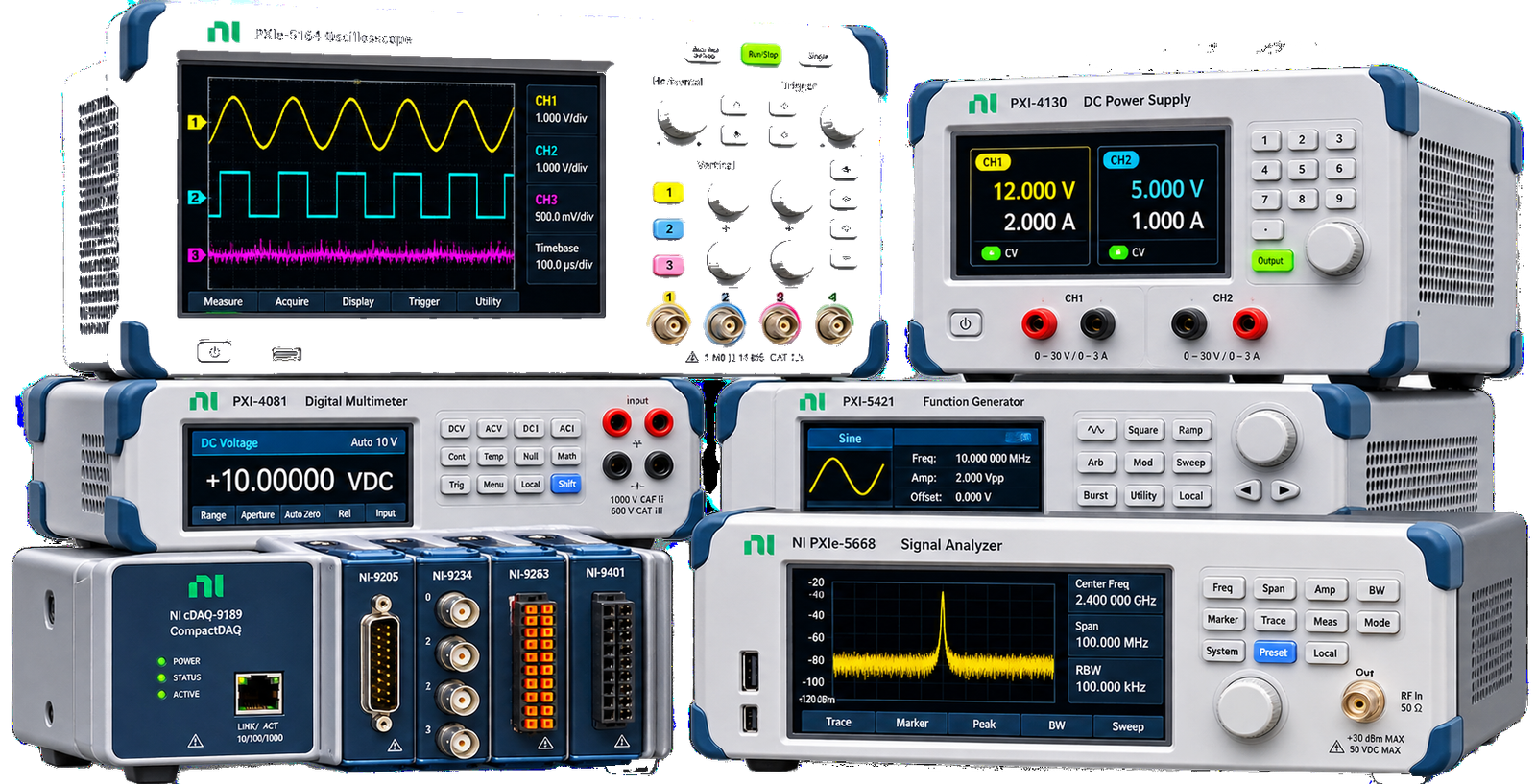
SCPI & VISA Instrument Drivers
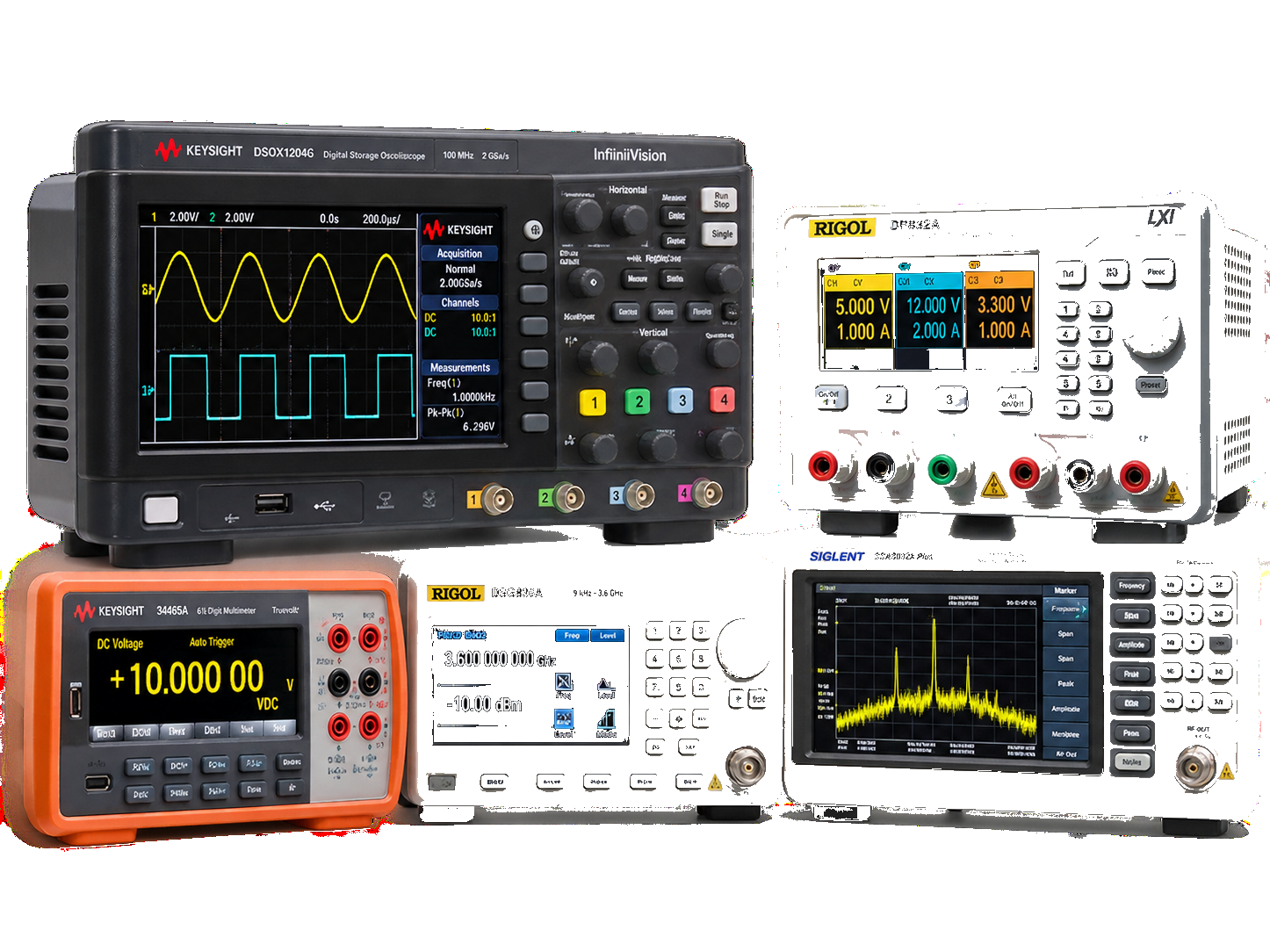
Certified driver packages automating laboratory oscilloscopes, spectrum analyzers, power supplies, and electronic loads.
- ✓Standard Commands for Programmable Instruments
- ✓Ethernet / LXI & USBTMC connectivity
- ✓Legacy IEEE 488.2 GPIB preservation
- ✓Automated self-calibration routines
Industrial Bus Interfacing
Bridging test systems to automotive, industrial, and avionics communication buses with microsecond hardware timestamping.
- ✓CAN 2.0B & CAN-FD automotive networks
- ✓RS-232 / RS-422 / RS-485 serial buses
- ✓Modbus TCP & RTU field controllers
- ✓ARINC 429 & MIL-STD-1553 avionics
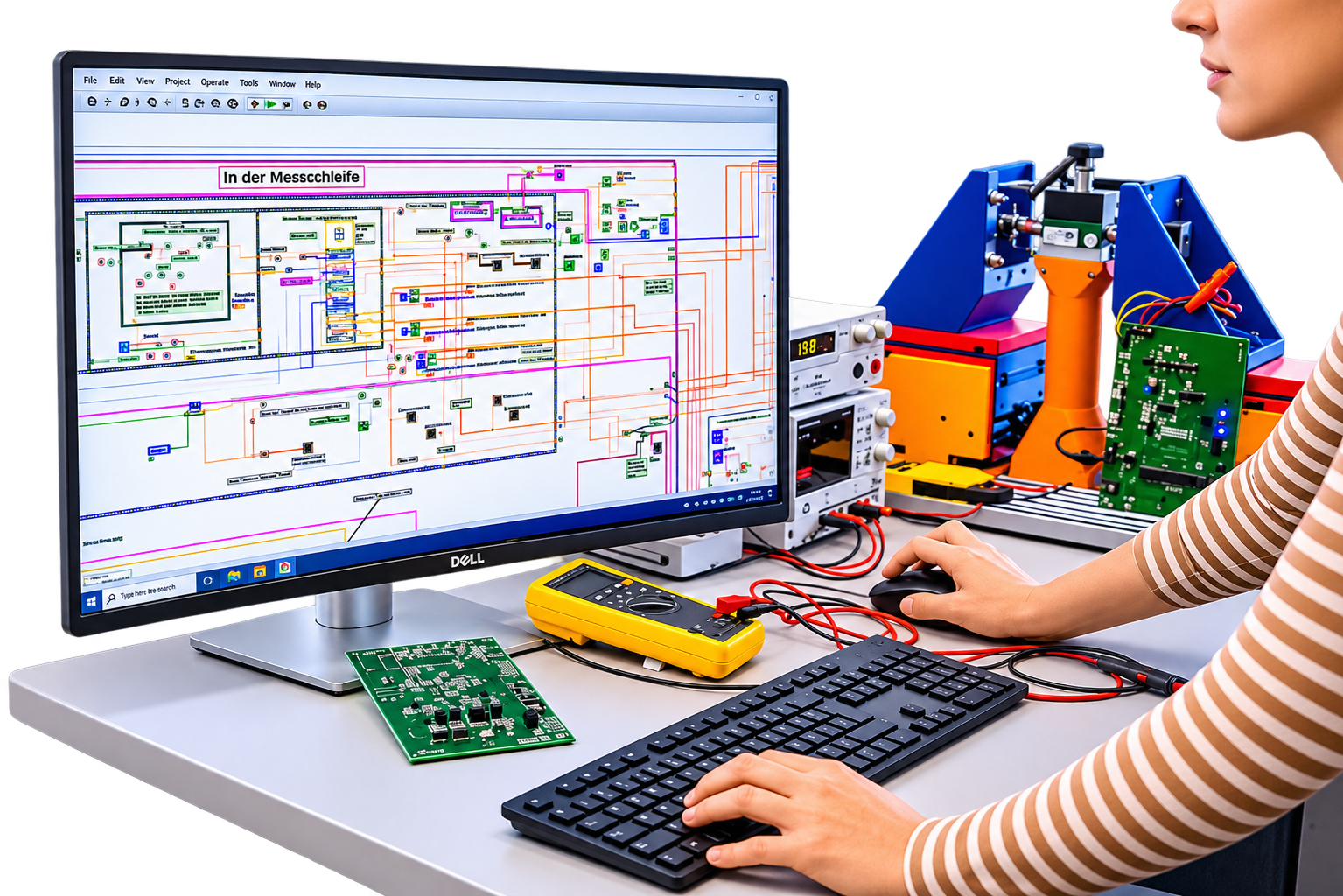
Unified Hardware Control for Complex Multi-Instrument Rigs
At VEST Solutions, we eliminate the communication chaos of multi-vendor hardware environments. We develop standardized, high-speed instrument drivers and hardware abstraction layers (HAL) that unify National Instruments PXIe, cDAQ, and cRIO platforms with standalone bench instruments.
Whether automating high-bandwidth oscilloscopes over Gigabit LAN, synchronizing multichannel digitisers via PXI star triggers, or integrating legacy GPIB meters, we deliver bulletproof communication architectures that never drop packets or hang the software.
Hardware Abstraction Patterns
Industrial-grade design patterns engineered to replace monolithic code with modular, testable, and maintainable LabVIEW frameworks.
Hardware Abstraction Layer (HAL)
Abstracts physical devices behind generic interfaces (Initialize, Configure, Read, Reset, Close). Upgrading an instrument requires zero changes to test routines.
PXI Backplane Trigger Routing
Uses dedicated PXI trigger and star lines to synchronize digitisers and AWGs in hardware without software latency jitter.
Thread-Safe VISA Sessions
Implements semaphore-guarded instrument sessions to prevent simultaneous thread collisions on shared communication buses.
Offline Hardware Simulator
Injects synthetic waveforms and responses when running on development laptops without physical hardware connected.
Instrument Vendors & NI Platforms
Seamless integration with industry-leading measurement hardware, controllers, sensors, and communication protocols.
Hardware Precision & Synchronization
We eliminate software-induced measurement errors through hardware-timed synchronization.
Signal Integrity Assurance
- Differential signaling to reject factory common-mode noise
- Proper 50-ohm characteristic impedance termination
- Shielded twisted-pair cabling with star point grounding
- Calibration verification against NIST standards
Bus Optimization
- Batch binary SCPI queries to reduce ASCII parse overhead
- Circular double-buffered DMA memory allocations
- Asynchronous non-blocking VISA read pipelines
- Dedicated hardware trigger lines replacing polling loops
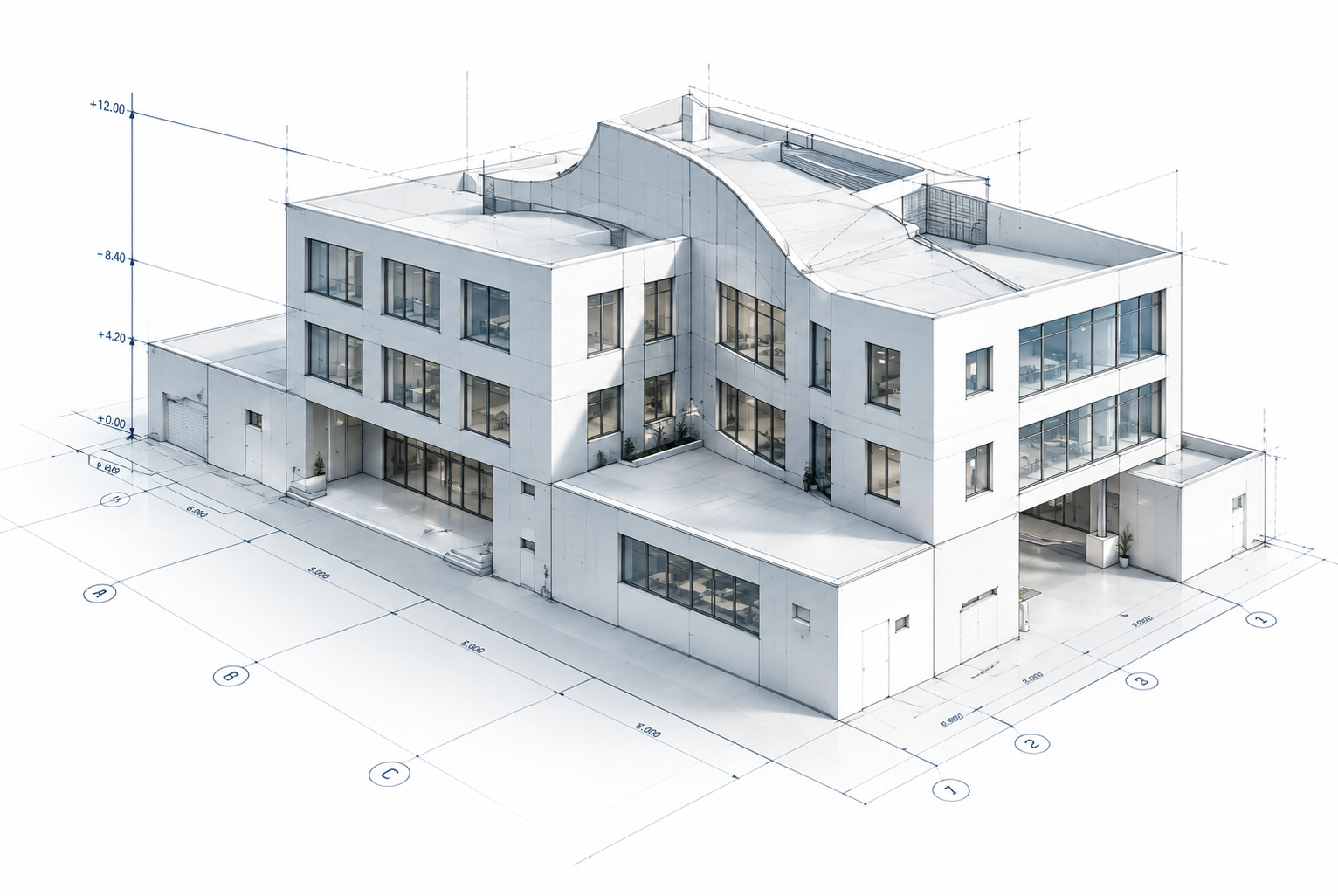
Hardware Integration Methodology
From initial requirements elicitation to automated FAT/SAT deployment, our deterministic engineering lifecycle ensures zero runtime regressions.
Instrument Interface Audit
Verify firmware versions, command sets, connection interfaces, and bus bandwidth.
- Test Routine Specification
- Signal Limit Matrix
- User Access & Audit Trail
- Initial FAT Criteria
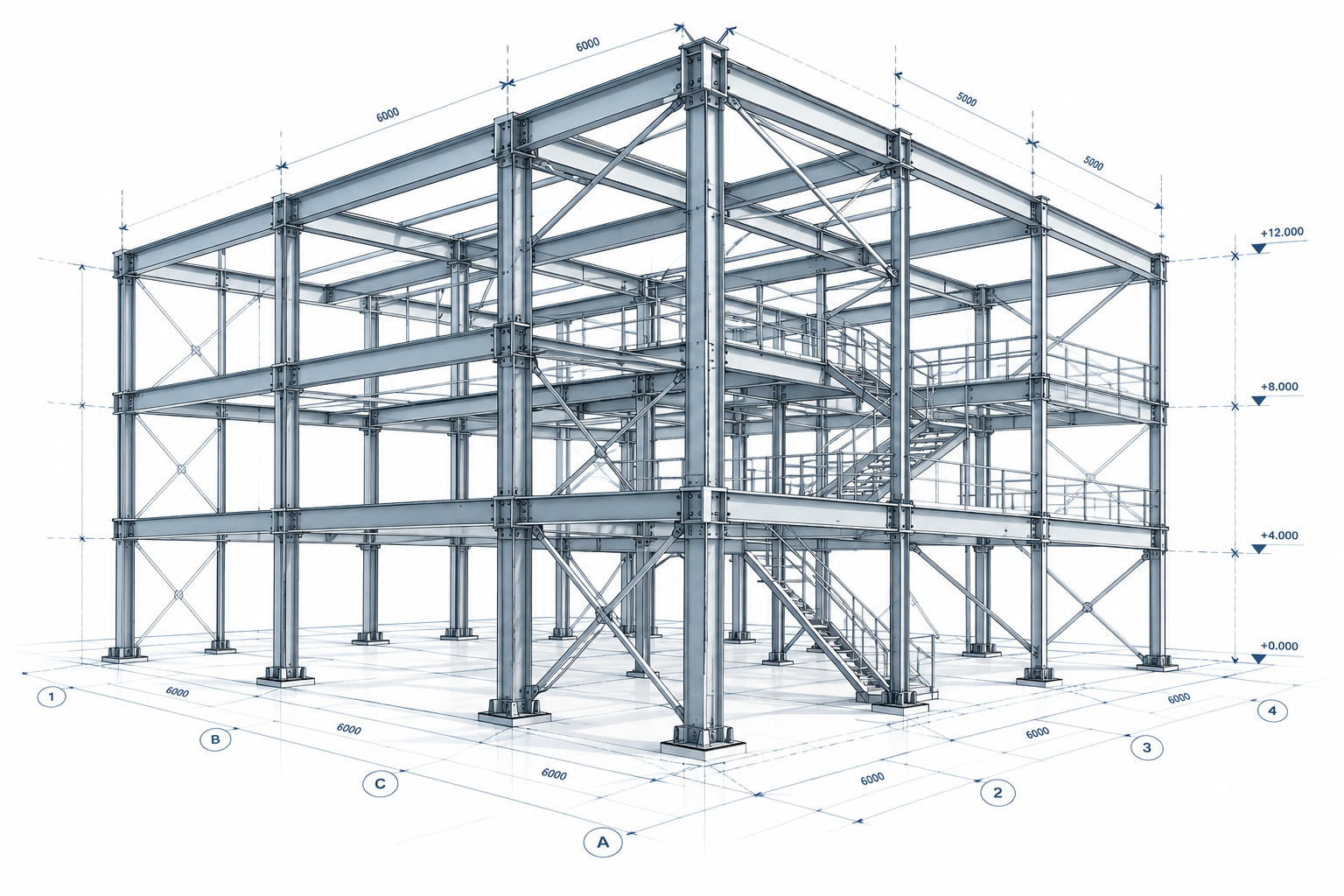
Wiring & Topology Blueprint
Design cable assemblies, shielding schematics, and star grounding topology.
- Module Class UML Diagrams
- Queue / Event Channel Protocols
- Actor Tree & DQMH Modules
- HAL Interface Definitions
HAL Class Development
Write object-oriented LabVIEW or Python classes with simulation capability.
- Interchangeable Instrument Drivers
- SCPI / VISA Protocol Adapters
- Offline Simulation Stubs
- Hardware Loopback Verification
Driver Stress Testing
Benchmark instrument query timeouts, buffer overflows, and reconnection logic.
- Asynchronous Engine Implementation
- State Transition Handlers
- TDMS / Database Logging Engines
- SubVI Error Cluster Routing
System Synchronization
Align clocks and test triggers using high-speed oscilloscopes to measure skew.
- Dynamic Subpanel Framework
- 24/7 Dark/Light Operator HMI
- Interactive Calibration Wizards
- Automated Recipe Batch Loaders
Calibration Routine Build
Create automated multi-point voltage and current calibration routines.
- 72-Hour Continuous Run Benchmark
- DETT Reference Leak Eradication
- Thread Execution Trace Report
- VI Analyzer Automated Code Score
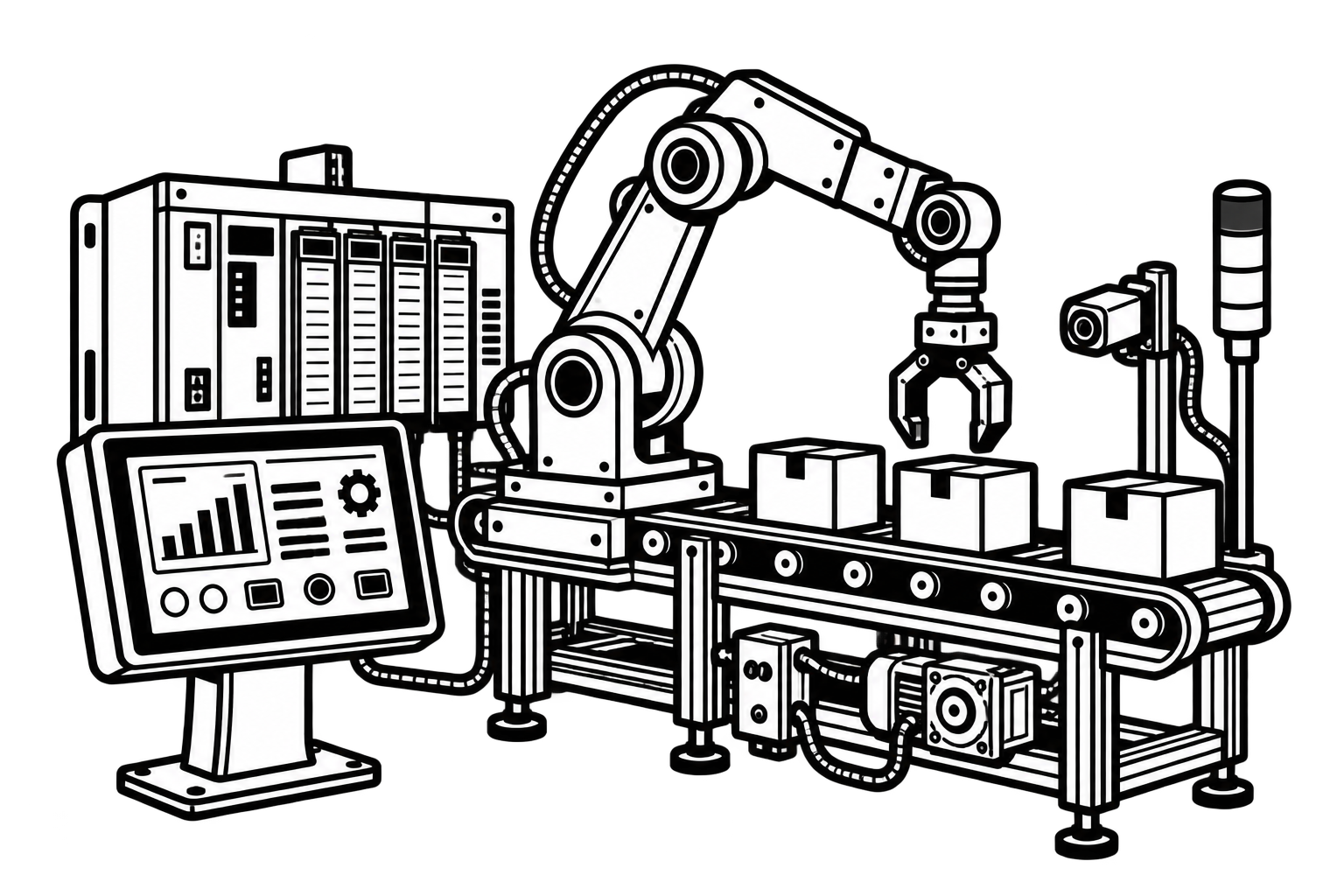
Site Commissioning
Install on customer test floor, verify noise margins, and deliver wiring manuals.
- Final Standalone Executable (.exe)
- Factory Acceptance (FAT) Sign-Off
- Site Commissioning (SAT) Protocol
- Complete Uncompiled VI Source Code
What You Receive
A useful proposal starts with useful data. Every system we deliver is validated for throughput, hardware determinism, error recovery, and comprehensive lifecycle operating criteria.
Integrated Applications
Proven test, measurement, and automated validation platforms deployed across mission-critical global industrial sectors.
Aerospace Multi-Axis Shaker Tables
High-channel CompactDAQ acceleration and strain gauge acquisition synchronized with hydraulic servo controllers.

Automotive Inverter Dynamometers
High-voltage isolated PXI power measurement synchronized with CAN-FD telemetry and chiller controllers.

RF Component Characterization
Automated switching matrices coordinating VNAs, noise figure meters, and multi-channel power supplies.
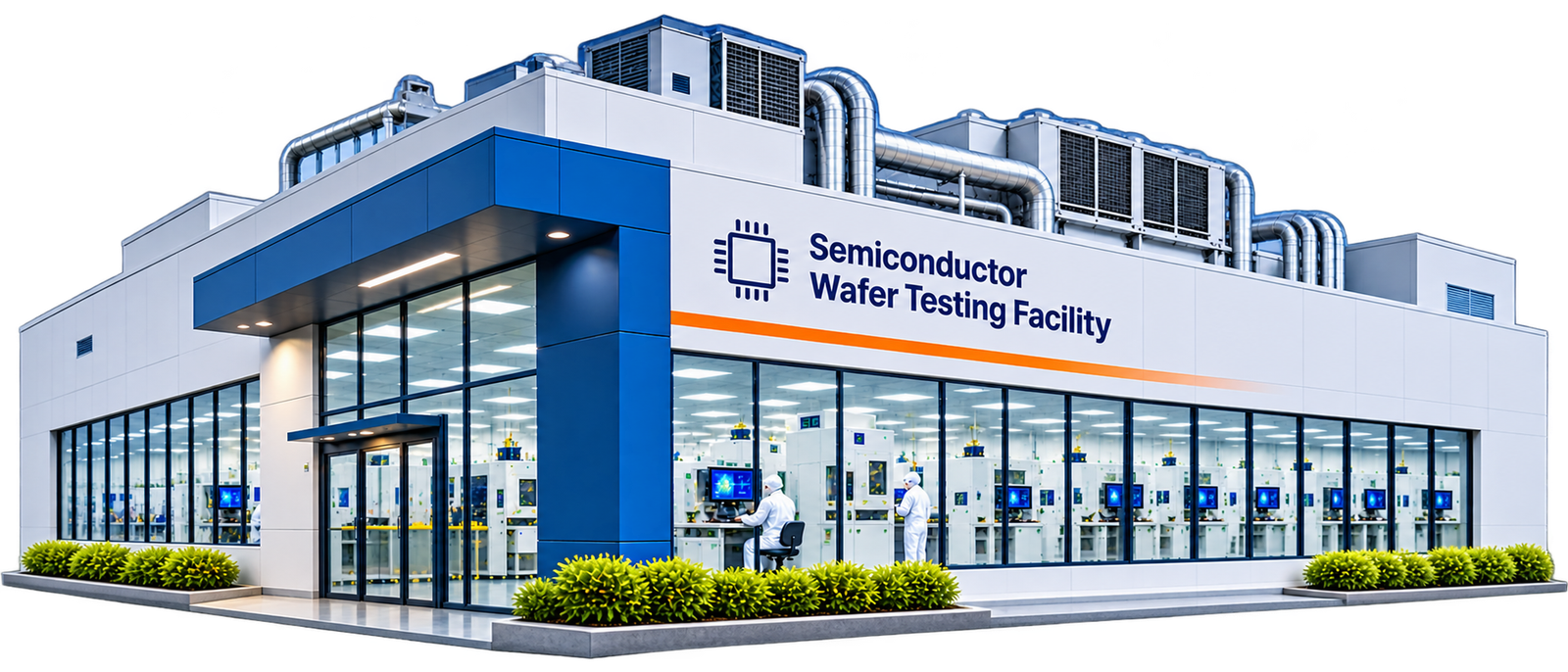
Power Grid Substation Monitoring
Rugged CompactRIO systems running Linux RT to sample three-phase transformers and execute transient capture.
Why VEST Solutions
Why Choose Our Engineers?
Certified LabVIEW Architects and Hardware Integration Specialists delivering zero-defect deterministic automation.
Extensive National Instruments alliance and certified hardware background
Deep multi-vendor bench instrument expertise across 500+ device models
Clean Hardware Abstraction Layers that protect software investments
In-house electrical engineering capability for custom breakout fixtures

Strict adherence to CE, UL, and industrial noise immunity standards
Complete open source delivery of all instrument drivers and VIs
Hands-on experience with legacy GPIB modernization and fiber optic links
Fast turn-around on custom instrument driver requests
Engineering Truth: Software Can't Fix Bad Physics
A 100 MS/s digitizer will give you meaningless noise if you route unshielded cables across a high-current motor drive. True hardware integration starts with physical physics.
When to invest in modular PXI / cDAQ systems
- Channel counts exceeding 16 analog or digital measurement lines
- Sub-microsecond synchronization required across different measurement types
- High-throughput continuous streaming directly to disk (TDMS)
- Challenging shop-floor environments requiring shock and vibration tolerance
When standalone benchtop instruments are best
- Ultra-high precision RF or metrology calibration requirements
- R&D laboratory benches where manual front-panel knobs are essential
- Single-purpose test benches requiring only one or two measurements
- Low-frequency, intermittent logging tasks easily handled by USB meters
Common Hardware Integration Pitfalls
Architectural pitfalls that turn scalable test systems into unmaintainable legacy technical debt.
Creating ground loops between instruments
Connecting multiple earth grounds creates circulating currents that add 50Hz hum to sensitive signals. We enforce single-point star grounding.
Ignoring instrument command queue latency
Spamming SCPI queries over slow serial or GPIB buses causes buffer overruns and frozen instruments. We implement query pacing and timeout queues.
Unterminated high-frequency coaxial cables
Omitting 50-ohm load termination causes signal reflections, ringing, and inaccurate voltage readings at high frequencies.
Neglecting thermal drift in precision DAQ
Failing to allow instruments to warm up or neglecting self-calibration leads to significant measurement drift over shift changes.
Relying on software timing for synchronization
Using Windows OS sleep timers to synchronize two instruments introduces 15ms random jitter. We use hardware backplane triggers.
Hardcoding VISA resource strings in diagrams
Hardcoding 'GPIB0::14::INSTR' breaks the software when an instrument address changes. We use external configuration files.
Frequently Asked Questions
Answers to technical questions regarding architecture patterns, instrument drivers, FAT/SAT deployment, and full source code ownership.